On this page
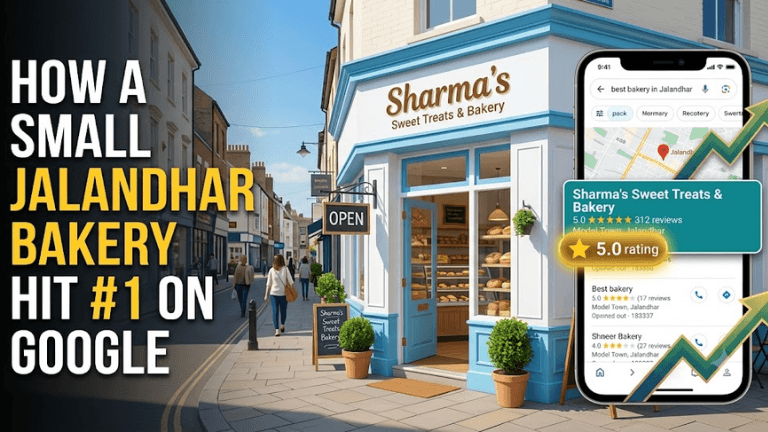
The Bakery Nobody Noticed (At First)
There's a small bakery tucked into a quiet corner near a Jalandhar market. Fresh bread, decent cakes, loyal regulars — the kind of place that runs entirely on word of mouth. For years, that was enough. Then a new bakery opened two streets away with a flashy Instagram page and a delivery tie-up, and the old shop's daily footfall started dropping.
The owner didn't panic and hire an expensive marketing agency. His nephew, a second-year student learning digital marketing on the side, offered to help — for free, just to practice what he was studying. That's where this story actually gets interesting for anyone learning SEO right now.
No budget. No backlinks. No paid ads. Just a Google Business Profile that had never been claimed, a website that didn't exist, and a search term — "bakery near me Jalandhar" — that the bakery was invisible on.
If you're a student wondering whether SEO is just theory you memorize for exams, this is exactly the kind of real example that shows it isn't. Search engine optimization isn't about tricking Google. It's about making sure the right information reaches the right person at the right moment — someone standing outside their house at 7 PM, craving a cake, typing four words into their phone.
The nephew started with something most beginners overlook completely: he didn't touch the website first. He claimed the Google Business Profile. Within a week, something shifted. The bakery started showing up — not ranking #1 yet, but visible. That one step taught him more about how local search actually works than any textbook chapter had.
What came next is where the real strategy kicked in — and it's simpler than most people expect.
Step One: Fixing What Was Already Broken
Before adding anything new, the nephew cleaned up what already existed. The bakery's Google Business Profile had an outdated phone number, no photos, and the wrong closing time listed. Small details, but Google — and customers — notice them.
He filled in every section honestly: correct hours, real photos of the actual shelves (not stock images), the exact street location, and a short description that used natural phrases like "fresh bakery in Jalandhar" instead of stuffing the name everywhere. This is a mistake a lot of beginners make — they think more keywords automatically mean more visibility. It's actually the opposite. Google rewards clarity, not repetition.
Step Two: Reviews Became the Real Engine
Next, he asked regular customers — people who already loved the bakery — to leave a quick Google review. No incentives, no fake reviews, just a polite ask after a good purchase. Within a month, the profile had over 40 genuine reviews, several mentioning specific items like "the almond croissant" or "birthday cake orders."
Here's what surprised him: Google started matching the bakery to searches like "best cake shop Jalandhar" purely because real customers had used those words in their reviews. That's a lesson students often miss early on — SEO isn't only about what you write. It's also about what your customers say, and how naturally those words match real search behavior.
Step Three: A Simple One-Page Website
He built one basic page — no fancy design, just menu, location, contact number, and a few photos. Loading fast mattered more than looking impressive. He didn't chase design perfection. He chased usefulness.
By week six, the bakery appeared on the first page. By week nine, for that specific local search phrase, it sat at position one.
What This Story Actually Teaches Beginners
If you're a student trying to break into SEO, this bakery's story matters more than most case studies you'll read online — because there was no big budget, no team of experts, no premium tools involved. Just a clear understanding of what people actually search for and a willingness to fix basics before chasing anything advanced.
A common doubt students have is: "Do I need to learn everything — technical SEO, content writing, link building — before I can actually help a business?" This story answers that honestly. No. You need to understand priorities. For a small local business, an optimized Google Business Profile and genuine reviews will often outperform a beautifully designed website with zero visibility.
Another mistake beginners repeat constantly is treating SEO as a one-time task. The nephew didn't just set things up and walk away. He checked the profile monthly, added new photos when the menu changed, and kept responding to reviews — even the average ones. Consistency, not perfection, is what search engines end up rewarding over time.
If you're wondering where to start practicing this yourself, look around your own city. A local shop, your family's small business, even a tuition centre — most of them have zero SEO presence. That's your practice ground. You don't need permission or a big project to start learning by doing.
And if you want to learn SEO in a more structured, practical way, SEO course in Jalandhar by Techcadd can be a good place to build those fundamentals and work on real-world SEO concepts. Instead of only learning theory, focus on understanding how keyword research, on-page SEO, technical SEO, local SEO, and Google rankings actually work — and then practice those skills on businesses around you.
This bakery didn't rank #1 because of some secret trick. It ranked #1 because someone paid attention to details that most competitors ignored. And honestly, that's the real skill separating good SEO practitioners from everyone else — not knowing more, but caring enough to check what's actually there.
Filed under
Keep reading
- The SEO Trick That Changed a Local Business Owner's Fortune in Jalandhar A Jalandhar shop owner was invisible online until one simple SEO fix changed everything. Here's the exact trick that brought in real customers, fast.
- From Likes to Leads: A Social Media Marketing Guide for Jalandhar BusinessesStruggling to turn social media followers into real customers? Here's a practical, no-fluff social media marketing guide made specifically for Jalandhar businesses looking to grow.
- The Local Shop Owner Whose Business Went Cloud-Based Overnight (And What It Means for Jalandhar's Youth)A small shop owner in Jalandhar took his business online almost overnight. Here's what actually changed, what skills made it possible, and why more local entrepreneurs and students are learning the same tech today.
Comments
Loading…