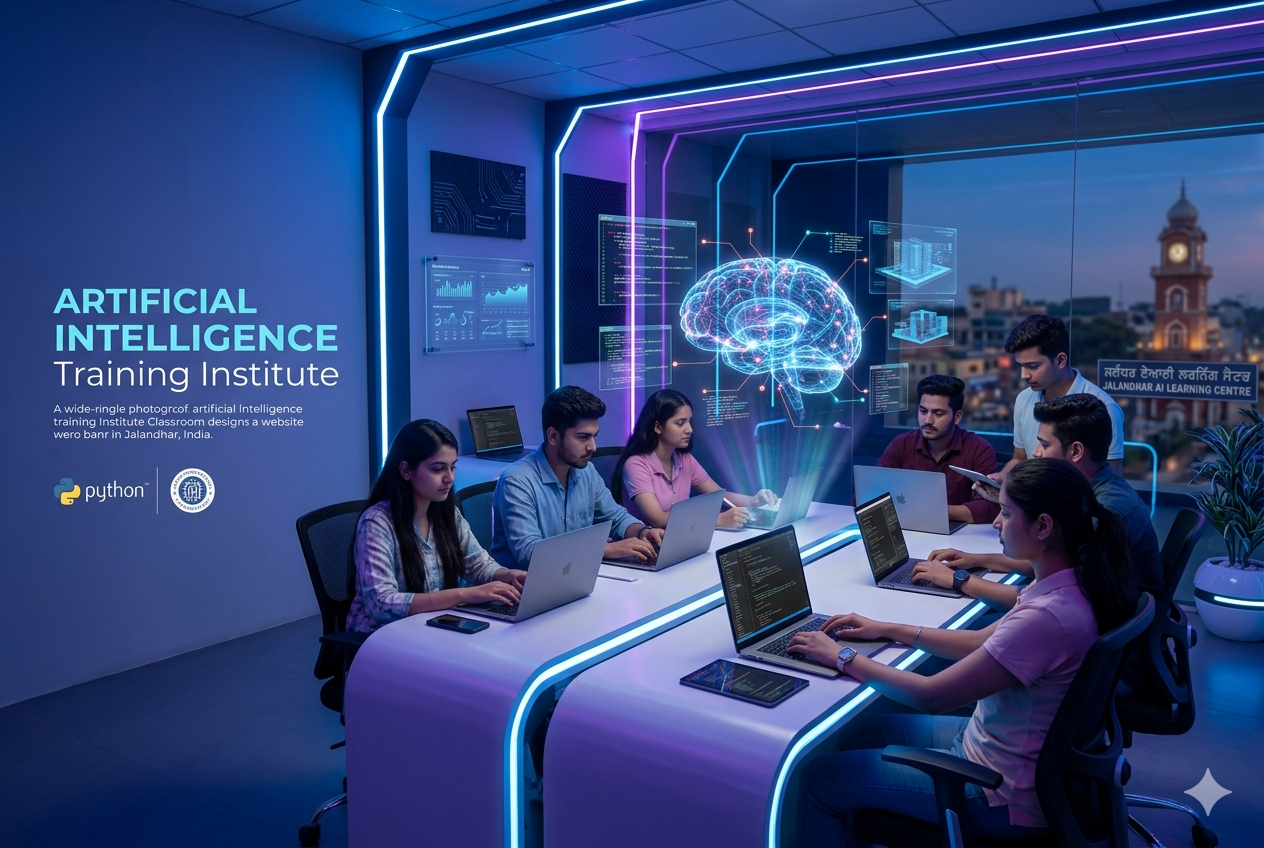
Why TechCADD is the Premier Choice for AI and Technology Education in Jalandhar
In the rapidly evolving landscape of technology education, choosing the right institute can make the difference between a struggling career and a thriving one. Jalandhar has emerged as a significant hub for Artificial Intelligence and tech training, with numerous institutes offering courses across various domains. Among these, TechCADD Computer Education has established itself as a standout institution, consistently earning a 5.00 average rating and transforming students from diverse backgrounds into successful tech professionals .
This comprehensive guide explores the compelling reasons why TechCADD should be your preferred choice for AI, Data Science, Cybersecurity, and technology education in Jalandhar.
1. Real Success Stories That Prove Transformation
From BCA Graduate to Ethical Hacker: The Angelina Journey
Perhaps the most powerful testament to TechCADD's effectiveness is the story of Angelina, a BCA graduate who transformed from a curious beginner into a skilled ethical hacker now working at an IT risk consulting firm .
Before joining TechCADD, Angelina felt her degree had only scratched the surface. "I'd watch movies about hackers and read news about data breaches. I wasn't intrigued by the crime but by the 'how'—how did they get in? How could it have been prevented?" she recalls .
The counselling session at TechCADD proved transformative. "The instructor demystified the entire field. He explained that ethical hacking isn't about random guessing; it's a methodological process of vulnerability assessment and penetration testing. The Ethical Hacking and Cyber Security course was mapped out like a journey, starting with the very basics of networking and moving all the way to advanced exploitation techniques" .
Angelina's training covered everything from networking fundamentals and Kali Linux to advanced topics like Metasploit exploitation, OWASP Top 10 vulnerabilities, and professional report writing. The hands-on approach proved invaluable when she landed her first job. "In my first week, I was tasked with a vulnerability assessment for a client's web application. Using the skills I learnt at TechCADD, I identified a critical SQL injection flaw that their own developers had missed" .
From Beginner to Python Developer: Multiple Success Stories
TechCADD's track record extends across programs. Student reviews consistently highlight the institute's effectiveness:
Karan Sharma: "I have been studying here from past few months and i would say that this institute is really very good as it provides a friendly environment for students and also the facilities are amazing" .
Sandeep Chahal: "I am doing full stack course there and I feel very glad to join this institute. Staff is very cooperated and all classes are well maintained and teacher are so cooperative and provide appropriate knowledge regarding course" .
Manmeet Kaur: "A great place to learn and enhance your technical skills. Nice place to upgrade your skills and upgrade your career in IT sector. So you must enroll yourself in this institute" .
Komal: "I'm so glad I enrolled in the AI course in Jalandhar! The curriculum is well-structured, covering essential topics like natural language processing (NLP), data science, and neural networks. The instructors are knowledgeable and supportive, and the projects helped me apply what I learned in real-life scenarios" .
2. Industry-Aligned, Future-Ready Curriculum
Professional Certificate Program in Machine Learning & AI
TechCADD's flagship AI program is designed to take learners from fundamentals to advanced implementation across 10 comprehensive modules :
DevOps Certification with Generative AI Integration
What sets TechCADD apart is its early adoption of Generative AI integration. The DevOps Certification Training Course with Generative AI is one of the few programs in Jalandhar that blends traditional DevOps tools with AI-driven automation strategies .
The program covers:
-
Generative AI in DevOps for predictive analytics and intelligent workflow optimization
-
AI-Driven DevOps Pipelines using Generative AI tools for automation
-
ChatOps and AI assistants for real-time troubleshooting
-
Self-healing systems powered by AI
Modules include Linux & Shell Scripting, Git & GitHub, Jenkins, Ansible, Docker & Kubernetes, Cloud Integration (AWS, Azure, GCP), and AI-powered automation frameworks .
Advanced Certification in Ethical Hacking
TechCADD's cybersecurity program is equally comprehensive, covering everything from reconnaissance to advanced exploitation across nine detailed modules plus a capstone project :
-
Module 1-3: Introduction to Ethical Hacking, Footprinting, Scanning, Enumeration & Vulnerability Analysis
-
Module 4-6: System Hacking, Web Application Hacking (OWASP Top 10), Wireless Network Hacking
-
Module 7-9: Cloud Security, Malware Analysis, Security Operations & Incident Response
-
Capstone Project: Real-world ethical hacking projects with CEH exam preparation
Students gain hands-on experience with tools like Nmap, Metasploit, Burp Suite, Wireshark, Aircrack-ng, and John the Ripper in specialized lab environments .
3. Hands-On, Project-Based Learning Methodology
Learning by Doing, Not Just Listening
TechCADD's pedagogical philosophy revolves around one core principle: practical application. Students don't just learn theory—they build things .
The classroom environment is designed for active learning. In the Data Science class, the instructor demonstrates coding and analysis live on a projector while students follow along on their workstations. "This setup ensures that all participants, regardless of their prior experience, can actively engage in learning and apply concepts in real-time" .
Building a Professional Portfolio
Students work on real-world capstone projects including :
-
Recommender systems
-
Fraud detection algorithms
-
Chatbot development using NLP
-
End-to-end AI-powered data science solutions
-
Penetration testing engagements
TechCADD helps students build GitHub profiles showcasing completed projects and develop documentation of problem-solving approaches .
4. Expert Mentorship from Industry Professionals
TechCADD's faculty comprises industry professionals who bring years of practical experience to the classroom .
Angelina highlights this distinction: "TechCADD didn't just teach us tools; they taught us a mindset. We learnt to think creatively, to look for the unconventional entry point" .
The mentorship extends beyond regular classroom hours to include:
-
Guidance on industry best practices
-
Help navigating technical interviews
-
Insights into real-world problem-solving
-
Career path counseling
5. Comprehensive Career Support and Placement Assistance
End-to-End Placement Guidance
TechCADD's commitment to student success doesn't end with course completion. The institute provides :
-
Resume building workshops that highlight practical skills
-
Mock interviews where students are grilled on technical scenarios
-
GitHub portfolio development to showcase projects
-
Job referrals to leading IT companies
-
Interview preparation sessions on articulating career transitions
Proven Track Record
The effectiveness of this placement support is evident in student outcomes. Angelina secured a position as a junior penetration tester and immediately began working on client projects . TechCADD offers "100% placement guidance, resume building, mock interviews, and job referrals to leading IT companies" .
6. Flexible Learning Options for Every Schedule
TechCADD understands that students have diverse needs and commitments. The institute offers :
Multiple Learning Modes:
-
Online batches for remote learning
-
Classroom learning at Jalandhar campus
-
Hybrid options combining both
Flexible Batch Timings:
-
Regular batches for full-time students
-
Weekend batches for working professionals
-
Fast-track options for accelerated completion
Duration Flexibility:
7. Diverse Program Offerings Under One Roof
TechCADD offers a comprehensive suite of technology programs :
This diversity means students can either focus on a single domain or pursue multiple certifications to build a versatile skill set .
8. Affordable Investment with High Returns
TechCADD positions itself as offering high-quality technical education at affordable fees with flexible payment options .
Affordability Features:
-
EMI options for students who prefer installments
-
Competitive pricing compared to other institutes in Jalandhar
-
Combo packs like DevOps + Cloud or DevOps + AI for enhanced value
Return on Investment:
The high-demand skills taught at TechCADD—Machine Learning, AI, Data Science, DevOps, Cybersecurity—command premium salaries in the job market. "AI skills boost DevOps engineer pay scales," and the program is positioned as an "investment-for-value opportunity—a chance to learn valuable high-demand skills at a reasonable cost" .
9. Globally Recognized Certification
Upon successful completion of any TechCADD program, students receive a certification that is recognized across the industry :
-
Globally accepted and industry-approved
-
TechCADD Certified "Professional in Machine Learning & AI" designation
-
Preparation for additional international certifications like CEH (Certified Ethical Hacker)
-
Valid for international job markets
Angelina's preparation for the Certified Ethical Hacker (CEH) certification at TechCADD positioned her for roles requiring recognized credentials .
10. Student Reviews Reflect Consistent Quality
Across multiple programs, student reviews consistently highlight TechCADD's strengths, maintaining a 5.00 average rating :
Karan Sharma: "I have been studying here from past few months and i would say that this institute is really very good as it provides a friendly environment for students and also the facilities are amazing."
Sandeep Chahal: "I am doing full stack course there and I feel very glad to join this institute. Staff is very cooperated and all classes are well maintained and teacher are so cooperative and provide appropriate knowledge regarding course."
Manmeet Kaur: "A great place to learn and enhance your technical skills. Nice place to upgrade your skills and upgrade your career in IT sector. So you must enroll yourself in this institute."
Komal: "I'm so glad I enrolled in the AI course in Jalandhar! The curriculum is well-structured, covering essential topics like natural language processing (NLP), data science, and neural networks."
Simran: "I joined the best AI training course in Jalandhar, and it's been an incredible experience! The instructors break down complex AI concepts, making them easy to grasp."
11. Modern Infrastructure and Learning Environment
TechCADD's Jalandhar campus is designed to facilitate effective learning :
-
Spacious, well-equipped classrooms with projector-based instruction
-
Workstations arranged for collaboration to facilitate teamwork
-
Advanced labs with industry-standard tools
-
Access to latest software and datasets
-
Cloud-based labs for DevOps and AI practice
For specialized programs like cybersecurity, TechCADD provides dedicated lab environments that mimic enterprise networks, allowing students to practice real-time attacks and defense simulations in controlled settings .
12. Ideal for Students from All Backgrounds
One of TechCADD's greatest strengths is its inclusivity. The institute welcomes students from all educational backgrounds .
No Programming Experience Required:
"TechCADD Jalandhar teaches the basics from scratch. Basic programming knowledge is helpful but not mandatory" .
Career Switchers Welcome:
Angelina's story demonstrates that BCA graduates can successfully transition to tech careers through TechCADD's training .
For Working Professionals:
Professionals looking to upskill can choose weekend batches or online learning options .
For Freshers:
Recent graduates can build comprehensive portfolios that make them job-ready .
13. Commitment to AI Ethics and Responsible AI
In an era where AI's impact on society is growing, TechCADD's curriculum includes modules on AI Ethics and Responsible AI . Students learn about:
-
Data privacy and protection
-
Fairness in algorithmic decision-making
-
Transparency in AI systems
-
Ethical AI practices
This focus ensures that TechCADD graduates are not just technically proficient but also understand the broader implications of their work.
14. Comparison with Other Institutes
While many institutes such as ThinkNEXT Technologies, TCIL-IT Jalandhar, and WebTech Learning offer AI and ML courses, TechCADD stands apart :
Conclusion: Your Launchpad to a Tech Career
Choosing the right institute for AI and technology education is a decision that shapes your career trajectory. TechCADD Computer Education in Jalandhar offers a compelling combination of :
-
Real transformation stories from students of diverse backgrounds
-
Industry-aligned curriculum that includes cutting-edge Generative AI
-
Hands-on, project-based learning that builds portfolios
-
Expert mentorship from industry professionals
-
Flexible options for every schedule
-
Comprehensive career support with proven results
-
Affordable investment with high returns
-
Globally recognized certification
-
5.00 student ratings reflecting consistent quality
Whether you are:
-
A fresh graduate seeking entry into the tech industry
-
A working professional looking to upskill
-
A career switcher from a non-IT background
-
An aspiring AI engineer, data scientist, cybersecurity professional, or DevOps specialist
TechCADD provides the structured path, practical exposure, and support system you need to achieve your goals.
As the institute states: "This is not just a course; it's your doorway to becoming a next-generation data professional, poised to take the reins in the age of AI and innovation" . With AI talent demand in India projected to reach 1.25 million by 2027 and professionals with AI capabilities seeing 18-22% annual salary growth, the time to invest in your future is now [citation:previous].
If you are ready to build your future in technology, TechCADD invites you to take the first step. Visit their Jalandhar campus, attend a free demo session, and experience firsthand why TechCADD is considered one of the best technology training institutes in Punjab .
annually since 2019, with compensation growing 11% annually over the same period. Yet the number of qualified candidates has not kept pace, creating a widening talent gap that is slowing AI adoption worldwide.
The Bain report predicts:
-
United States: One in two AI jobs could be left unfilled by 2027
-
Germany: The biggest AI talent gap, with around 70% of AI jobs unfilled by 2027
-
United Kingdom: Talent shortfalls of more than 50%
-
Australia: Shortfall of more than 60,000 AI professionals by 2027
India's AI Talent Demand: From 629K to Over 1 Million
According to NASSCOM's analysis, India's installed talent base of AI professionals stood at 416,000 as of August 2022, with current demand at approximately 629,000. By 2026, the estimated demand is expected to exceed 1 million professionals.
The Businessworld report provides even more striking figures: current AI talent demand is estimated between 600,000 and 650,000 roles, and by 2027, that number is expected to exceed 1.25 million. Compensation trends reflect this imbalance, with AI and MLOps professionals across experience bands now commanding ₹30-60 lakh packages, with senior specialists moving well beyond that.
2. The Talent Gap: A Critical Challenge and Opportunity
43% Skill Shortage in High-Impact Technology Domains
According to the Quess GCC Talent Trends Q3 FY2026 report, supply gaps have widened most sharply in mid-to-senior hiring cycles across key domains:
Kapil Joshi, Chief Executive Officer of Quess IT Staffing, emphasizes: "Supply shortages ranging between 18% and 43% across AI/ML Ops, platform engineering, cybersecurity, and GenAI operations underscore the pressing need for accelerated upskilling, stronger functional mobility, and deeper Tier II ecosystem maturity".
Only 4,000-5,000 True AI Specialists in India
A more sobering statistic comes from talent analytics firm Xpheno, cited by Bank of America Securities: only around 4,000 to 5,000 professionals in India can genuinely be classified as true AI specialists. The bulk of India's current talent sits in the "AI user" and "AI integrator" categories—people who can apply AI tools to their work or connect AI services to platforms, but who are not building or designing AI systems from scratch.
This scarcity of true AI builders—as opposed to AI users—represents both a challenge and an opportunity. For students who commit to deep, specialized AI education, the rewards will be substantial.
The PhD Gap: India Produces Only 500 AI PhDs Annually
Another constraint is the limited pipeline of advanced AI researchers. India produces only about 500 AI-related PhDs annually, and roughly 44% of India's leading AI researchers are based overseas, drawn by better-funded laboratories and clearer career trajectories abroad.
Demand Growing at 25%, Supply at Only 15%
The imbalance is stark: demand for AI and data talent in India is growing at a 25% compound annual rate, while supply is growing at only 15%. Between 35% and 55% of job openings for AI specialists are currently going unfilled.
3. The Skills That Will Command Premium Compensation
The Shift from Basic AI to Enterprise-Grade Skills
According to TeamLease Digital, the demand in the job sector is moving from basic AI roles to enterprise-grade AI skills. India's AI market is expected to reach $17 billion (₹1.53 trillion) by 2027, and to support this rise, the requirement for AI talent is likely to double to around 1.25 million professionals.
The 6 High-Demand AI Skills for 2026 and Beyond
TeamLease Digital has identified six AI skills that will matter most in 2026, along with their estimated salary ranges:
These skills will be in high demand in metropolitan cities like Bengaluru, Hyderabad, and Pune, with organizations such as Global Capability Centres (GCCs), AI-first startups, and large enterprises across healthcare and manufacturing seeking mid-level professionals who understand governance and business.
Emerging High-Value Skills Beyond Traditional Roles
Beyond these core skills, emerging areas are creating opportunities for professionals who understand how to integrate AI effectively into business processes. Experts suggest that by 2027, people who master these capabilities could command rates of $500 per hour:
-
AI System Architecture: Designing environments where AI, automation, and human input are coordinated efficiently
-
AI Training Data Curation: Curating, organizing, and maintaining AI training data tailored to specific industries
-
No-Code AI Workflow Building: Creating automated AI-driven processes without programming using tools like n8n, Make, and Zapier
-
AI Output Quality Control: Systematic evaluation of AI-generated content and decisions to ensure consistency and accuracy
-
Automation Maintenance and Optimization: Auditing existing systems, identifying inefficiencies, and improving performance over time
4. The Evolution of AI Roles: What Will Be in Demand
Roles with the Highest Demand-Supply Disparity
According to NASSCOM analysis, certain roles have a higher degree of demand-supply disparity, ranging between 60% and 73%:
75-80% of Job Openings in the 0-10 Year Experience Bands
NASSCOM also notes that 75-80% of job openings fall between 0-5 years and 5-10 year experience bands. This is encouraging news for fresh graduates and early-career professionals entering the field.
The Rise of Specialized Roles
The Businessworld report highlights that the roles in demand are increasingly specialized:
-
GenAI and LLM Engineers
-
MLOps Professionals
-
AI Platform Architects
-
Data Engineers
-
AI Product Leaders
-
Governance Specialists
What is notable is that this demand is no longer confined to technology firms. BFSI, healthcare, retail, manufacturing—every sector is building AI capability.
LinkedIn's Fastest-Growing Jobs for 2026
LinkedIn's 2026 Jobs on the Rise analysis confirms that AI-centric roles top the growth charts, including:
The report notes that projected growth for AI and ML engineers could reach up to 40% by 2027, with corresponding salary premiums for specialized skills.
5. The GCC Opportunity: India's Growing Role in Global AI
65% of Global 500 Companies Not Yet in India
One of the most significant opportunities for AI professionals in India comes from Global Capability Centres (GCCs). According to Bank of America Securities, 65% of Global 500 companies have not yet opened a sizeable GCC in India, representing an enormous pool of potential new entrants.
Asia-Pacific GCCs Growing Rapidly
The trend is also spreading beyond the traditional American and European corporate base. Asia-Pacific headquartered GCCs in India have grown 51% over the last three years, with Japan leading that charge. Seventy-five Japanese companies have established 121 GCCs across India in the last five to six years.
GCC Revenues at $76 Billion, Growing at 11% CAGR
Global Capability Centre revenues in India grew at an 11% compound annual growth rate between FY19 and FY25, reaching USD 76 billion. Their share of India's overall technology exports has risen from 30% in FY19 to 33% in FY25.
Engineering R&D Accounts for 56% of GCC Market
Engineering Research and Development now accounts for 56% of the overall GCC market in India, with Information Technology and Business Process Management making up the remaining 44%. Driving digital transformation has overtaken cost reduction as the primary stated priority for GCCs, with 61% of enterprises citing it versus 54% for cost reduction.
Newer GCCs: Deep Technology Hubs from Day One
Bank of America Securities notes that while older and more established GCCs started with a cost focus and are now gradually moving up the value chain, newer mid-market entrants are skipping that phase entirely and using their India centres as deep technology hubs from day one. These new entrants are coming specifically for AI, data science, and Engineering Research and Development talent.
6. Tier-2 Cities: The Emerging Frontier for AI Careers
30% Rise in Demand for AI Talent in Tier-2 Cities
According to LinkedIn data, Tier-II cities are showing a 30% rise in demand for AI and tech talent. This trend is supported by the Quess report, which notes that Tier-II cities such as Coimbatore, Kochi, and Ahmedabad have seen GCC presence rise to 9-10%, driven by cost efficiencies.
The Jalandhar Opportunity
For students in Jalandhar, this represents a significant opportunity. As more GCCs and tech companies expand beyond traditional metros, cities like Jalandhar are well-positioned to benefit. The city's growing AI education ecosystem, with institutes like TechCADD offering industry-aligned training, can serve as a launchpad for careers that may not require relocation to metropolitan hubs.
However, the Quess report also notes a challenge: mid-senior talent depth in Tier-II markets continues to lag Tier-I cities, limiting their ability to immediately bridge advanced skill gaps. This creates an opportunity for early-career professionals who build strong skills locally to become the foundational talent pool for expanding operations in these regions.
7. The Economic Impact: AI's Role in India's Growth
AI Could Reshape 38 Million Jobs and Add 2.61% Productivity Boost
According to the Businessworld report, AI could reshape 38 million jobs and contribute an estimated 2.61% productivity boost to the Indian economy. However, these gains will not materialize through adoption alone. They will depend on how deliberately organizations redesign roles, reskill talent, and integrate human capability with AI systems.
Agentic AI Could Reshape 10.35 Million Jobs by 2030
The narrative around AI often comes with the misconception that AI means job loss. However, the reality is more complex. In India alone, Agentic AI could reshape 10.35 million jobs by 2030. Agent-based systems automate repetitive activities while expanding analytical and supervisory work. An increasing number of roles are becoming AI-complementary, where human judgment and AI capability combine to drive productivity.
India's Digital Economy to Reach $1.2 Trillion by 2029-30
The Indian digital economy is expected to reach $1.2 trillion (₹108 trillion) by 2029-30, and this estimated future growth will strongly depend on skilled digital and AI capabilities, not just platforms or policies.
8. The Skills-to-Jobs Pipeline: Reskilling and Upskilling
The Time to Transition to AI Roles
NASSCOM analysis provides valuable insights into the time required to transition to AI and data science roles:
Bank of America Securities, citing NASSCOM, notes that pivoting from an allied technology role to a data sciences role takes between three and eight months, while reaching a reasonable level of AI proficiency takes five to twelve months.
The Challenge: Only 42.6% of Graduates Are Job-Ready
The Businessworld report highlights a critical challenge: only 42.6% of graduates are currently job-ready. At the same time, professionals with AI, cloud, and data capabilities are seeing 18-22% annual salary growth. The market is making its priorities clear: skills translate into value, and value translates into mobility.
Encouraging Progress: Employability Improved to 56.35%
There are encouraging signs of progress. Employability improved to 56.35% in 2025, up from 54.81% in 2024. Notably, women surpassed men in job readiness for the first time, particularly in digital and technology-aligned roles. This demonstrates that focused skilling interventions can deliver measurable impact.
33% of India's DS&AI Developer Talent is Between 18-21 Years
One of the most encouraging statistics comes from NASSCOM: 33% of India's Data Science and AI developer talent is between 18 and 21 years of age. This indicates a young, dynamic workforce entering the field, ready to shape the future of AI in India.
The proliferation of freely available tools and platforms (e.g., Google/Kaggle) is fast-tracking the growth of a large developer community and associated ecosystems.
9. Policy Support: Government Initiatives
IndiaAI Mission and PMKVY 4.0
The Union Budget 2026 priorities include the formation of a High-Powered Committee to assess AI's impact on jobs and expanded skilling initiatives under the IndiaAI Mission and PMKVY 4.0. These initiatives aim to address the skills gap and prepare India's workforce for the AI-driven economy.
Future Skills Prime: Reskilling ~2 Million Professionals
Future Skills Prime, a partnership between MeitY and NASSCOM, is a skilling ecosystem focused on emerging technologies, which aims to reskill/upskill about 2 million professionals.
New Education Policy (NEP) Reforms
The NASSCOM report highlights that the New Education Policy (NEP) aims to ensure a quality pool of AI talent that is technically sound and industry-ready through:
-
Reforming primary and tertiary education
-
Adding multidisciplinary curriculum and research impetus
-
Improving employability via stronger industry-academia tie-ups
-
Improving post-doc research in AI
10. Two Scenarios for India's Tech Workforce by 2031
Bank of America Securities, citing a joint study by NITI Aayog, NASSCOM, and Boston Consulting Group, outlines two potential scenarios for India's technology workforce:
Business-as-Usual Scenario
If neither industry nor policymakers respond to AI-driven productivity changes, technology services headcount could fall from 75-80 lakh in 2023 to 60 lakh by 2031. The customer experience sector could shrink from 20-25 lakh to 18 lakh over the same period.
Proactive Scenario
If companies reskill employees and policymakers support new role creation, the talent pool can grow at 3-5% compound annually. This requires India to produce significantly more prompt engineers, AI architects, and AIOps engineers, alongside changes to computer science curricula and corporate training programmes.
Bank of America's Base Case: Low Single-Digit Growth
Bank of America Securities expects headcount growth for India tech to grow in low single digits over the next five years, with the sector benefiting from AI-experimentation programs. The firms arriving today are coming for AI, data science, and Engineering Research and Development talent.
11. Why Now Is the Perfect Time to Start
A Unique Window of Opportunity
The current state of the AI job market presents a unique opportunity for students and professionals in Jalandhar:
-
Demand exceeds supply dramatically: With job openings projected at 2.3 million by 2027 and talent available at only 1.2 million, the window for early entrants is wide open
-
Salary premiums are substantial: AI skills command 18-22% higher salaries than other tech roles, with senior specialists earning ₹30-60 lakh
-
Entry points are accessible: Reskilling can be accomplished in 3-12 months, and programs like those at TechCADD are designed to take students from any background to job-ready professionals
-
Tier-2 cities are rising: 30% increase in demand for AI talent in Tier-II cities creates local opportunities
-
Young talent is welcome: 33% of India's DS&AI developer talent is between 18-21 years of age
The Cost of Delay
Every month you delay acquiring AI skills is a month of missed opportunity. The gap between demand and supply will eventually narrow as more professionals enter the field. Those who start now will be positioned at the forefront of this transformation, capturing the most significant opportunities.
The Question That Will Determine India's Tech Trajectory
Bank of America Securities concludes: "Whether India can supply the right talent fast enough is the question that will determine the sector's trajectory from here".
Conclusion
The future scope of AI and data science careers has never been brighter. With projected job openings of 2.3 million by 2027, salary premiums of 18-22% over other tech roles, and a widening talent gap that shows no signs of closing soon, the conditions for building a successful career in AI are exceptionally favorable.
The demand for AI professionals in India is expected to exceed 1.25 million by 2027. Yet the talent gap remains stark—only 4,000-5,000 true AI specialists exist in India today, and 35-55% of AI specialist job openings are going unfilled. This scarcity is driving salaries upward and creating opportunities for those who invest in the right skills.
For students and professionals in Jalandhar, institutions like TechCADD offer a pathway into this expanding field. With industry-aligned curriculum covering emerging skills like prompt engineering, agent design, and AI orchestration, hands-on project experience, flexible learning options, and comprehensive placement support, TechCADD graduates are positioned to capture these emerging opportunities.
The question is not whether you can build a career in AI—it's whether you will start today. As the Businessworld report concludes: "The narrative around AI often comes with the misconception that the rise of AI means the loss of jobs. However, the reality is more complex... The question is not whether AI will scale, but whether our workforce can deploy, govern, and meaningfully leverage these systems"