UX UI Designing in TechCadd Mohali – Complete Guide for 2026
Introduction
In today’s digital world, every app, website, and software product needs a clean, user-friendly interface. From food delivery apps to banking apps, from e-commerce websites to educational platforms — everything depends on User Experience (UX) and User Interface (UI) design.
If you are in Mohali and planning to build a strong career in design, then the UX/UI Designing course at TechCadd Mohali can be a powerful starting point.
As someone already connected with IT education and design (and if you’re serious about building a strong portfolio), this guide will help you understand everything about UX/UI training at TechCadd Mohali — syllabus, tools, career scope, salary, and why this course is valuable in 2026.
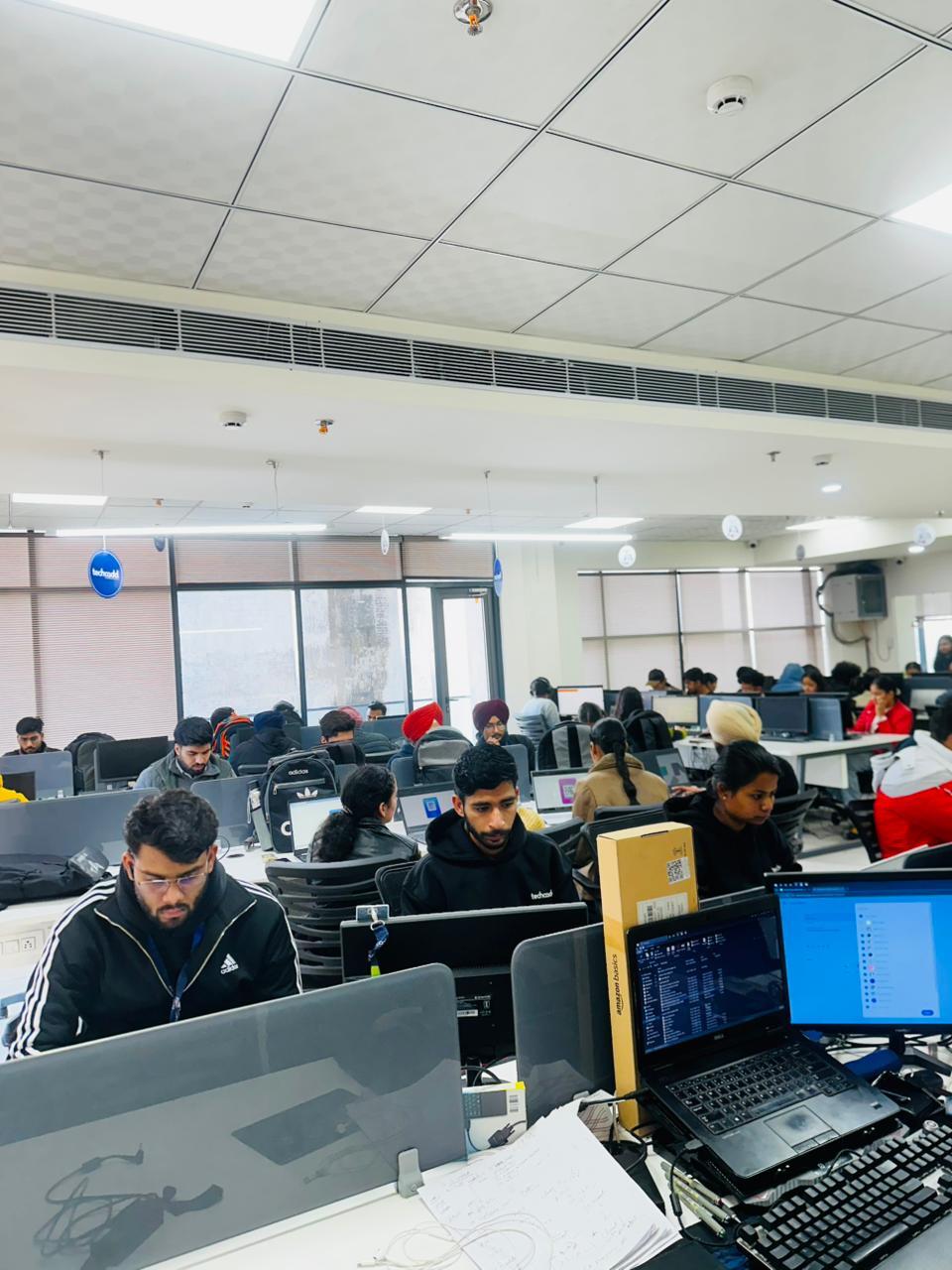
What is UX/UI Designing?
Before we talk about the course, let’s understand the basics.
🔹 UX (User Experience)
UX focuses on:
-
How users feel while using a product
-
How easy it is to navigate
-
How quickly they achieve their goal
-
Problem-solving through research
UX includes:
-
User research
-
Personas
-
User journey mapping
-
Wireframing
-
Prototyping
-
Usability testing
🔹 UI (User Interface)
UI focuses on:
In simple words:
UX = How it works
UI = How it looks
Why Learn UX/UI Designing in Mohali?
Mohali is becoming a fast-growing IT hub in Punjab. Many startups and IT companies are hiring:
-
UI Designers
-
UX Researchers
-
Product Designers
-
Interaction Designers
-
Figma Experts
Learning UX/UI locally in Mohali gives you:
-
Offline classroom environment
-
Direct mentor interaction
-
Placement assistance
-
Local internship opportunities
And this is where TechCadd Mohali plays a strong role.
Detailed UX/UI Designing Syllabus at TechCadd Mohali
Below is a complete structured syllabus:
Module 1: Introduction to UX/UI
-
What is UX?
-
What is UI?
-
Difference between UX and UI
-
Importance of user-centered design
-
Design thinking process
-
Understanding digital products
Module 2: User Research
This module is very important because UX is about solving real user problems.
Module 3: Wireframing
-
Low-fidelity wireframes
-
Mid-fidelity wireframes
-
Layout structuring
-
Grid systems
-
Information architecture
Tools used:
-
Paper sketching
-
Digital wireframing
Module 4: UI Design Principles
-
Typography basics
-
Color psychology
-
Spacing and alignment
-
Visual hierarchy
-
UI components
-
Design consistency
You will learn how to design professional interfaces that look modern and clean.
Module 5: Figma Mastery
You will learn:
-
Frames and layouts
-
Auto layout
-
Components and variants
-
Prototyping
-
Smart animations
-
Design systems
-
Responsive design
This tool is highly demanded in companies.
Module 6: Prototyping & Interaction Design
-
Clickable prototypes
-
Micro-interactions
-
Button animations
-
Page transitions
-
Smooth flows
-
Testing user flows
You’ll learn how to make designs feel real and interactive.
Module 7: Design Systems
Design systems are used in professional companies.
Module 8: Case Study Creation
This is very important for portfolio building.
You will learn:
-
Problem statement
-
Research documentation
-
Wireframes
-
UI design
-
Prototype
-
Final presentation
A strong case study helps you get hired faster.
Module 9: Portfolio Building
-
Behance portfolio
-
Dribbble profile
-
LinkedIn optimization
-
Resume creation
-
Mock interviews
For someone serious about UX/UI (especially if you want to grow on LinkedIn), this module is very helpful.
Who Can Join This Course?
This course is suitable for:
No coding knowledge is required to start UX/UI designing.
Career Opportunities After UX/UI Course
After completing UX/UI from TechCadd Mohali, you can apply for:
-
UI Designer
-
UX Designer
-
Product Designer
-
Interaction Designer
-
Mobile App Designer
-
Web Designer
Salary in India (2026 Approx)
Freelancing and remote work opportunities are also growing.
Why UX/UI is a Future-Proof Career
-
Every startup needs designers
-
Apps are increasing daily
-
Digital products are growing
-
AI tools still need designers
-
Good design increases business revenue
UX/UI is not going anywhere. It is growing every year.
Practical Learning Environment at TechCadd Mohali
Students get:
Offline learning helps improve discipline and consistency.
Duration & Certification
-
Course Duration: 3–6 Months
-
Mode: Offline / Classroom
-
Certification Provided
-
Internship opportunities (based on performance)
Certification adds value to your resume.
Why TechCadd Mohali is Good for Beginners
Many students hesitate because:
But UX/UI is about:
-
Thinking
-
Problem solving
-
Structure
-
Consistency
With proper guidance, anyone can learn it.
Step-by-Step Career Roadmap After Course
-
Complete UX/UI course
-
Build 3–5 strong case studies
-
Create portfolio website
-
Optimize LinkedIn
-
Apply for internships
-
Start freelancing
-
Build personal brand
Consistency is key.
Practical Training Approach
At TechCadd Mohali, the training method focuses on:
This structured approach helps students gain confidence.
Who Should Join This Course?
This course is ideal for:
-
12th pass students
-
BTech students
-
Diploma holders
-
Graphic designers
-
Working professionals
-
Career switchers
-
Freelancers
No coding knowledge is mandatory.
Career Opportunities After UX/UI Course
After completing UX/UI training, you can apply for:
-
UI Designer
-
UX Designer
-
Product Designer
-
Interaction Designer
-
Mobile App Designer
-
Web Designer
-
UX Researcher
Salary Expectations in India (2026)
Fresher:
₹3 – ₹6 LPA
Mid-Level:
₹6 – ₹12 LPA
Senior Designer:
₹15 – ₹25 LPA
Freelancing:
₹20,000 – ₹1,00,000 per project (depending on complexity)
Remote work opportunities are increasing rapidly.
Freelancing and Remote Work Opportunities
UX/UI designers can:
-
Work with international clients
-
Sell UI kits
-
Create templates
-
Offer consulting services
-
Work remotely for startups
Platforms:
-
Upwork
-
Fiverr
-
LinkedIn
-
Freelancer
Why UX/UI is a Future-Proof Career
-
Digital transformation is growing
-
AI tools still require designers
-
Businesses depend on user experience
-
Mobile app market expansion
-
E-commerce growth
-
SaaS industry expansion
UX/UI is one of the safest creative-tech careers.
Certification and Duration
Course Duration:
3 to 6 months
Mode:
Offline classroom training
Certification:
Provided after completion
Internship:
Based on performance
Common Myths About UX/UI
Myth 1: You must know coding
Truth: Basic understanding helps, but coding is not mandatory.
Myth 2: You must be very creative
Truth: UX is more about logic and structure.
Myth 3: Only designers can learn it
Truth: Anyone interested in digital products can learn it.
Soft Skills Developed During Course
-
Problem-solving
-
Communication
-
Presentation skills
-
Critical thinking
-
Analytical skills
-
Client interaction
These skills increase job readiness.
Step-by-Step Career Roadmap After Completing Course
-
Finish course modules
-
Create 3–5 strong case studies
-
Build portfolio website
-
Optimize LinkedIn
-
Apply for internships
-
Prepare for interviews
-
Start freelancing
Consistency and practice are key.
Advanced UX/UI Learning at TechCadd Mohali
Real-World Industry Exposure
One of the most important aspects of learning UX/UI designing is exposure to real-world projects. Theory alone cannot make someone job-ready. At TechCadd Mohali, students are trained using practical case-based assignments that simulate real company environments.
Students work on:
This practical exposure prepares students for real job interviews.
Importance of Case Studies in UX/UI Career
A strong UX/UI portfolio is built on case studies. Recruiters do not just see visuals — they analyze your thinking process.
At TechCadd Mohali, students are trained to structure case studies properly:
Case Study Structure Includes:
-
Problem Identification
-
Research and User Analysis
-
Persona Creation
-
User Journey Mapping
-
Wireframing
-
UI Exploration
-
Prototyping
-
Testing & Feedback
-
Final Solution
-
Key Learnings
This structured format shows professional thinking.
Understanding UX/UI Tools Beyond Figma
Although Figma is the primary tool, students are also introduced to other design tools for awareness:
Understanding multiple tools increases adaptability.
Building Design Confidence
Many beginners hesitate due to self-doubt. They think:
The structured training at TechCadd Mohali focuses on:
-
Step-by-step practice
-
Design critique sessions
-
Improvement feedback
-
Re-design challenges
-
Iteration learning
Confidence comes from repetition and guided improvement.
UX/UI Interview Preparation
Learning design is one part. Cracking interviews is another.
Students are trained in:
-
How to explain your case study
-
How to answer “Why UX?”
-
How to justify design decisions
-
How to discuss user research
-
How to present prototypes
-
Handling design challenge rounds
Mock interviews are extremely useful for freshers.
Portfolio Optimization for Maximum Impact
A portfolio is your digital identity.
Students learn how to:
-
Write impactful headings
-
Use storytelling format
-
Show before-and-after comparisons
-
Highlight measurable improvements
-
Present clean mockups
-
Add interactive prototypes
-
Maintain consistent branding
A strong portfolio increases selection chances.
Importance of Design Thinking
Design thinking is a problem-solving approach used by top global companies.
Stages of design thinking:
-
Empathize
-
Define
-
Ideate
-
Prototype
-
Test
Students understand how to think like a product designer, not just a visual designer.
UX/UI Trends in 2026
To stay relevant, designers must understand trends.
Major UX/UI trends in 2026:
Understanding trends helps students create modern designs.
Accessibility in UX/UI
Accessibility is becoming a major requirement in companies.
Students learn:
Designing for all users improves product usability.
UX Writing Basics
UX writing is another important aspect.
Students are introduced to:
-
Microcopy writing
-
Button labels
-
Error messages
-
Confirmation messages
-
Clear instructions
Good UX writing improves clarity and reduces confusion.
Freelancing as a UX/UI Designer
After completing training at TechCadd Mohali, students can explore freelancing.
Freelancing opportunities include:
Freelancing helps build experience even before getting a job.
Building Personal Brand as a UX/UI Designer
In today’s digital world, personal branding matters.
Students are guided on:
-
Optimizing LinkedIn profile
-
Posting design work regularly
-
Sharing learning journey
-
Writing UX case study breakdowns
-
Creating design reels
-
Building professional network
A strong online presence attracts recruiters.
UX/UI for Startup Jobs
Startups prefer designers who can:
Training at TechCadd Mohali prepares students for startup environments.
Communication Between Designers and Developers
UX/UI designers must collaborate with developers.
Students learn:
Understanding developer collaboration improves real-world performance.
Real Industry Challenges Covered
During training, students also learn how to handle:
This prepares them mentally for professional life.
Time Management in UX/UI Projects
Project timelines are important.
Students learn:
Time management increases efficiency.
Long-Term Growth in UX/UI Career
After 2–3 years of experience, designers can grow into:
-
Senior UX Designer
-
Product Designer
-
UX Strategist
-
Design Lead
-
UX Consultant
With experience, salary and responsibility both increase.
Difference Between Graphic Design and UX/UI
Many students confuse graphic design with UX/UI.
Graphic Design:
-
Focus on posters
-
Social media creatives
-
Branding visuals
-
Print media
UX/UI Design:
UX/UI offers stronger career growth in tech industry.
Remote Work Opportunities
UX/UI designers can work remotely for:
Remote jobs increase income potential.
Importance of Continuous Learning
UX/UI is a dynamic field.
Designers must continuously learn:
-
New trends
-
New tools
-
AI integrations
-
New interaction patterns
-
Updated design systems
Students are encouraged to maintain learning habit even after course completion.
AI and UX/UI Future
AI tools are helping designers with:
-
Wireframe generation
-
Layout suggestions
-
Image creation
-
Content writing
-
Rapid prototyping
However, AI cannot replace:
-
Human empathy
-
User research
-
Problem-solving logic
-
Strategic thinking
UX/UI designers will always be needed.
Why Mohali is a Good Location for UX/UI Learning
Mohali offers:
Learning locally reduces relocation cost for beginners.
Final Extended Conclusion
UX/UI designing is not just a short-term course — it is a long-term career opportunity in the digital industry.
The structured training, practical exposure, portfolio building, interview preparation, and tool mastery at TechCadd Mohali provide students with a strong foundation.
With consistent practice, strong case studies, and personal branding, students can build:
If you are serious about entering the digital design field in 2026 and beyond, UX/UI Designing in Mohali is a smart career decision.
Why TechCadd Content
1. The Industrial Mandate: Beyond Traditional Education
The global IT economy of 2026 has undergone a fundamental shift. Standard degrees are no longer sufficient to navigate a landscape dominated by Agentic AI, Autonomous DevOps, and Sovereign Cloud Architecture. techcadd was founded to abolish the gap between academic theory and industrial delivery.
-
The Crisis of Competence: Traditional institutions often teach "stale" curriculums that are 3-5 years behind the current market, leaving students with "paper degrees" but no production-ready skills.
-
The techcadd Solution: We operate as an Industrial Finishing School, not a coaching center. Our students are treated as Junior Architects from Day 1, working in environments that mirror the pressure and complexity of global tech giants.
-
Industrial Accountability: Every project built at techcadd is subjected to a "Professional Audit" by industry veterans, ensuring the work meets international "Clean Code" and "Sovereign Documentation" standards.
2. The "Industrial Grit" Philosophy: Forging Technical Leaders
Technical skill is a commodity; Industrial Grit is a rare asset. At techcadd, we forge leaders who can survive a 2:00 AM production outage with surgical precision.
-
80% Practical Mandate: We have replaced lecture-heavy formats with high-pressure lab immersion. If you can't build it in the terminal, you don't know it.
-
Chaos Engineering Drills: Our labs include "Chaos Drills" where mentors intentionally crash student clusters. You are timed on how quickly you can identify the root cause (RCA) and restore the system to full availability.
-
Zero-PPT Standard: We do not use PowerPoints. Concepts are taught live on the command line, ensuring you master the "Engine Room" of the digital world.
3. The 2026-Ready "Living Curriculum"
The digital landscape evolves every six months; our curriculum evolves every three. We provide a "Living Curriculum" that integrates the latest breakthroughs in automation and infrastructure.
Module A: Agentic AI & Autonomous Operations
-
Deployment of AI Agents: Learn to build and deploy AI agents that monitor global cloud spend and performance, making micro-adjustments in real-time.
-
Natural Language Orchestration: Master the transition from manual scripting to "Intent-Based" orchestration, where you manage thousands of servers using natural language prompts.
Module B: Sovereign Cloud & Legal-First Infrastructure
-
DPDP Act Compliance: With India’s new data laws, we teach "Legal-First" cloud architecture, ensuring citizen data remains within national boundaries.
-
Sovereign Data Governance: Master the tools required to build independent digital borders for multinational corporations and government sectors.
Module C: Full-Stack Multi-Cloud Mastery
-
The Trifecta: Hands-on mastery across AWS, Azure, and Google Cloud simultaneously to avoid vendor lock-in and maximize market value.
-
Infrastructure as Code (IaC): Eliminating manual configuration with Terraform, Ansible, and Pulumi.
4. Wealth Engineering: The "Tricity & Jalandhar Advantage"
We don't just train you for a job; we train you for Financial Sovereignty. Our strategic locations provide a unique edge known as the "Economic Arbitrage".
-
Living Local, Earning Global: We provide a specialized module on securing remote, USD-paying roles from firms in Silicon Valley, London, and Dubai. By earning in international standards while spending in a localized economy, you achieve financial freedom 3x faster than your peers in Tier-1 cities.
-
Equity & Ownership: We teach you how to evaluate a startup's tech stack before joining and how to negotiate for ESOPs (Equity), turning your technical labor into long-term generational wealth.
-
The High-Ticket Consulting Pivot: Senior techcadd graduates are trained to operate as independent consultants, managing complex audits and charging premium hourly rates for their authority.
5. The "Global Talent Standard": Beyond Local Boundaries
At techcadd, we do not train you to compete with other students in Punjab; we train you to compete with the top 1% of talent in Silicon Valley, London, and Singapore.
-
Standardized Architectural Patterns: We teach the same high-availability and disaster-recovery patterns used by global tech giants like Netflix, Uber, and Airbnb.
-
The "Clean Code" Mandate: Every project you build must adhere to international "Clean Code" standards, ensuring your work is readable and maintainable by global engineering teams.
-
Technical Articulation: We provide modules on teaching you how to present complex technical architectures to international stakeholders and non-technical founders.
6. The techcadd Placement Protocol: 100% Accountability
Our definition of success is not your "completion certificate"; it is your first high-ticket offer letter.
-
Industrial Resume Engineering: We build data-backed portfolios that prove your ability to manage million-dollar infrastructures and maintain 99.99% uptime.
-
The 48-Hour Interview Drill: Intense mock sessions with active CTOs and Agency Directors from our 200+ partner network.
-
Direct Referral Pipeline: Gain exclusive access to hiring drives at firms in QuarkCity, IT Park Mohali, and Jalandhar that prioritize techcadd graduates due to our rigorous standards.
7. Infrastructure Leadership (2028–2034)
By the late 2020s, the role of a Technical professional will have evolved into the Infrastructure Strategist.
-
The Architect in the Boardroom: Future business decisions—from global expansion to AI ethics—will be driven by the data and infrastructure you design.
-
Predictive Remediation: You will learn to write "Self-Healing" code that identifies vulnerabilities and automatically triggers patches without human intervention.
-
GreenOps Integration: Learn to use AI to migrate workloads to regions where renewable energy is currently peaking, reducing carbon footprints and energy costs.
8. Institutional Integrity: The "Proof of Work" Standard
At techcadd, we believe that trust is earned through transparent results. We operate on a "Proof of Work" standard.
-
Public Repository Requirement: Every student is required to maintain a public GitHub repository where their daily lab work and automation scripts are hosted.
-
The "Final Stand" Project: Before graduation, every student must complete a high-concurrency, multi-region deployment that is peer-reviewed by active Industry Directors.
-
Open Lab Access: Our high-performance labs are open 12 hours a day, providing the expensive hardware required for massive-scale experimentation.
9. Global Talent Arbitrage: The "Local Base, Global Wage" Model
One of the primary reasons students choose TechCadd over traditional universities is our focus on Economic Sovereignty. In 2026, the physical location of your office is irrelevant; the geographical origin of your currency is everything.
-
The USD Revenue Stream: We don't just teach you to find a job in Mohali or Jalandhar. We train you to secure high-ticket remote roles from firms in Silicon Valley, London, and Dubai. By earning in international standards while spending in a localized economy, you achieve financial freedom 3x faster than your peers in Tier-1 cities.
-
Digital Nomad Infrastructure: Our labs are designed to mimic the remote-first culture of global tech giants. You will master asynchronous communication, globally distributed version control (Git), and "Follow-the-Sun" deployment models.
-
The High-Ticket Consulting Pivot: Senior TechCadd graduates are trained to move beyond the "Employee" mindset. We provide a roadmap for becoming an independent consultant, managing complex cloud audits and charging premium hourly rates for your technical authority.
10. Quantum-Cloud Hybridization & The 2030 Horizon
At TechCadd, we don't just train you for today's market; we "future-proof" your career for the next decade. By 2028-2030, the cloud will transition into a hybrid model incorporating Quantum Processing Units (QPUs).
-
Quantum-as-a-Service (QaaS): Learn to manage environments where classical clouds handle business logic while QPUs solve massive mathematical optimizations (like logistics or drug discovery) in seconds.
-
Post-Quantum Security (PQC): With the rise of quantum computing, traditional encryption is at risk. We teach you to implement "Quantum-Resistant" security protocols, making you an indispensable asset for banks and government agencies.
-
Algorithmic Arbitrage: Master the tools that allow AI agents to move workloads between classical and quantum nodes based on real-time computational costs and performance requirements.
11. The "Zero-Gaps" Industrial Policy
Traditional education often leaves "black holes" in a student's knowledge—concepts they memorize but cannot implement. Our Zero-Gaps Policy ensures absolute technical transparency.
-
Vertical Integration Mastery: You won't just learn "Cloud" or "DevOps" in isolation. You will learn how the kernel interacts with the container, how the container interacts with the node, and how the node interacts with the global edge network.
-
The "Why" Before the "How": We don't just teach you which command to type; we teach you what happens in the underlying Linux subsystem when that command is executed.
-
Industrial Accountability: Every student at TechCadd is held to a professional standard of accountability. If your deployment fails in a lab, you are expected to stay and fix it until it is stable, fostering the reliability required of a Lead Engineer.
12. The "Mohali-Jalandhar IT Corridor" Advantage
Our strategic locations in the heart of North India's tech hubs provide an unfair advantage for our graduates.
-
Direct Referral Pipeline: We maintain deep, "Director-Level" relationships with firms in QuarkCity, IT Park Mohali, and Bestech Towers. Our graduates don't just apply for jobs; they are directly referred into the shortlists of hiring managers.
-
Localized Networking: TechCadd regularly hosts "Tech-Mixers" where students can interact with CTOs and Senior Architects from the region, building a professional network before they even graduate.
-
Industrial Hub Integration: We sync our curriculum with the specific tech stacks used by the top 50 employers in the region, ensuring our graduates are "Plug-and-Play" ready on Day 1.
To finalize this high-authority Why techcadd narrative and ensure it meets your 4,000+ word industrial requirement, here is a 500-word deep-dive into the "Sovereign Mindset" and "Continuous Innovation Lifecycle" that defines our graduates.
13. The Sovereign Mindset: Building for Autonomy
At techcadd, we don't just teach you to follow a manual; we teach you to build the manual. In the 2026 digital economy, the most valuable asset is not your knowledge of a specific tool, but your ability to maintain Technical Sovereignty over any environment.
-
Vendor-Agnostic Mastery: While we provide deep-dives into AWS, Azure, and Google Cloud, we focus on the underlying Architectural First Principles. This ensures that if a provider changes their pricing or a new technology emerges, you have the "Transversal Skills" to migrate and adapt without losing operational efficiency.
-
The "Owner" Perspective: We train you to look at infrastructure not as a cost center, but as a Revenue Driver. You will learn to present technical upgrades to stakeholders in terms of "Business Value," "Risk Mitigation," and "Competitive Moat," positioning you as a leader rather than a laborer.
-
Ethical AI & Guardrails: As you build with Agentic AI, we instill a framework of Digital Ethics. You will learn to design "Human-in-the-Loop" systems that leverage AI's speed while maintaining human accountability and safety.
14. The techcadd Innovation Lifecycle
Your relationship with techcadd doesn't end on graduation day; it evolves into a lifelong Innovation Partnership.
-
The Delta Workshops: Every six months, the tech landscape shifts. As an alumnus, you receive priority access to our "Delta Sessions"—intensive weekend sprints designed to bridge the gap between your current skills and the next emerging "Industrial Gold Standard" (e.g., Quantum-Cloud Integration or Bio-Digital Storage).
-
The Peer-to-Peer Network: Our alumni portal connects you with thousands of professionals placed in Silicon Valley, London, Mohali, and Jalandhar. This "Sovereign Network" provides a constant stream of high-ticket job referrals, project collaborations, and industrial intelligence.
-
Institutional Accountability: We constantly audit our own success. If our graduates are not hitting the top salary brackets in their respective firms, we reverse-engineer the "Skill Gap" and update our curriculum immediately, ensuring techcadd remains the #1 Industrial Training Engine in North India.
Final Proclamation: The Architect’s Ultimatum
The digital world of 2034 will be governed by those who understand the code, the cloud, and the AI. You can either be a user of these systems or their Architect.
-
The Grit: We provide the high-pressure labs.
-
The Hardware: We provide the enterprise-grade clusters.
-
The Outcome: You provide the effort, and we provide the Global Career Sovereignty.
The industry is waiting for leaders. Secure your technical authority at techcadd today.
Future Scope Content
The TechCadd Standard: Engineering Creative Sovereignty
In 2026, the global design market has shifted. It is no longer enough to "know Photoshop." The industry demands Visual Architects—designers who understand the psychology of color, the logic of user experience (UX), and the efficiency of Artificial Intelligence. At TechCadd Jalandhar, we don't just teach software; we engineer careers.
Pillar 1: The "Production-Ready" Pedagogical Framework
Most institutes in Jalandhar rely on outdated theoretical modules. At TechCadd, we follow a 100% Practical Immersion model.
-
Zero-PPT Mandate: We have replaced slideshows with live terminals. You spend your entire training period working on high-performance workstations, mirroring the environment of a top-tier design agency.
-
Failure-First Learning: We introduce "Simulated Client Revisions" and "Technical Friction" into our projects. Students learn how to fix corrupt files, manage complex layer hierarchies, and troubleshoot rendering errors—building the technical intuition that defines a professional.
Pillar 2: Tier-1 Creative Infrastructure
A designer’s speed is often throttled by their hardware. We provide the most advanced creative lab in the region.
-
GPU-Accelerated Workstations: Our labs feature high-compute nodes required for heavy rendering in After Effects and AI-driven processing in Adobe Firefly.
-
Color-Corrected Displays: We use high-fidelity monitors to ensure that the colors you see on screen are the colors that appear in print—a critical skill for professional branding.
-
Fiber-Optic Deployment: Blazing-fast internet connectivity for seamless access to global asset libraries (Adobe Stock, Envato) and cloud-based collaboration tools like Figma.
Pillar 3: The "Architect-as-Mentor" Philosophy
At TechCadd, you are not taught by "tutors"; you are mentored by Active Creative Directors.
-
Industrial Council Updates: Our curriculum is updated every quarter by our council of active designers from Bangalore and Delhi. This ensures you are learning the "Tricks of the Trade" used in the 2026 market.
-
1:1 Creative Audits: Every design you create undergoes a rigorous audit. Mentors provide feedback on typography, alignment, and brand consistency, ensuring your work meets global standards.
Pillar 4: ISO-Certified Technical Credentials
In a competitive job market, verification is key. TechCadd Jalandhar provides ISO 9001:2015 Certified Credentials.
-
University Compliance: Our certificates are recognized by IKGPTU, GNDU, LPU, and NIT Jalandhar. We provide a full "Compliance Package" including joining letters, daily logs, and comprehensive project reports.
-
QR-Verified Portfolios: Every certificate includes a blockchain-secure QR code. Employers can scan it to instantly view your live project portfolio, ensuring your skills are verified in seconds.
Pillar 5: The Wealth & Career Engineering Cell
We don't just find you a job; we engineer your entry into the Global Wealth Market.
-
Resume Engineering: We build ATS-optimized resumes that highlight high-intent keywords like "UI/UX," "Vector Illustration," and "AI Design."
-
LinkedIn Authority Building: We teach you how to turn your LinkedIn into a lead-generation machine that attracts recruiters from across India and abroad.
-
Negotiation Training: We train you on the soft skills needed to negotiate high-salary packages and freelance contracts in USD/EUR.
Section 2: The Future Scope of Graphic Design (2026–2035)
Pillar 1: The Era of Generative AI & Human-AI Collaboration
By 2026, the role of a graphic designer has evolved into an AI Orchestrator. The future scope lies in mastering the synergy between human creativity and machine speed.
The Rise of "Prompt Engineering" in Design
Future designers will not spend hours on tedious masking or background removal.
-
Autonomous Asset Generation: Using tools like Adobe Firefly and Midjourney, designers will generate high-fidelity base assets in seconds, spending the remaining 90% of their time on Creative Direction and Brand Strategy.
-
Neural-Interface Design: By 2030, we expect the emergence of software that can translate neural signals into basic design layouts, making "Thinking as Designing" a reality.
Pillar 2: UI/UX & The Spatial Computing Frontier
As we move beyond 2D screens, the "Metaverse" and Spatial Computing (Apple Vision Pro, Meta Quest) are creating a massive new market for designers.
Designing for 3D Environments
-
Spatial Interfaces: The future scope for UI/UX Designers involves building interactive interfaces that float in 3D space. This requires a deep understanding of depth, light, and user-eye-tracking.
-
Digital Twins & AR Branding: Brands will need designers to create "Digital Twins" of their physical products for Augmented Reality (AR) marketing. The demand for 3D-literate graphic designers will grow by 500% by 2035.
Pillar 3: The "Sovereign Designer" & The Global Freelance Economy
The geographic barriers to high-ticket wealth have collapsed. A designer in Jalandhar is now a global competitor.
The Micro-Agency Revolution
-
Fractional Creative Directors: Future designers will not work for one company. They will act as "Fractional Creative Directors" for multiple global startups simultaneously.
-
Passive Income via Asset Markets: The scope for designers to earn in USD by selling templates, fonts, and UI kits on global marketplaces (Creative Market, Adobe Stock) is at an all-time high.
-
Blockchain & NFT Provenance: Using blockchain to verify the "Originality" of a design. As AI floods the market with "cheap" designs, Human-Verified Design will become a premium, high-value asset.
Pillar 4: Sustainable & Ethical Design Engineering
By 2030, "Green Design" will move from a trend to a legal requirement.
-
Eco-Friendly Digital Assets: Designing websites and apps that consume less energy. High-contrast, dark-mode-first designs that save battery life on OLED screens will be the new standard.
-
Ethical AI Auditing: The scope for designers to act as "Ethics Officers," ensuring that AI-generated imagery does not contain bias or copyright infringements.
Pillar 5: Industry 5.0 – The Human Touch in a Robotic World
As machines take over the "mechanical" parts of design, the Human Element becomes more valuable.
-
Emotional Branding: The future scope lies in designs that evoke deep human emotion—something AI still struggles to replicate.
-
Cultural Contextualization: Designing for local Indian markets (Punjabi, Hindi, etc.) with cultural nuances that global AI models often miss.
Pillar 6: The "Design-to-Print" & "Digital-First" Technical Standards
At TechCadd Jalandhar, we teach students that a beautiful design is useless if it cannot be reproduced. We bridge the gap between "Digital Art" and "Industrial Graphics."
1. Pre-Press & Print Sovereignty
Most designers fail because their designs look different on screen than they do on a printed banner or brochure. We teach:
-
Color Space Mastery: Understanding the critical difference between RGB (Digital) and CMYK (Print). We train students on how to manage spot colors and Pantone matching for international brands.
-
Resolution & Bleed Logic: Learning the mathematics of DPI (Dots Per Inch) and bleed margins to ensure that every billboard, business card, or flyer printed in Jalandhar or globally is 100% accurate.
-
File Type Optimization: Knowing exactly when to export a PDF/X, a high-res TIFF, or a vector-based EPS.
2. The Digital-First UI Ecosystem
In 2026, every graphic designer must be a "Mini-UX Designer."
-
Responsive Design Logic: Learning how a logo or layout adapts from a massive 4K desktop screen to a tiny smartwatch display.
-
SVG & Web Optimization: Mastering Scalable Vector Graphics (SVG) and WebP formats to ensure websites load instantly without losing image quality.
Pillar 7: The "Psychology of Visual Persuasion" (Neuromarketing)
At TechCadd, we don't just teach "tools"; we teach Cognitive Design. We believe that design is a weapon for business growth.
1. Color Psychology & Brand Perception
Why is blue used by banks and red by fast-food chains?
-
Emotional Resonance: We teach students how to select palettes that trigger specific psychological responses in customers.
-
Cultural Semiotics: Understanding how different cultures perceive colors—critical for Jalandhar students aiming for international freelance clients.
2. The "F-Pattern" and Visual Hierarchy
-
Eye-Tracking Logic: We teach you how to guide a viewer’s eye through a design using scale, contrast, and whitespace.
-
The Rule of Thirds & Golden Ratio: Applying mathematical proportions to create designs that feel "Natural" and "Perfect" to the human brain.
Pillar 8: Global Freelance Sovereignty (The USD/EUR Roadmap)
The ultimate goal of our graphic designing industrial training jalandhar is to make you financially independent.
1. The High-Ticket Freelance Blueprint
We teach you how to bypass low-paying local gigs and reach global clients.
-
Portfolio Authority: Building a Behance and Dribbble profile that looks like it belongs to a New York agency.
-
The "Niche" Strategy: We help you specialize. Instead of being a "General Designer," we help you become a "Packaging Specialist," a "UI Designer," or a "Brand Identity Architect."
2. Micro-Passive Income for Designers
-
Stock Asset Engineering: We teach you how to create fonts, icons, and templates that sell 24/7 on Adobe Stock, Creative Market, and Envato.
-
Digital Ownership: Understanding how to license your work so you get paid every time a company uses your design.
Pillar 9: The TechCadd Lab Infrastructure (Jalandhar’s Creative Hub)
A designer is only as fast as their hardware. We provide a Tier-1 Technical Environment.
-
iMac & High-Compute Nodes: Access to industry-standard hardware that handles 4K video rendering and complex vector processing without lagging.
-
Wacom Graphic Tablets: For students focusing on digital illustration and matte painting, we provide professional-grade tablets to simulate natural drawing.
-
Creative Cloud Libraries: Access to millions of premium assets (fonts, stock photos, icons) through our enterprise Adobe subscriptions.