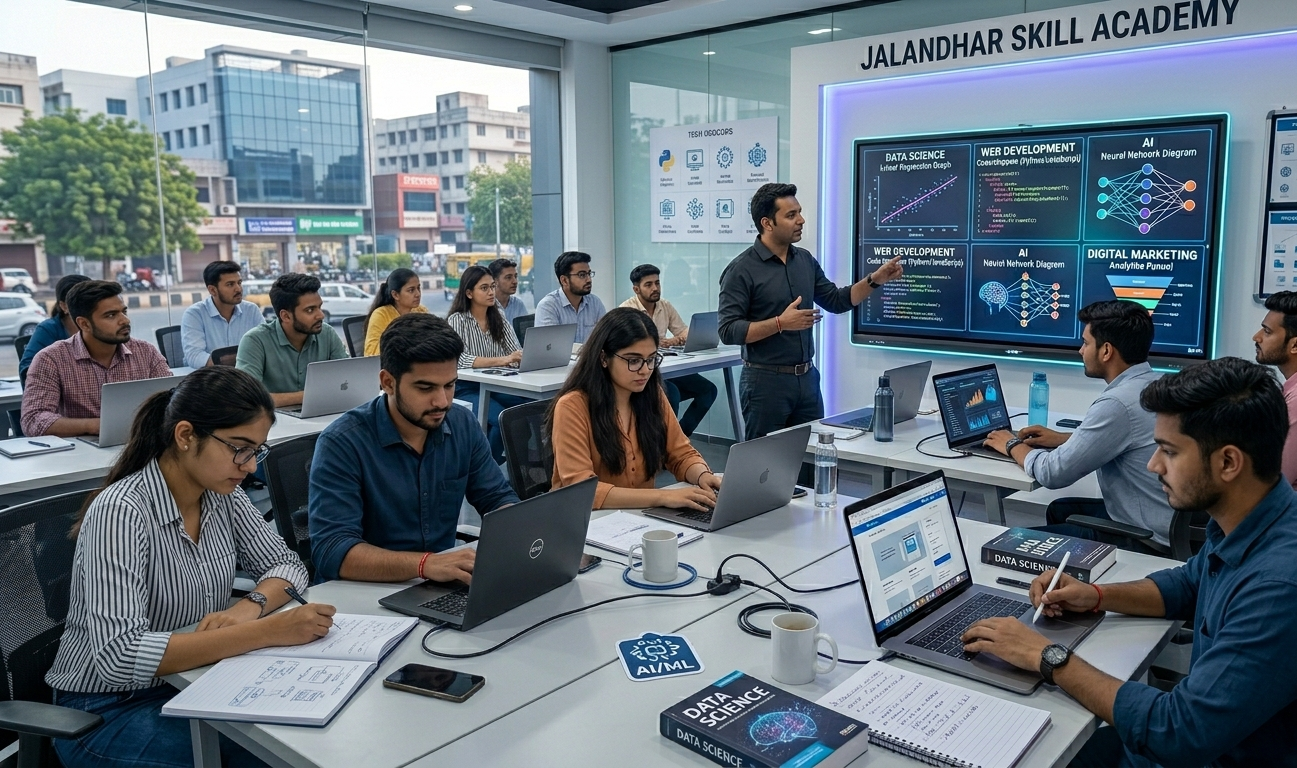
Course Overview – Best Industry Training Institute in Jalandhar
An industry training course is designed to bridge the gap between academic education and real-world job requirements. In a rapidly evolving job market, especially in a developing education hub like Jalandhar, such courses are becoming essential for students and professionals who want to gain practical skills, industry exposure, and job-ready expertise. A well-structured course offered by a reputed institute such as TechCadd Jalandhar focuses on hands-on learning, live projects, and skill development aligned with current industry standards.
This course overview provides a comprehensive understanding of how industry training programs are structured, what they include, and how they help learners build successful careers in various technical and non-technical domains.
Introduction to the Course
The industry training course is a professional program aimed at equipping students with practical knowledge and real-time experience in their chosen field. Unlike traditional academic courses, which are mostly theory-based, this course emphasizes applied learning, allowing students to work on real-life projects and case studies.
The course is suitable for:
- College students (B.Tech, BCA, MCA, B.Sc, etc.)
- Fresh graduates
- Working professionals looking to upskill
- Entrepreneurs seeking technical knowledge
The main goal of the course is to prepare learners for real-world challenges and ensure they are job-ready by the end of the training.
Course Objectives
The primary objectives of the industry training course include:
1. Skill Development
To provide in-depth knowledge of technical tools, technologies, and methodologies used in the industry.
2. Practical Exposure
To give students hands-on experience through live projects, assignments, and simulations.
3. Career Preparation
To prepare students for job roles through interview training, resume building, and soft skills development.
4. Industry Readiness
To make learners familiar with real work environments, team collaboration, and problem-solving techniques.
Course Structure
The course is divided into multiple phases to ensure systematic learning and gradual skill enhancement.
Phase 1: Foundation Level
This phase focuses on building basic concepts and fundamentals.
Topics covered:
- Introduction to the domain (IT, Data Science, Digital Marketing, etc.)
- Basic programming (Python, C++, or Java)
- Understanding tools and technologies
- Logical thinking and problem-solving
Students gain a strong base that helps them understand advanced concepts later in the course.
Phase 2: Intermediate Level
At this stage, learners dive deeper into technical subjects.
Topics include:
- Advanced programming concepts
- Working with databases
- Introduction to frameworks and tools
- Data handling and processing
Students start working on mini-projects to apply their knowledge.
Phase 3: Advanced Level
This phase focuses on specialization and real-world application.
Key components:
- Advanced tools and technologies
- Industry case studies
- Project-based learning
- Real-time problem-solving
Students gain expertise in their chosen domain and begin working on complex projects.
Phase 4: Project & Internship Phase
This is the most important phase of the course.
Students:
- Work on live industry projects
- Participate in internships
- Build portfolios
- Solve real business problems
This phase ensures that students gain actual work experience before entering the job market.
Key Domains Covered
Industry training institutes in Jalandhar offer courses across multiple domains to cater to diverse career interests.
1. Data Science & Analytics
This domain focuses on extracting insights from data.
Topics covered:
- Python programming
- Data analysis
- Data visualization (Tableau, Power BI)
- Machine learning algorithms
- Statistics and probability
Students work on real datasets to understand data-driven decision-making.
2. Artificial Intelligence & Machine Learning
AI is one of the fastest-growing fields globally.
Course modules include:
- Supervised and unsupervised learning
- Neural networks
- Deep learning
- Natural Language Processing (NLP)
Learners build intelligent systems and predictive models.
3. Web Development
This course teaches how to build websites and web applications.
Topics include:
- HTML, CSS, JavaScript
- Frontend frameworks (React, Angular)
- Backend development (Node.js, PHP)
- Database integration
Students create fully functional websites and applications.
4. Digital Marketing
Digital marketing courses focus on online business growth strategies.
Modules include:
- Search Engine Optimization (SEO)
- Social Media Marketing (SMM)
- Pay-Per-Click Advertising (PPC)
- Content marketing
Students learn how to promote brands and generate leads online.
5. Cloud Computing
Cloud computing is essential for modern IT infrastructure.
Topics covered:
- AWS, Azure, Google Cloud
- Cloud architecture
- Deployment and management
- Security in cloud computing
Students learn how to manage cloud-based systems.
6. Cyber Security
This course focuses on protecting systems and data.
Modules include:
- Ethical hacking
- Network security
- Threat analysis
- Risk management
Students learn how to prevent cyber attacks and secure digital assets.
Teaching Methodology
The teaching approach is what makes industry training courses highly effective.
1. Practical Learning Approach
- Hands-on sessions
- Lab-based training
- Real-time problem-solving
2. Project-Based Learning
Students work on:
- Live projects
- Case studies
- Industry assignments
3. Interactive Classes
- Doubt-solving sessions
- Group discussions
- Peer learning
4. Continuous Assessment
- Weekly tests
- Assignments
- Performance tracking
Tools and Technologies Used
Students get exposure to the latest tools used in the industry:
- Python, R
- SQL databases
- Tableau, Power BI
- TensorFlow, Scikit-learn
- Git and GitHub
- AWS and Azure
This ensures that learners are familiar with real-world tools.
Certification
Upon completion of the course, students receive a certification that validates their skills.
Benefits of certification:
- Adds value to resume
- Recognized by employers
- Improves job prospects
Internship Opportunities
Many institutes offer internship programs as part of the course.
Benefits:
- Real work experience
- Industry exposure
- Networking opportunities
- Better job chances
Students often get the opportunity to work with real companies during their training.
Placement Assistance
Placement support is a key feature of industry training courses.
Services include:
- Resume preparation
- Mock interviews
- Job referrals
- Career counseling
Institutes like TechCadd Jalandhar provide dedicated placement support to help students secure jobs.
Soft Skills Training
Apart from technical skills, students also develop soft skills such as:
- Communication skills
- Teamwork
- Time management
- Leadership
These skills are essential for professional success.
Course Duration
The course duration varies based on the level of training:
- Short-term: 4–6 weeks
- Medium-term: 3 months
- Long-term: 6 months
Students can choose the duration based on their goals.
Learning Outcomes
By the end of the course, students will:
- Have strong technical knowledge
- Gain practical experience
- Build a professional portfolio
- Be job-ready
Who Should Enroll?
This course is ideal for:
- Students looking for career-oriented training
- Freshers seeking job opportunities
- Professionals wanting to upgrade skills
- Entrepreneurs exploring technical domains
Advantages of Industry Training in Jalandhar
- Affordable fees
- Quality education
- Growing job opportunities
- Access to experienced trainers
Jalandhar is becoming a major hub for skill-based training.
Career Opportunities After Course
After completing the course, students can pursue roles such as:
- Data Analyst
- Software Developer
- AI Engineer
- Digital Marketer
- Cloud Engineer
- Cyber Security Analyst
Future Scope
The demand for skilled professionals is increasing rapidly.
Key trends:
- Growth of AI and automation
- Expansion of digital businesses
- Increasing reliance on data
Industry training courses will continue to be highly valuable in the future.
To further enhance the value of an industry training course, modern institutes in Jalandhar are increasingly integrating advanced learning strategies and career-focused modules that go beyond traditional classroom teaching. These additions ensure that students not only gain technical knowledge but also develop a strong professional mindset required in today’s competitive environment.
One of the key enhancements in such courses is the inclusion of real-time industry simulations. These simulations are designed to replicate actual workplace scenarios where students are assigned tasks similar to those performed in companies. For example, a data science student may be required to analyze business data and present actionable insights, while a web development student may be tasked with creating a complete client-based website from scratch. This type of immersive learning helps students understand deadlines, client expectations, and teamwork dynamics.
Another important aspect is the focus on portfolio development. A strong portfolio is essential for showcasing skills to potential employers. During the course, students are guided step-by-step to build professional portfolios that include:
- Live projects
- Case studies
- GitHub repositories
- Personal websites
This portfolio becomes a powerful tool during job interviews, allowing candidates to demonstrate their practical expertise rather than just theoretical knowledge.
Additionally, industry training programs now emphasize continuous mentorship and personalized guidance. Instead of a one-size-fits-all approach, trainers closely monitor each student’s progress and provide tailored support based on their strengths and weaknesses. This ensures that every learner progresses at their own pace and gains a deep understanding of the subject.
Another valuable component is exposure to industry tools and workflows. Students are trained to use tools that are widely adopted in professional environments, such as project management software, version control systems, and collaborative platforms. This familiarity helps them transition smoothly into corporate roles without facing a steep learning curve.
Furthermore, institutes often organize workshops, seminars, and guest lectures conducted by industry experts. These sessions provide insights into the latest trends, technologies, and career opportunities. Students also get the chance to interact with professionals, ask questions, and gain clarity about their career paths.
The course also includes mock interviews and job readiness programs, which are crucial for building confidence. These sessions simulate real interview environments, helping students improve their communication skills, technical knowledge, and problem-solving abilities. Feedback from trainers allows students to identify areas of improvement and refine their performance.
In addition, many training institutes focus on entrepreneurship development. Students who wish to start their own business or freelance career are guided on how to:
- Build a brand
- Acquire clients
- Manage projects
- Scale their services
This opens up alternative career paths beyond traditional employment.
Lastly, the course encourages a culture of continuous learning and adaptability. With technology evolving rapidly, students are trained to stay updated with new tools, frameworks, and industry practices. This mindset ensures long-term career growth and sustainability.
Overall, these additional components make industry training courses in Jalandhar more comprehensive, practical, and aligned with real-world demands, ultimately helping students achieve both immediate job placement and long-term career success.
Why Choose Techcadd – Your Gateway to Industry Success
In today’s fast-evolving digital world, choosing the right training institute is one of the most important decisions for building a successful career. With countless options available, students often struggle to identify an institute that not only teaches theoretical concepts but also prepares them for real-world industry challenges. This is where Techcadd stands out as a trusted name in professional and industry-oriented training in Jalandhar.
Techcadd has built a strong reputation for delivering high-quality education, practical exposure, and career-focused training programs. Whether you are a beginner, a college student, or a working professional looking to upgrade your skills, Techcadd provides the perfect environment to learn, grow, and succeed.
1. Industry-Oriented Training Approach
One of the biggest reasons to choose Techcadd is its industry-focused curriculum. Unlike traditional institutes that rely heavily on theoretical teaching, Techcadd emphasizes practical learning and real-world application.
The courses are carefully designed to match current industry demands, ensuring that students learn the most relevant tools, technologies, and techniques. From data science and artificial intelligence to web development and digital marketing, every program is structured to prepare students for real job roles.
Students are not just taught “what” to do but also “how” and “why” — helping them develop a deep understanding of concepts.
2. Experienced and Professional Trainers
At Techcadd, learning is guided by highly experienced trainers who have strong industry backgrounds. These instructors bring real-world knowledge into the classroom, making learning more practical and relatable.
Instead of focusing only on textbook knowledge, trainers share:
- Real industry case studies
- Practical problem-solving techniques
- Insights from actual projects
- Career guidance and mentorship
This ensures that students gain not just knowledge, but also the confidence to apply it in real-life scenarios.
3. Hands-On Practical Learning
Techcadd strongly believes that practical experience is the key to mastering any skill. That’s why every course includes extensive hands-on training.
Students work on:
- Live projects
- Real-time assignments
- Case studies
- Industry-based problem-solving tasks
This practical exposure helps students build a strong portfolio, which is essential for job placement.
Instead of passive learning, Techcadd promotes active participation, ensuring students are job-ready by the end of the course.
4. Wide Range of Career-Oriented Courses
Techcadd offers a diverse range of courses designed to meet the needs of different career paths. Some of the popular domains include:
- Data Science & Data Analytics
- Artificial Intelligence & Machine Learning
- Web Development (Frontend & Backend)
- Digital Marketing
- Graphic Designing
- Software Development
- Python Programming
- UI/UX Design
This variety allows students to choose a career path that aligns with their interests and goals.
5. Job-Oriented Training Programs
One of the most important factors students consider while choosing an institute is job placement. Techcadd focuses heavily on job-oriented training, ensuring that students are fully prepared for employment.
The institute provides:
- Resume building sessions
- Interview preparation
- Mock interviews
- Soft skills training
- Personality development
Students are trained not just technically but also professionally, helping them succeed in interviews and workplace environments.
6. Strong Placement Assistance
Techcadd provides dedicated placement assistance to help students kickstart their careers. The institute has connections with various companies and startups, increasing the chances of placement opportunities.
Placement support includes:
- Job referrals
- Interview scheduling
- Career counseling
- Internship opportunities
Many students have successfully secured jobs in reputed companies after completing their training at Techcadd.
7. Modern Infrastructure and Learning Environment
A good learning environment plays a crucial role in student success. Techcadd offers modern infrastructure and a professional training environment.
Key features include:
- Well-equipped computer labs
- High-speed internet
- Smart classrooms
- Latest software and tools
- Comfortable learning spaces
This creates an atmosphere that encourages focus, creativity, and innovation.
8. Flexible Learning Options
Techcadd understands that students have different schedules and commitments. That’s why it offers flexible learning options.
Students can choose:
- Weekday batches
- Weekend batches
- Online and offline classes
This flexibility makes it easier for college students and working professionals to learn without disrupting their routine.
9. Affordable Fee Structure
Quality education should be accessible to everyone. Techcadd offers affordable courses with high value, making it a great choice for students from different backgrounds.
The institute ensures that students receive:
- High-quality training
- Practical exposure
- Career support
— all at reasonable pricing.
10. Focus on Skill Development
Techcadd goes beyond traditional teaching by focusing on complete skill development.
Students are trained in:
- Technical skills
- Analytical thinking
- Problem-solving
- Communication skills
- Team collaboration
This holistic approach ensures that students are not just skilled but also industry-ready professionals.
11. Real-Time Project Experience
One of the standout features of Techcadd is its emphasis on real-time project work.
Students get the opportunity to work on projects that simulate real industry challenges. This helps them:
- Understand real workflows
- Gain confidence
- Build a strong portfolio
- Impress recruiters
Practical project experience gives Techcadd students a competitive edge in the job market.
12. Updated Curriculum with Latest Technologies
Technology is constantly evolving, and staying updated is essential. Techcadd regularly updates its curriculum to include the latest tools and technologies.
Students learn:
- Trending programming languages
- Modern frameworks
- Industry tools
- Emerging technologies
This ensures they remain relevant and competitive in the job market.
13. Personalized Attention to Students
Unlike large institutions where students often get lost in the crowd, Techcadd focuses on personalized learning.
Trainers provide:
- Individual attention
- Doubt-clearing sessions
- One-on-one guidance
- Progress tracking
This helps students learn more effectively and confidently.
14. Supportive Learning Community
Techcadd fosters a supportive and collaborative environment where students can learn and grow together.
Students benefit from:
- Peer learning
- Group discussions
- Team projects
- Networking opportunities
This community-driven approach enhances the overall learning experience.
15. Certification and Career Recognition
After completing a course, students receive a professional certification from Techcadd.
This certification:
- Validates their skills
- Enhances their resume
- Improves job prospects
It acts as proof of their expertise in their chosen field.
16. Continuous Learning and Growth
Techcadd encourages students to adopt a mindset of continuous learning.
Even after course completion, students are guided on:
- Advanced learning paths
- Industry trends
- Career growth strategies
This ensures long-term success in their careers.
17. Proven Track Record of Success
Over the years, Techcadd has trained numerous students who are now working in various industries.
Its success is reflected in:
- Student achievements
- Positive reviews
- Successful placements
- Strong reputation
This makes Techcadd a trusted choice for career-focused training.
18. Bridging the Gap Between Education and Industry
One of the biggest challenges students face is the gap between academic learning and industry requirements. Techcadd effectively bridges this gap by:
- Providing practical exposure
- Teaching real-world skills
- Preparing students for job roles
This ensures that students are not just educated but truly employable.
19. Strong Focus on Career Transformation
Techcadd is not just a training institute; it is a platform for complete career transformation. Many students join with little or no technical background, but through structured training and consistent support, they evolve into confident professionals ready to take on industry roles.
The institute focuses on transforming:
- Beginners into skilled professionals
- Students into job-ready candidates
- Job seekers into confident interview performers
This transformation-oriented approach makes Techcadd different from traditional institutes that only focus on course completion.
20. Exposure to Real Industry Tools and Platforms
Another key advantage of choosing Techcadd is the exposure to real industry tools and platforms. Students are trained using the same software and technologies that professionals use in top companies.
This includes:
- Data visualization tools
- Programming environments
- Marketing platforms
- Development frameworks
Learning these tools helps students adapt quickly to professional environments and reduces the learning curve when they start working.
21. Emphasis on Practical Problem-Solving
In the modern job market, employers value candidates who can solve real problems rather than just recall theoretical knowledge. Techcadd places a strong emphasis on problem-solving skills.
Students are trained to:
- Analyze real-world scenarios
- Break down complex problems
- Develop logical solutions
- Apply critical thinking
This practical approach ensures that students are not just learners but thinkers and innovators.
22. Regular Assessments and Performance Tracking
Techcadd ensures consistent student progress through regular assessments and performance evaluations.
These include:
- Weekly tests
- Assignments
- Project reviews
- Practical evaluations
This system helps students identify their strengths and areas for improvement, ensuring continuous growth throughout the course.
23. Internship Opportunities for Real Experience
To further enhance practical exposure, Techcadd also provides internship opportunities. These internships allow students to work in a real or simulated professional environment.
Benefits of internships include:
- Hands-on industry experience
- Exposure to real workflows
- Improved confidence
- Stronger resumes
Internships act as a bridge between learning and employment, making students more attractive to recruiters.
24. Soft Skills and Personality Development
Technical skills alone are not enough to succeed in today’s professional world. Techcadd focuses equally on soft skills and personality development.
Students are trained in:
- Communication skills
- Presentation skills
- Teamwork and collaboration
- Time management
- Professional etiquette
This ensures that students are well-rounded professionals who can perform effectively in any workplace.
25. Continuous Support Even After Course Completion
One of the standout qualities of Techcadd is its commitment to students even after they complete their courses. The institute provides post-training support, ensuring long-term success.
This includes:
- Career guidance
- Job updates
- Doubt sessions
- Skill upgrade recommendations
Students can stay connected with trainers and mentors, making Techcadd a lifelong learning partner rather than just a short-term institute.
26. High Student Satisfaction and Positive Feedback
Techcadd has earned a strong reputation due to high student satisfaction levels. Many students recommend the institute to others based on their positive experiences.
The feedback often highlights:
- Quality of teaching
- Practical training
- Supportive environment
- Career growth opportunities
This trust and credibility make Techcadd a preferred choice among students in Jalandhar.
27. Future-Ready Learning Approach
Techcadd prepares students not just for today’s jobs but also for future career opportunities. With the rise of emerging technologies, the institute ensures students stay ahead of the curve.
Students are introduced to:
- AI and automation trends
- Data-driven decision making
- Digital transformation concepts
- Future job roles
This forward-thinking approach ensures long-term career stability and growth.