Career Oriented Courses in Jalandhar — Course Overview
Introduction
In the modern professional landscape, success is increasingly determined by practical skills, adaptability, and real-world competence rather than academic qualifications alone. Industries are evolving rapidly due to technological advancement, digital transformation, automation, and globalization. As a result, there is a growing demand for professionals who are not just educated but are truly job-ready.
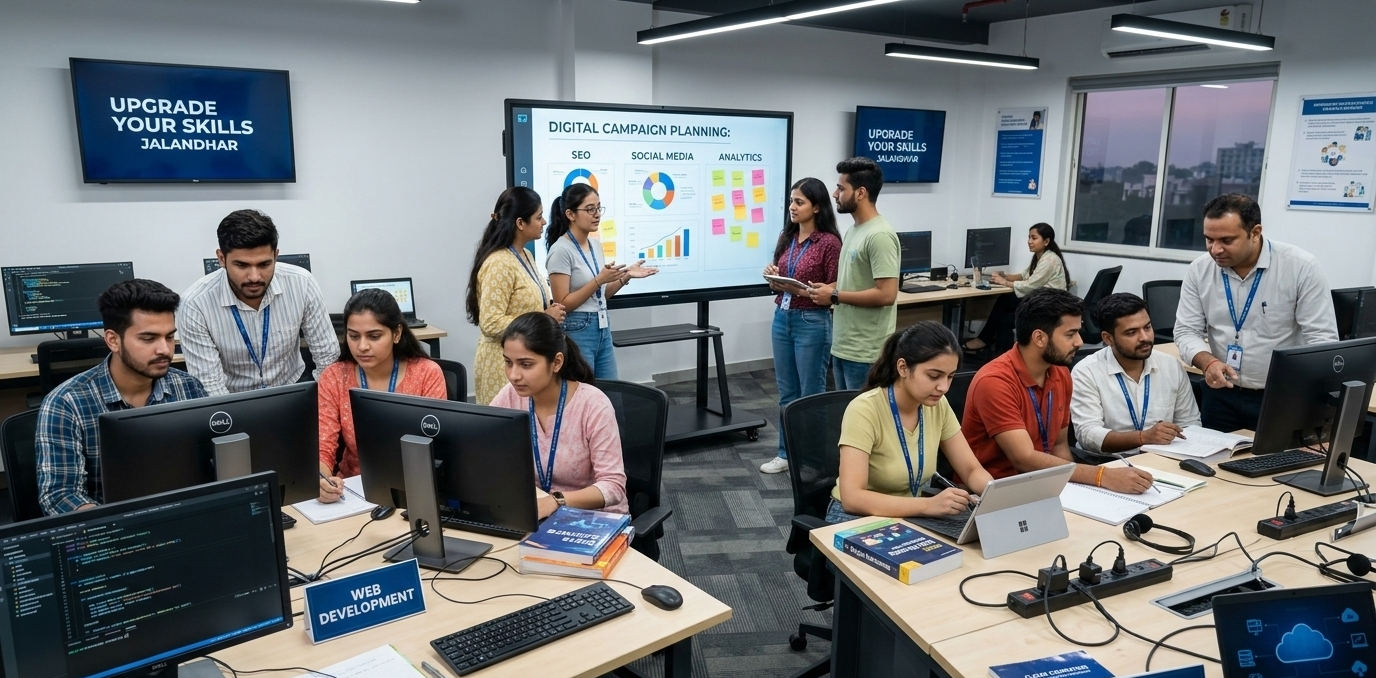
Career Oriented Courses in Jalandhar are designed specifically to meet this demand. These programs focus on equipping learners with industry-relevant skills, hands-on training, professional certifications, and practical exposure that directly translate into employment and career growth opportunities.
Jalandhar has emerged as one of Punjab’s most prominent centers for professional education and skill development. With its expanding industrial base, growing startup ecosystem, and increasing demand for skilled professionals, the city offers an ideal environment for career-focused learning.
Course Vision & Mission
Vision
To empower students and professionals with practical skills, industry knowledge, and career confidence that enable them to succeed in competitive job markets.
Mission
-
To bridge the gap between education and employment
-
To provide hands-on, industry-aligned training
-
To nurture technical competence and professional discipline
-
To develop confident, skilled, and employable professionals
Why Career Oriented Education Matters
Traditional education emphasizes theoretical knowledge, but employers look for candidates who can perform real tasks efficiently. Career oriented programs solve this gap by focusing on:
These courses prepare students to contribute productively from their very first job.
Who Should Enroll
Career oriented programs are ideal for:
Students After 10th or 12th
Learners who want early employability through diplomas and vocational skills.
College Students
Undergraduates seeking practical certifications alongside degrees.
Graduates & Job Seekers
Individuals aiming to strengthen resumes with professional expertise.
Working Professionals
Employees looking to upgrade skills or switch career paths.
Entrepreneurs & Freelancers
Aspiring business owners and independent professionals seeking skill mastery.
Course Categories & Specializations
Career oriented courses cover diverse high-demand industries.
1. Information Technology & Digital Careers
Technology drives modern economies. IT-focused courses prepare students for fast-growing digital professions.
Specializations Include:
-
Programming & Software Development
-
Web Design & Full Stack Development
-
Mobile App Development
-
Data Science & Analytics
-
Artificial Intelligence & Machine Learning
-
Cybersecurity & Ethical Hacking
-
Cloud Computing & DevOps
-
UI/UX & Product Design
-
Digital Marketing & SEO
-
Graphic Design & Multimedia
Learning Approach:
-
Coding labs
-
Live application development
-
Website deployment projects
-
Real digital campaigns
-
Data analysis assignments
Career Roles:
Software Developer, Data Analyst, Web Developer, Cybersecurity Specialist, Digital Marketing Executive, UI/UX Designer.
2. Business, Finance & Management Programs
Business-oriented training builds corporate and entrepreneurial skills.
Programs Include:
-
Professional Accounting
-
GST & Taxation
-
Tally & Financial Software
-
SAP & ERP Systems
-
Banking & Financial Services
-
Business Administration
-
Retail Management
-
Sales & Marketing Management
-
Human Resource Management
Practical Training:
Career Options:
Accountant, GST Consultant, Banking Executive, Business Analyst, HR Executive, Operations Manager.
3. Creative Design & Media Programs
The digital content revolution has created high demand for creative professionals.
Specializations:
-
Graphic Design
-
Animation & Visual Effects
-
Video Editing & Film Production
-
Photography & Visual Storytelling
-
UI/UX & Web Graphics
-
Branding & Advertising Design
-
Social Media Content Creation
Hands-On Training:
Career Paths:
Graphic Designer, Animator, Video Editor, Content Creator, Branding Specialist.
4. Vocational & Skill Development Programs
Vocational training emphasizes practical skills for direct employment.
Major Fields:
-
Fashion Designing
-
Beauty & Wellness
-
Cosmetology & Makeup
-
Healthcare & Medical Lab Technology
-
Hotel & Hospitality Management
-
Travel & Tourism
-
Culinary Arts & Bakery
-
Agriculture & Organic Farming
-
Electrical & Electronics Technician
-
Automobile Servicing
-
Construction & Civil Drafting
Training Structure:
-
Workshops
-
Lab sessions
-
Field practice
-
Demonstrations
-
Industry internships
Career Outcomes:
Technician, Lab Assistant, Fashion Designer, Chef, Hotel Executive, Beautician, Field Officer.
5. Polytechnic & Technical Diploma Programs
Ideal for engineering and industrial careers.
Disciplines:
Learning Format:
-
Technical labs
-
Workshop practice
-
CAD design sessions
-
Industrial training
Career Roles:
Junior Engineer, CAD Technician, Site Supervisor, Maintenance Engineer.
Course Structure
Programs follow a progressive learning framework:
1. Foundation Learning
Core principles and essential theory.
2. Practical Skill Training
Tool-based lab work and guided practice.
3. Project-Based Learning
Assignments simulating real industry tasks.
4. Industry Exposure
Expert sessions, seminars, and site visits.
5. Internship Programs
On-the-job training experience.
6. Certification & Evaluation
Skill assessments and professional credentials.
7. Placement Preparation
Resume building, mock interviews, aptitude training.
Teaching Methodology
Modern training approaches ensure better skill absorption:
Key Features
✔ Industry-Aligned Curriculum
✔ Experienced Professional Trainers
✔ Advanced Labs & Smart Classrooms
✔ Flexible Batch Timings
✔ Affordable Fee Structure
✔ Placement Assistance
✔ Internship Opportunities
✔ Portfolio Development
✔ Soft Skills & Personality Training
Practical Training & Real-World Exposure
Students gain confidence through:
-
Live technical projects
-
Business case handling
-
Design portfolio creation
-
Marketing campaign execution
-
Data-driven reporting
-
System configuration tasks
Practical exposure ensures job readiness.
Soft Skills & Personality Development
Professional success requires strong interpersonal abilities:
-
Communication skills
-
Spoken English training
-
Public speaking
-
Interview preparation
-
Corporate etiquette
-
Leadership skills
-
Team collaboration
Certification & Credentials
Programs provide:
-
Industry-recognized certificates
-
Diploma credentials
-
Skill development certifications
-
Tool-specific training proof
Certifications enhance professional credibility.
Placement & Career Support
Dedicated career services include:
Flexible Learning Options
Students can choose:
Career Opportunities After Completion
Graduates can work in:
Why Study in Jalandhar
Jalandhar offers:
Future-Ready Learning
Courses align with modern trends:
Industry Collaboration and Practical Ecosystem
Career oriented programs are most effective when education is closely connected with industry requirements. Modern training institutes in Jalandhar actively collaborate with companies, professionals, and sector experts to ensure that learning outcomes align with real workplace expectations. These collaborations help students understand current market trends, employer demands, and evolving skill requirements.
Industry partnerships enable guest lectures by working professionals, live demonstrations of tools and workflows, and exposure to current technologies being used in companies. Students gain insights into corporate culture, project management standards, client communication practices, and performance expectations. Such exposure builds professional awareness early in the learning journey.
Workshops and seminars conducted by industry experts help learners stay updated with the latest advancements in software platforms, digital systems, financial regulations, marketing strategies, and technical innovations. Instead of relying on outdated study material, students engage with current tools and modern practices that enhance employability.
Project-Based Learning and Portfolio Development
One of the strongest components of career oriented education is project-based learning. Rather than focusing solely on theory, students are trained to apply knowledge to real tasks. Each module includes assignments that simulate workplace responsibilities and problem-solving scenarios.
Technology students build functional websites, mobile applications, software modules, databases, dashboards, and automation scripts. Business and finance learners prepare financial statements, taxation reports, payroll systems, compliance documents, and management case solutions. Creative design students produce branding kits, digital campaigns, motion graphics, videos, illustrations, and visual identities.
These projects are compiled into professional portfolios that showcase students’ practical capabilities. A strong portfolio significantly increases interview success rates and freelance opportunities. Employers prefer candidates who can demonstrate real work rather than just academic credentials.
Internship and Workplace Readiness
Internships provide hands-on exposure to professional environments. Many career oriented courses integrate internship programs where students work with companies, agencies, startups, or service providers. This phase allows learners to apply classroom knowledge in real operational settings.
Internships help students understand deadlines, teamwork, reporting structures, workplace discipline, and quality standards. They gain confidence in handling clients, participating in meetings, and delivering results under supervision. This real-world experience reduces the transition gap between training and employment.
Workplace readiness modules further prepare learners for corporate life. Students are trained in professional communication, email etiquette, documentation practices, meeting conduct, presentation skills, and workplace ethics. These non-technical skills play a crucial role in career success.
Entrepreneurship and Freelancing Opportunities
Career oriented education not only prepares students for jobs but also empowers them to become independent professionals. With the rise of digital platforms and service marketplaces, freelancing has become a viable career option. Skilled individuals can work with clients across India and globally without relocating.
Courses include guidance on client acquisition, project pricing, proposal writing, portfolio presentation, and service marketing. Creative professionals can work as designers, editors, animators, and content creators. Technology experts can offer development, cybersecurity, automation, and consulting services. Business professionals can provide accounting, taxation, and advisory services.
Entrepreneurship support helps aspiring business owners understand startup planning, market research, business registration, branding, operations management, and financial planning. With proper guidance, learners can establish their own ventures and generate employment for others.
Technology Integration in Learning
Modern classrooms are increasingly technology-enabled to enhance the learning experience. Smart boards, digital projectors, simulation tools, virtual labs, and collaborative platforms create an interactive environment. Students learn through demonstrations, real-time practice, and guided exercises.
Learning management systems allow access to study materials, recorded lectures, assignments, and assessments. This ensures continuity of learning beyond physical classrooms. Hybrid learning options combine offline instruction with digital resources for flexible education.
Simulation software allows students to practice real-world scenarios safely. For example, cybersecurity learners test systems in controlled environments, finance students work on virtual accounting platforms, and design students experiment with professional creative suites.
Assessment and Skill Validation
Evaluation methods in career oriented courses focus on practical competence rather than memorization. Students are assessed through live tasks, project submissions, technical tests, and skill demonstrations.
Continuous assessments help trainers track progress and provide personalized feedback. This ensures that learners strengthen weak areas and build mastery step by step. Certification exams validate skill levels and enhance professional credibility.
Skill validation also includes peer reviews, mentor evaluations, and client-based project feedback. These multi-layer assessments ensure that students meet industry quality standards.
Lifelong Learning and Career Progression
Professional growth does not stop after course completion. Career oriented education builds a foundation for lifelong learning. As industries evolve, professionals must upgrade skills to remain competitive.
Advanced certifications, specialization tracks, and master-level programs help learners move into senior roles. Continuous learning improves promotion prospects, salary growth, and leadership opportunities.
Alumni networks, professional communities, and mentorship programs support ongoing career development. Learners remain connected to trainers and peers for guidance, collaboration, and job referrals.
Supportive Learning Environment
A positive academic environment enhances learning efficiency. Structured classrooms, well-equipped labs, resource libraries, and collaborative spaces encourage productivity. Mentors provide individual attention and guidance to ensure no student falls behind.
Doubt-clearing sessions, revision classes, and practice labs reinforce learning. Academic counselors help students choose the right specialization based on interests, strengths, and career goals.
Career oriented courses create a structured pathway from learning to livelihood. With skill-focused training, real-world exposure, and professional guidance, learners gain the competence required to succeed in competitive industries. The combination of technical expertise, practical experience, and career preparation ensures sustainable professional growth.
Students completing these programs are not only job seekers but skilled professionals capable of contributing value from day one. Whether entering employment, freelancing, or entrepreneurship, they are prepared for evolving industry demands and long-term career success.
Why Choose TechCadd for Career Oriented Courses
Introduction
Choosing the right training institute is one of the most important decisions in a student’s professional journey. The quality of education, practical exposure, mentorship, infrastructure, and placement support directly influence career success. In today’s competitive job market, students need more than classroom learning — they need industry-ready skills, confidence, and guidance.
TechCadd has built a strong reputation as a premier destination for career oriented education by focusing on practical training, modern infrastructure, expert mentorship, and strong industry alignment. Located in Jalandhar, the institute serves as a gateway for students who aspire to build successful careers in technology, business, design, and vocational fields.
This section explains in detail why TechCadd stands out as a preferred choice for skill development and professional training.
1. Industry-Oriented Curriculum
One of the strongest reasons to choose TechCadd is its industry-aligned curriculum. Courses are carefully designed to match current market needs and employer expectations. Instead of outdated theory-heavy syllabi, programs focus on practical skills, modern tools, and real workflows used in professional environments.
Curriculum experts continuously review and update course content to keep pace with:
-
Technological advancements
-
Industry software upgrades
-
Changing business practices
-
Emerging career opportunities
-
Employer skill requirements
This ensures students graduate with relevant knowledge that directly translates into employability.
2. Strong Focus on Practical Training
Skill development requires hands-on practice. TechCadd emphasizes experiential learning through:
Students do not just learn concepts; they apply them in structured practical sessions. This builds technical confidence and problem-solving ability.
Practical exposure also reduces the fear many students face when entering professional roles for the first time.
3. Experienced and Certified Trainers
Faculty quality plays a critical role in learning outcomes. TechCadd’s trainers bring a blend of academic knowledge and industry experience. Students benefit from:
-
Expert-led sessions
-
Real-world insights
-
Practical demonstrations
-
Personalized mentorship
-
Career guidance
Trainers understand workplace expectations and teach beyond textbooks. Their mentorship helps students avoid common beginner mistakes and adopt professional best practices early.
4. Comprehensive Course Portfolio
TechCadd offers diverse career-oriented programs across multiple domains, allowing students from different backgrounds to find suitable options.
Technology & IT Programs
Business & Management Programs
-
Professional Accounting
-
GST & Taxation
-
Tally & ERP Systems
-
Banking & Finance
-
HR & Operations
-
Marketing Management
Vocational & Technical Programs
This wide range ensures flexible career pathways.
5. Modern Infrastructure and Advanced Labs
Learning quality improves when students train in professional environments. TechCadd provides:
-
High-performance computer labs
-
Licensed industry software
-
Smart classrooms
-
Interactive learning systems
-
Project workstations
Students gain experience working with the same tools and systems used in real companies.
6. Live Projects and Portfolio Development
Employers prefer candidates who can demonstrate real work. TechCadd integrates live projects into course modules so students gain experience solving practical problems.
Project-based learning helps students:
-
Apply technical knowledge
-
Build problem-solving skills
-
Understand project workflows
-
Develop teamwork abilities
-
Create professional portfolios
A strong portfolio increases placement and freelancing opportunities.
7. Internship Opportunities
Internships bridge the gap between training and employment. TechCadd supports students in gaining industry exposure through internship programs.
Internships help learners:
-
Work in professional settings
-
Handle real responsibilities
-
Understand corporate culture
-
Build professional networks
-
Gain work experience certificates
This significantly improves job readiness.
8. Dedicated Placement Assistance
Career support is a major strength of TechCadd. Placement services include:
The placement team connects students with hiring companies and supports them through the recruitment process.
9. Soft Skills and Personality Development
Technical expertise alone is not enough. Employers value communication and professionalism. TechCadd integrates soft skills training into programs, including:
-
Spoken English
-
Communication skills
-
Public speaking
-
Presentation skills
-
Corporate etiquette
-
Interview confidence
This holistic development prepares students for workplace success.
10. Flexible Learning Options
Students have different schedules and learning needs. TechCadd offers:
-
Weekday batches
-
Weekend batches
-
Fast-track courses
-
Modular certifications
-
Short-term programs
-
Long-term diplomas
Flexible scheduling allows learners to balance education with work or academics.
11. Affordable Fee Structure
Quality education should be accessible. TechCadd maintains competitive and affordable course fees while delivering premium training standards. Flexible payment options reduce financial stress for students and families.
12. Student-Centric Learning Environment
A supportive environment improves learning outcomes. TechCadd focuses on:
-
Small batch sizes
-
Individual attention
-
Doubt-clearing sessions
-
Practice labs
-
Academic counseling
Students receive personalized guidance throughout their learning journey.
13. Industry Exposure and Expert Sessions
Regular seminars and workshops connect students with industry professionals. These sessions provide insights into:
Students gain clarity about real-world careers.
14. Certification and Professional Credibility
TechCadd provides recognized certifications that validate student skills. Credentials enhance resumes and improve employability in competitive job markets.
15. Career Guidance and Counseling
Choosing the right career path can be challenging. Expert counselors help students:
This structured guidance prevents misdirected career decisions.
16. Entrepreneurship and Freelancing Support
TechCadd encourages independent career paths by supporting:
-
Freelancing guidance
-
Client handling skills
-
Proposal writing
-
Business fundamentals
-
Startup planning
Students can explore self-employment opportunities confidently.
17. Continuous Learning and Alumni Support
Learning does not end with course completion. Alumni support includes:
-
Skill upgrade workshops
-
Advanced certifications
-
Networking opportunities
-
Job referrals
-
Professional mentoring
This ensures long-term career growth.
18. Reputation and Trust
Over the years, TechCadd has built trust through consistent training quality and successful student outcomes. Positive student feedback and strong placement records reinforce credibility.
19. Strategic Location Advantage
Located in Jalandhar, TechCadd is easily accessible to students across Punjab. The city’s growing education ecosystem and industrial presence create strong career opportunities.
20. Commitment to Student Success
Above all, TechCadd prioritizes student outcomes. The institute measures success by student achievements, placements, skill mastery, and career growth.
21. Structured Learning Pathways
A major advantage of learning at TechCadd is the structured progression of courses. Many students struggle when learning is unorganized or lacks direction. TechCadd designs its programs with clear learning pathways so students can progress from fundamentals to advanced expertise in a systematic manner.
Each course is divided into levels that gradually build competence. Beginners start with foundational concepts, terminology, and essential tools. Intermediate modules focus on practical applications and workflow mastery. Advanced levels emphasize specialization, optimization techniques, and complex project execution.
This step-by-step structure ensures that learners never feel overwhelmed and gain confidence as they progress. It also helps students clearly visualize their career roadmap.
22. Real-World Problem Solving Approach
Employers value professionals who can think critically and solve practical problems. TechCadd integrates problem-solving exercises into training modules to strengthen analytical thinking.
Students work on scenario-based assignments inspired by real industry challenges. They learn how to:
-
Analyze client requirements
-
Break down complex tasks
-
Identify practical solutions
-
Execute projects efficiently
-
Optimize performance and quality
This approach transforms theoretical learners into capable professionals who can handle workplace responsibilities independently.
23. Emphasis on Productivity and Professional Discipline
Professional success requires more than technical knowledge. Time management, discipline, responsibility, and work ethics play a critical role in career growth.
Training programs at TechCadd incorporate professional discipline through:
Students develop workplace habits that prepare them for corporate environments and professional expectations.
24. Personalized Mentorship and Career Support
Every student has unique goals, strengths, and learning speeds. TechCadd emphasizes personalized mentorship to ensure no learner is left behind.
Mentors provide:
-
One-on-one doubt resolution
-
Individual progress reviews
-
Skill improvement feedback
-
Career path suggestions
-
Motivation and confidence building
This personal guidance creates a supportive ecosystem where students feel encouraged to grow.
25. Exposure to Latest Tools and Technologies
Modern industries evolve rapidly with frequent tool and software upgrades. TechCadd ensures students are trained on current platforms and technologies used by professionals.
Learners gain hands-on experience with:
-
Latest development frameworks
-
Modern design suites
-
Updated accounting platforms
-
Advanced marketing tools
-
Industry-standard engineering software
Familiarity with current tools increases productivity and job readiness.
26. Collaborative Learning Environment
Team collaboration is an essential workplace skill. TechCadd encourages collaborative learning through group activities, peer projects, and team-based assignments.
Students learn to:
Collaborative training prepares learners for professional teamwork environments.
27. Confidence Building Through Practice
Many students hesitate to apply skills due to lack of confidence. Continuous practice sessions at TechCadd help learners overcome fear and hesitation.
Repeated hands-on exercises strengthen technical command and familiarity with tools. Mock presentations, demonstrations, and project showcases help students become comfortable with public speaking and professional communication.
Confidence built during training reflects strongly in interviews and workplace performance.
28. Ethical and Responsible Skill Development
Professional integrity is essential in every field. TechCadd emphasizes ethical practices and responsible work behavior.
Students are guided on:
Ethical training ensures long-term credibility and professional respect.
29. Supportive Academic Administration
Behind every successful institute is a well-organized academic support system. TechCadd provides structured administrative assistance that enhances student convenience.
Support services include:
-
Easy enrollment process
-
Course planning assistance
-
Batch scheduling flexibility
-
Examination coordination
-
Certification documentation
Efficient systems allow students to focus fully on learning.
30. Strong Local and Regional Recognition
Over time, TechCadd has earned recognition for delivering reliable skill-based education. Strong word-of-mouth reputation and positive learner outcomes have made it a trusted training destination in Jalandhar and surrounding regions.
Recognition builds employer trust and enhances the value of certifications earned by students.
31. Preparation for Competitive Job Markets
Modern job markets are highly competitive. TechCadd prepares students not just to qualify for jobs but to stand out among applicants.
Students receive guidance on:
-
Building strong resumes
-
Creating professional portfolios
-
Developing interview strategies
-
Showcasing project work
-
Improving communication clarity
This preparation improves hiring success rates.
32. Balanced Focus on Knowledge and Skills
Some institutions focus only on theory, while others emphasize tools without conceptual clarity. TechCadd maintains a balance between knowledge and skill development.
Conceptual understanding helps learners adapt to new technologies, while practical expertise enables immediate workplace performance.
This balanced training approach ensures long-term career sustainability.
33. Encouraging Innovation and Creativity
Innovation drives professional growth. TechCadd encourages students to explore creative solutions, experiment with ideas, and develop unique approaches to problem-solving.
Creative freedom in projects helps learners:
-
Build original work
-
Develop innovative thinking
-
Explore multiple solution paths
-
Enhance design and technical creativity
Such innovation adds strong value to portfolios.
34. Safe and Professional Learning Atmosphere
A positive environment enhances concentration and productivity. TechCadd maintains a disciplined, respectful, and professional atmosphere that supports focused learning.
Students benefit from structured classrooms, organized labs, and a culture of mutual respect.
Future Scope of Career Oriented Courses in Jalandhar
Introduction
The global employment landscape is evolving at an unprecedented pace. Technological advancements, digital transformation, automation, globalization, and changing consumer behaviors are reshaping how industries operate and how professionals build their careers. In this dynamic environment, skill-based education has become more valuable than ever.
Career oriented courses focus on practical expertise, industry readiness, and employability. These programs are designed to prepare learners for real-world challenges and emerging opportunities. Students who pursue career focused training gain a strong competitive advantage in job markets that increasingly prioritize skills over degrees.
The future scope of career oriented courses in Jalandhar is highly promising due to regional industrial growth, rising digital adoption, expanding service sectors, and increasing demand for skilled professionals across multiple domains.
Growing Demand for Skilled Professionals
Employers today seek candidates who can contribute from day one. Organizations prefer professionals with hands-on experience, technical competence, and problem-solving abilities. Career oriented programs align perfectly with these expectations.
Industries experiencing rapid growth include:
These sectors continuously generate employment opportunities for trained professionals.
Technology-Driven Career Expansion
Technology continues to transform every industry. Digital systems, artificial intelligence, automation tools, and data-driven decision-making are becoming standard operational practices.
Students trained in career oriented technology programs can build futures in:
-
Software Development
-
Web & Mobile Applications
-
Artificial Intelligence & Machine Learning
-
Data Science & Business Analytics
-
Cybersecurity
-
Cloud Infrastructure
-
UI/UX & Product Design
-
Digital Marketing Technologies
As businesses digitize operations, the need for skilled tech professionals will continue to grow.
Rise of Digital Economy and Remote Work
The digital economy has removed geographical barriers. Professionals can now work with companies worldwide without relocating. Freelancing platforms, remote employment models, and global collaboration tools have expanded earning possibilities.
Career oriented courses prepare students to:
This flexibility increases career resilience and income potential.
Entrepreneurship and Startup Opportunities
India’s startup ecosystem is expanding rapidly. Skill-based learners are well-positioned to start independent ventures because they possess practical expertise and operational knowledge.
Entrepreneurial opportunities include:
-
Technology startups
-
Digital marketing agencies
-
Design studios
-
Accounting & consulting firms
-
Skill training centers
-
E-commerce businesses
-
Creative production houses
Career oriented education encourages self-employment and innovation.
Industry 4.0 and Automation Careers
Modern industries are adopting smart technologies such as robotics, IoT, automation systems, and advanced manufacturing tools. This shift creates demand for technically trained professionals.
Future opportunities exist in:
-
Smart manufacturing systems
-
Industrial automation
-
Robotics maintenance
-
Digital engineering design
-
Advanced technical drafting
-
Mechatronics
Technical diploma and engineering skill programs prepare students for these roles.
Expansion of Service Sector Employment
Service industries are major employment generators. Career oriented training supports multiple service domains:
Professional certifications improve employability in these sectors.
Creative Industry Growth
Digital media consumption has increased demand for creative professionals. Brands rely on visual communication, content marketing, and digital storytelling.
Creative career paths include:
Students with creative portfolios can access global freelance and agency work.
Government and Public Sector Opportunities
Skill-based certifications enhance eligibility for technical and administrative roles in government projects and public sector undertakings.
Career oriented training supports opportunities in:
-
Digital governance projects
-
Infrastructure development programs
-
Public data management
-
Technical maintenance roles
-
Vocational skill missions
Government skill initiatives further promote employability.
Global Career Mobility
Professional skills are internationally transferable. Students trained in globally relevant tools and technologies can pursue opportunities abroad.
Global prospects exist in:
Skill certifications strengthen visa and employment applications.
Lifelong Career Growth and Upskilling
Industries evolve continuously. Professionals must upgrade skills to remain competitive. Career oriented education builds strong foundations for continuous learning.
Future progression paths include:
-
Advanced certifications
-
Specialization programs
-
Leadership training
-
Project management roles
-
Consulting opportunities
Continuous upskilling supports long-term career stability.
Regional Growth Advantages
Jalandhar is witnessing growth in education, retail, manufacturing, and service sectors. Expanding infrastructure and business activity increase local employment options.
Regional advantages include:
-
Expanding industrial zones
-
Growing business ecosystem
-
Affordable living costs
-
Strong connectivity to major cities
-
Student-friendly environment
Local skill development supports regional economic growth.
Freelancing and Gig Economy Expansion
The gig economy allows professionals to work on flexible projects. Skilled individuals can generate multiple income streams through independent work.
Popular freelance domains include:
-
Software and app development
-
Graphic and UI design
-
Digital marketing services
-
Accounting and bookkeeping
-
Video editing and animation
-
Technical consulting
Career oriented training prepares learners for independent careers.
Corporate Career Advancement
Professionals with specialized skills experience faster promotions and salary growth. Certified expertise enhances credibility and leadership potential.
Career advancement opportunities include:
Skill mastery accelerates corporate growth.
Integration with Emerging Technologies
Emerging technologies create new professions every year. Career oriented learners adapt faster due to practical training backgrounds.
Future-ready domains include:
Continuous innovation ensures long-term relevance.
Future Scope Across Multiple Career Pathways
Career oriented education creates diverse pathways rather than limiting learners to a single profession. As industries merge technology with traditional operations, multidisciplinary skills are becoming highly valuable. Students trained through practical programs can work at the intersection of domains such as technology and business, design and marketing, engineering and automation, or finance and analytics.
This multidisciplinary adaptability increases employability and provides long-term career security. Professionals who understand multiple domains are better prepared to handle evolving job roles and organizational changes.
Opportunities in the Expanding Digital Business Ecosystem
Businesses of all sizes are moving toward digital platforms. Small enterprises, retail stores, service providers, and large corporations are adopting digital tools for operations, marketing, customer engagement, and analytics.
This transformation generates demand for skilled professionals who can:
-
Build and manage websites and e-commerce platforms
-
Run digital advertising campaigns
-
Manage social media presence
-
Analyze business data
-
Automate operational workflows
-
Implement customer management systems
Career oriented training prepares learners to support digital transformation across industries.
Future of Work and Hybrid Employment Models
The concept of traditional office-only jobs is changing. Hybrid models that combine office work and remote work are becoming standard. Many organizations now hire talent based on skills rather than physical location.
Students completing career oriented courses gain flexibility to work:
-
Onsite with companies
-
Remotely from home
-
As independent consultants
-
On contract-based projects
-
With international clients
Hybrid work culture expands job access and work-life balance.
High Demand for Skilled Technicians and Technologists
While digital careers are growing, there remains a strong need for skilled technical professionals in core industries. Infrastructure projects, manufacturing facilities, energy systems, and engineering services require trained technicians and technical experts.
Future opportunities include:
-
CAD drafting and engineering design
-
Electrical system maintenance
-
Electronics repair and installation
-
Mechanical servicing
-
Construction planning support
-
Industrial machine operations
Skill-focused technical education ensures employability in these stable sectors.
Healthcare and Allied Services Growth
Healthcare systems continue to expand due to population growth, medical advancements, and increased awareness. Alongside doctors and nurses, healthcare requires trained support professionals.
Career oriented programs prepare learners for roles such as:
-
Medical laboratory technicians
-
Healthcare assistants
-
Medical data coordinators
-
Diagnostic support staff
-
Hospital administration assistants
Healthcare careers offer stability and consistent demand.
Growth of Financial and Compliance Services
As businesses grow, financial management and regulatory compliance become critical. Skilled accounting and taxation professionals remain in demand across industries.
Future opportunities include:
Professional financial certifications ensure career continuity.
Global Freelance Market Expansion
The international freelance economy continues to grow rapidly. Skilled professionals can offer services across borders through online platforms.
Freelancers benefit from:
-
Flexible working hours
-
Multiple income sources
-
Global client exposure
-
Skill-based earnings
-
Location independence
Career oriented courses prepare students to compete effectively in freelance markets by developing portfolios, client communication skills, and service delivery standards.
Creative Economy and Personal Branding
Content-driven digital platforms have opened new income streams. Individuals with creative and technical skills can build personal brands and monetize their expertise.
Emerging opportunities include:
Creative professionals can generate independent revenue.
Role of Skill Education in Economic Development
Skill development contributes directly to economic progress. Regions with skilled workforces attract businesses, investments, and startups. Career oriented education supports local economic growth by producing employable professionals.
Jalandhar benefits from skilled youth who contribute to industries such as manufacturing, retail, services, education, and digital enterprises. This creates a cycle of employment, entrepreneurship, and regional prosperity.
Adaptability to Technological Disruption
Technological disruption replaces outdated roles while creating new ones. Professionals with practical skills adapt more easily because they understand tools, systems, and workflows.
Adaptable professionals can:
-
Learn new software quickly
-
Transition between industries
-
Upgrade technical expertise
-
Embrace innovation confidently
Career oriented education builds this adaptability.
Sustainability and Green Career Opportunities
Environmental sustainability is becoming a global priority. Industries are shifting toward energy-efficient systems, eco-friendly processes, and sustainable infrastructure.
Future-ready roles include:
-
Green building design support
-
Renewable energy system technicians
-
Environmental data analysts
-
Sustainable manufacturing assistants
Technical skill programs can align with sustainability initiatives.
Leadership and Managerial Career Progression
Professionals who begin with technical roles can progress into leadership positions through experience and upskilling.
Long-term career pathways include:
Skill foundations enable faster progression into management.
International Collaboration and Outsourcing Trends
Global companies increasingly outsource projects to skilled professionals in developing regions. This creates opportunities for remote teams and service providers.
Outsourcing domains include:
Skilled professionals can work with multinational organizations without relocation.
Importance of Continuous Certification
Certifications enhance professional credibility and global recognition. Continuous certification helps professionals remain competitive in evolving industries.
Advanced credentials open doors to:
Career oriented education builds a strong certification pathway.
Resilience Against Economic Uncertainty
Economic fluctuations affect industries differently. Professionals with diverse skills and practical expertise can shift between roles and sectors more easily.
Career oriented learners can:
-
Switch industries when needed
-
Offer freelance services
-
Start independent ventures
-
Upskill for emerging domains
This flexibility ensures income stability.
The future scope of career oriented education continues to expand as industries prioritize practical skills, innovation, and adaptability. Learners equipped with real-world expertise gain access to employment, entrepreneurship, freelancing, leadership, and global opportunities.
With regional growth, digital transformation, and expanding professional ecosystems, Jalandhar offers strong potential for skill-based career development. Students who invest in practical education today position themselves for long-term success in tomorrow’s dynamic professional world.