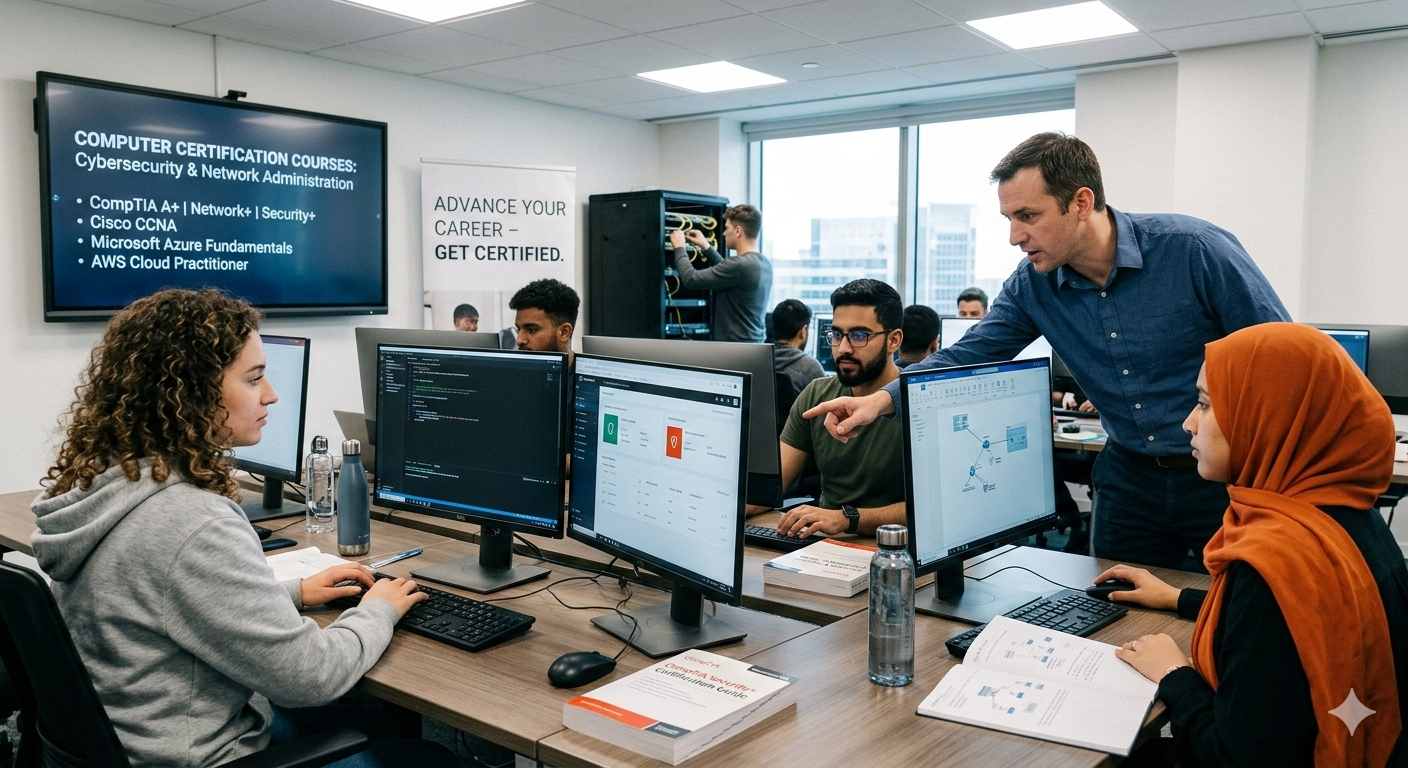
The Digital Skills Training Program at TechCadd Computer Education, Jalandhar, is a comprehensive, industry-focused learning initiative designed to equip students, graduates, and working professionals with practical, job-ready skills in today’s rapidly evolving digital landscape. As industries increasingly adopt digital technologies, the demand for skilled professionals in areas such as web development, digital marketing, data analytics, cloud computing, artificial intelligence, and cybersecurity continues to grow. This course is structured to bridge the gap between academic learning and real-world industry requirements, ensuring learners are fully prepared for professional opportunities in the digital economy.
Program Vision and Objective
The primary vision of this Digital Skills Training Program is to empower learners with technical competence, analytical thinking, and hands-on experience that enhances employability and career growth. The program aims to:
-
Develop practical knowledge aligned with industry standards.
-
Provide hands-on exposure through live projects and real-world case studies.
-
Enhance problem-solving and critical-thinking skills.
-
Prepare learners for placements, freelancing, and entrepreneurship.
-
Encourage continuous learning in emerging technologies.
By focusing on applied learning rather than purely theoretical instruction, the course ensures that students can confidently implement concepts in professional environments.
Course Structure and Modules
The Digital Skills Training Program is divided into multiple specialized modules. Each module is carefully designed to provide foundational knowledge followed by advanced practical implementation.
1. Digital Marketing Module
Digital marketing has become essential for businesses of all sizes. This module trains students in modern online marketing strategies and tools. The curriculum covers:
-
Search Engine Optimization (SEO)
-
Search Engine Marketing (SEM)
-
Social Media Marketing (SMM)
-
Content Marketing
-
Email Marketing
-
Affiliate Marketing
-
Google Ads and PPC Campaigns
-
Web Analytics and Reporting
Students learn how to create marketing strategies, optimize websites for search engines, run paid campaigns, and analyze campaign performance using tools like Google Analytics. Practical sessions include creating live campaigns, keyword research projects, and social media content planning. By the end of the module, learners can independently manage digital marketing projects for companies or freelance clients.
2. Web Designing and Front-End Development
This module focuses on building visually appealing and responsive websites. Students learn:
-
HTML5
-
CSS3
-
Bootstrap
-
JavaScript
-
Responsive Web Design
-
UI/UX Principles
Through hands-on exercises, learners design websites from scratch, create layouts, integrate interactive features, and ensure mobile responsiveness. The training emphasizes clean coding practices and modern design trends. Students complete a final project where they build a fully functional responsive website, enhancing their portfolio for job applications.
3. Full-Stack Web Development
The Full-Stack Development module is designed for students who want to work as professional developers. It includes:
-
Front-end technologies (HTML, CSS, JavaScript, React)
-
Backend development (Node.js, Express)
-
Database management (MongoDB, MySQL)
-
RESTful APIs
-
Authentication and Authorization
-
Deployment Techniques
Students work on real-time projects such as e-commerce websites, portfolio platforms, and management systems. This module ensures learners understand both client-side and server-side development, making them versatile professionals capable of handling complete web applications.
4. Data Science and Analytics
With businesses increasingly relying on data-driven decisions, this module introduces learners to data analytics and data science concepts. The curriculum includes:
Students work with datasets, create visual dashboards, and implement basic machine learning models. Real-world case studies help them understand how data insights influence business strategies. This module prepares students for roles such as Data Analyst or Junior Data Scientist.
5. Artificial Intelligence and Machine Learning
This advanced module introduces learners to AI technologies and intelligent systems. Topics include:
-
Introduction to Artificial Intelligence
-
Supervised and Unsupervised Learning
-
Neural Networks
-
Deep Learning Basics
-
Model Evaluation Techniques
-
AI Tools and Libraries
Students build simple AI models and understand how intelligent systems are applied in healthcare, finance, agriculture, and automation. Practical assignments reinforce conceptual clarity and hands-on implementation.
6. Cloud Computing
Cloud technology is transforming IT infrastructure worldwide. This module provides training in:
-
Cloud Fundamentals
-
Virtualization Concepts
-
Cloud Service Models (IaaS, PaaS, SaaS)
-
Deployment Models
-
Basic AWS Services
-
Cloud Security Fundamentals
Students learn to deploy applications on cloud platforms and manage cloud-based services. This training is particularly beneficial for those aiming for cloud engineer roles.
7. Cybersecurity and Ethical Hacking
With rising cyber threats, cybersecurity skills are highly valuable. This module covers:
Learners gain awareness of common cyber threats and prevention techniques. Practical demonstrations help them understand how security systems protect digital assets.
Teaching Methodology
The Digital Skills Training Program adopts a practical, interactive teaching methodology. Key features include:
Experienced trainers guide students step by step, ensuring conceptual clarity before moving to advanced topics. The learning environment encourages questions, experimentation, and innovation.
Practical Exposure and Projects
One of the major strengths of the course is its emphasis on project-based learning. Each module concludes with a capstone project that demonstrates the student’s understanding and technical ability. For example:
-
Digital marketing students run live ad campaigns.
-
Web development students create full-stack applications.
-
Data science students build predictive models.
-
Cloud computing students deploy sample applications.
These projects become part of the student’s professional portfolio, significantly improving job prospects.
Industry-Relevant Curriculum
The curriculum is regularly updated to match industry standards and technological advancements. Trainers incorporate current tools, frameworks, and best practices used in IT companies. This ensures learners remain competitive and relevant in the job market.
Career Opportunities
Upon completion of the Digital Skills Training Program, students can explore diverse career paths, including:
-
Digital Marketing Executive
-
SEO Specialist
-
Web Developer
-
Full-Stack Developer
-
Data Analyst
-
AI/ML Engineer (Entry Level)
-
Cloud Support Associate
-
Cybersecurity Analyst
-
Freelancer or Entrepreneur
The program not only prepares students for employment but also encourages self-employment and startup ventures.
Placement and Career Support
TechCadd provides dedicated career assistance services, including:
-
Resume and portfolio building
-
Mock interviews
-
Personality development sessions
-
Communication skills training
-
Internship opportunities
-
Placement assistance
This comprehensive support system ensures students transition smoothly from training to employment.
Infrastructure and Learning Environment
The institute provides modern computer labs equipped with updated software tools and high-speed internet. Classrooms are designed for interactive learning. Students receive study materials, practice assignments, and access to recorded sessions for revision.
Target Audience
The Digital Skills Training Program is suitable for:
No prior advanced technical knowledge is mandatory for beginner-level modules, making the course accessible to learners from various academic backgrounds.
Certification and Recognition
Upon successful completion, students receive a certification that validates their skills and knowledge. The certification enhances credibility during job applications and interviews.
Beyond foundational knowledge and technical training, the Digital Skills Training Program is structured to build comprehensive professional competence. The course not only teaches tools and technologies but also focuses on developing problem-solving abilities, logical reasoning, adaptability, and innovation. In today’s dynamic job market, employers seek professionals who can think critically, analyze complex challenges, and deliver efficient digital solutions. This program integrates practical exercises that simulate real workplace scenarios, enabling students to gain confidence in handling industry-level tasks.
Students are trained to approach problems systematically—starting from requirement analysis, planning, execution, testing, and final deployment. Whether developing a website, designing a marketing campaign, analyzing datasets, or configuring a cloud service, learners understand the complete workflow of a professional project lifecycle. This structured approach strengthens both technical depth and organizational skills.
Soft Skills and Professional Development
Technical knowledge alone is not sufficient to excel in the professional world. Recognizing this, the program includes personality development and communication training sessions. These sessions focus on:
-
Verbal and written communication skills
-
Interview preparation techniques
-
Group discussion practice
-
Professional email writing
-
Workplace ethics and etiquette
-
Time management strategies
Students learn how to present projects confidently, explain technical concepts clearly, and collaborate effectively in team environments. Mock interviews are conducted to simulate real hiring processes, allowing learners to identify their strengths and improve weaknesses. These soft skills significantly enhance employability and ensure students are workplace-ready.
Internship Opportunities and Real-World Exposure
A major highlight of the Digital Skills Training Program is its emphasis on internships and live industry exposure. Students are encouraged to participate in internships where they can apply their learning in practical settings. Working on real client projects provides invaluable experience, helping students understand deadlines, client requirements, and professional standards.
Internships also introduce learners to teamwork, reporting structures, and real-time problem-solving challenges. This exposure gives them a competitive edge in the job market, as employers value candidates with hands-on experience. Additionally, students build professional networks during internships, which can lead to future career opportunities.
Freelancing and Entrepreneurship Guidance
In addition to job placements, the program promotes freelancing and entrepreneurship as viable career options. Many digital skills such as web development, graphic designing, and digital marketing can be monetized independently. The course guides students on:
-
Creating professional portfolios
-
Building profiles on freelancing platforms
-
Communicating with international clients
-
Managing projects and payments
-
Branding and self-marketing
Entrepreneurial guidance sessions help students understand how to start their own digital service agencies or technology-based startups. They learn the basics of business planning, client acquisition, and scaling operations. This entrepreneurial orientation empowers learners to become job creators rather than only job seekers.
Continuous Learning and Technological Adaptability
The technology landscape is constantly evolving, and staying updated is critical for long-term career success. The Digital Skills Training Program emphasizes the importance of continuous learning. Trainers introduce students to learning resources, professional communities, and certification pathways that help them stay updated even after completing the course.
Students are encouraged to participate in workshops, webinars, hackathons, and coding competitions to expand their knowledge. Exposure to emerging technologies such as blockchain basics, automation tools, and advanced analytics concepts is also provided through guest lectures and special sessions. This ensures that learners remain adaptable and future-ready.
Assessment and Performance Evaluation
To ensure effective learning, the program incorporates regular assessments and evaluations. These include:
-
Weekly assignments
-
Practical lab tests
-
Module-end examinations
-
Project presentations
-
Peer reviews
Continuous evaluation helps track student progress and identify areas requiring improvement. Trainers provide personalized feedback to help students refine their technical skills. This systematic assessment structure ensures quality learning outcomes and consistent performance improvement.
Collaborative Learning Environment
The institute promotes a collaborative and supportive learning atmosphere. Students are encouraged to work in teams for projects and assignments. Group-based activities enhance teamwork, leadership qualities, and collaborative problem-solving skills. Peer learning sessions allow students to exchange ideas, share solutions, and learn from each other’s experiences.
Interactive classroom discussions and brainstorming sessions create an engaging learning environment. Trainers act as mentors rather than just instructors, guiding students through challenges and motivating them to explore creative solutions.
Ethical and Responsible Technology Use
In the digital era, ethical practices are crucial. The program emphasizes responsible use of technology, data privacy, and cybersecurity awareness. Students are taught to follow professional standards and legal guidelines when handling data, running marketing campaigns, or developing applications. This ethical foundation builds integrity and professionalism in future digital leaders.
Global Career Scope
Digital skills are universally applicable, offering global career opportunities. The training prepares students not only for local employment in Jalandhar and nearby regions but also for national and international job markets. With the rise of remote work and global freelancing platforms, learners can work with clients and companies worldwide.
The skills gained through this program are aligned with global industry requirements. Knowledge of international tools, coding standards, and digital marketing practices ensures that students can compete confidently on a global scale.
Alumni Success and Community Network
Over the years, students trained under this program have successfully secured positions in IT companies, startups, digital agencies, and multinational organizations. Some alumni have started their own businesses or built successful freelancing careers. The growing alumni network serves as a strong community for guidance, mentorship, and job referrals.
Regular alumni interactions and networking sessions inspire current students and provide insights into industry expectations. This strong professional community adds long-term value to the learning experience.
Flexible Learning Options
Understanding the diverse needs of learners, the program offers flexible learning schedules. Students can choose from regular batches, weekend batches, or fast-track options depending on their availability. This flexibility makes it accessible to college students, working professionals, and career changers.
Recorded sessions and revision materials are often provided to ensure students can review concepts at their convenience. The supportive learning structure ensures that no student feels left behind.
Long-Term Career Impact
The Digital Skills Training Program is more than just a short-term course; it is a long-term career-building platform. By integrating technical mastery, practical exposure, professional development, and career guidance, the program ensures sustainable growth. Students graduate not only with certificates but with confidence, industry exposure, and a clear career roadmap.
As digital transformation continues to reshape industries, the demand for skilled professionals will only increase. This program equips learners with the ability to adapt, innovate, and lead in a technology-driven world. Whether pursuing employment, freelancing, higher studies, or entrepreneurship, students gain a strong foundation for future success.
In conclusion, the extended Digital Skills Training Program at TechCadd Computer Education, Jalandhar, provides a holistic educational experience that combines advanced technical knowledge, real-world application, professional development, and career empowerment. Through structured modules, hands-on projects, internships, and continuous mentorship, learners develop into competent and confident digital professionals ready to thrive in an ever-evolving global marketplace.
Choosing the right training institute is one of the most important decisions in a student’s professional journey. In today’s competitive digital era, where technology is evolving rapidly, learners need more than just theoretical knowledge. They require practical exposure, industry-oriented skills, mentorship, career guidance, and placement support. TechCadd Computer Education in Jalandhar stands out as a trusted and career-focused training institute that has consistently helped students build strong foundations in digital and IT skills.
TechCadd is not just a training center; it is a career development platform designed to transform beginners into confident professionals. The institute focuses on bridging the gap between academic education and real-world industry requirements. Below are the major reasons why students prefer TechCadd for their digital and technical skill development.
1. Industry-Oriented Curriculum
One of the strongest reasons to choose TechCadd is its industry-relevant curriculum. The courses are carefully designed to match current market demands and technological trends. Unlike traditional learning systems that rely heavily on outdated theoretical content, TechCadd updates its syllabus regularly to incorporate the latest tools, frameworks, and industry practices.
The curriculum is structured in a way that beginners can understand fundamental concepts first and gradually move toward advanced practical implementation. This progressive learning approach ensures that students develop clarity and confidence at every stage. Whether it is Digital Marketing, Web Development, Data Science, Cloud Computing, or Cybersecurity, the training content aligns with real industry expectations.
2. Practical and Hands-On Learning
At TechCadd, practical learning is given more importance than theory. Students are trained through live projects, real-time assignments, and hands-on lab sessions. This approach allows learners to apply concepts immediately after understanding them.
For example:
-
Digital marketing students run live campaigns.
-
Web development students create complete websites and applications.
-
Data science learners work with real datasets.
-
Cloud computing students practice deployment techniques.
This practical exposure ensures students are job-ready and capable of handling real-world challenges confidently.
3. Experienced and Supportive Trainers
Another major reason to choose TechCadd is its team of experienced trainers. The faculty members are professionals with industry backgrounds who understand real corporate requirements. They not only teach technical skills but also share practical insights, industry experiences, and problem-solving strategies.
Trainers maintain an interactive teaching style, encouraging students to ask questions and participate in discussions. Doubt-clearing sessions are conducted regularly to ensure that no student is left behind. The mentorship approach helps students gain confidence and clarity in their learning journey.
4. Comprehensive Course Variety
TechCadd offers a wide range of digital and technical courses under one roof. Students can choose from multiple career-oriented programs, including:
-
Digital Marketing
-
Web Designing
-
Full-Stack Development
-
Graphic Designing
-
Data Science
-
Artificial Intelligence
-
Cloud Computing
-
Cybersecurity
-
Software Development
This variety allows students to explore different career paths according to their interests and goals. It also provides opportunities for multi-skill development, which is highly valuable in today’s job market.
5. Placement Assistance and Career Support
One of the most important factors students consider while choosing an institute is placement support. TechCadd provides dedicated placement assistance to help students secure jobs after completing their courses.
The placement support includes:
-
Resume building assistance
-
Portfolio development
-
Mock interviews
-
Interview preparation sessions
-
Personality development training
-
Internship opportunities
The institute collaborates with companies and local businesses to provide job opportunities to deserving candidates. This structured placement process increases students’ chances of employment significantly.
6. Focus on Soft Skills and Personality Development
Technical skills alone are not sufficient to succeed in the professional world. Communication skills, confidence, teamwork, and professional etiquette play a crucial role in career growth. TechCadd understands this requirement and includes soft skills training as part of its programs.
Students are trained in:
-
Public speaking
-
Interview communication
-
Professional behavior
-
Time management
-
Team collaboration
These sessions prepare students to perform effectively in interviews and workplace environments.
7. Real-World Project Experience
Working on real-world projects is one of the key highlights of TechCadd’s training approach. Each course includes project-based learning where students build complete applications, campaigns, or analytical models.
Projects help students:
-
Build strong portfolios
-
Demonstrate practical expertise
-
Gain confidence in handling client requirements
-
Understand real-time problem-solving
These projects become valuable proof of skills during job interviews.
8. Modern Infrastructure and Learning Environment
TechCadd provides a professional and comfortable learning environment. The institute is equipped with modern computer labs, updated software tools, and high-speed internet connectivity. Classrooms are designed to promote interactive learning.
A supportive environment encourages students to focus on their goals without distractions. Access to proper infrastructure ensures smooth practical training sessions.
9. Affordable Fee Structure
Another important reason to choose TechCadd is its affordable fee structure. The institute aims to make quality education accessible to students from various backgrounds. Compared to metropolitan training institutes, TechCadd offers high-quality training at reasonable costs.
Flexible payment options and batch timings make it convenient for students and working professionals.
10. Flexible Learning Options
Understanding that students have different schedules, TechCadd offers flexible batch timings, including:
-
Regular weekday batches
-
Weekend batches
-
Fast-track courses
This flexibility allows college students, working professionals, and career changers to learn without disrupting their existing commitments.
11. Support for Freelancing and Entrepreneurship
TechCadd not only prepares students for jobs but also guides them toward freelancing and entrepreneurship. Many digital skills such as web development and digital marketing can be used to start independent careers.
Students receive guidance on:
-
Creating online portfolios
-
Managing clients
-
Understanding freelancing platforms
-
Starting digital agencies
This entrepreneurial support helps students become financially independent.
12. Continuous Learning and Skill Upgradation
Technology evolves rapidly, and professionals must keep upgrading their skills. TechCadd encourages continuous learning by introducing students to advanced topics, workshops, and additional certifications.
Learners are motivated to stay updated with new tools and technologies even after course completion. This mindset ensures long-term career sustainability.
13. Strong Reputation and Student Trust
Over the years, TechCadd has built a reputation for delivering quality training and career results. Positive student feedback, successful placements, and alumni achievements reflect the institute’s credibility.
Trust is built through consistent performance, professional teaching standards, and genuine career support.
14. Career-Oriented Approach
Unlike traditional institutes that focus only on completing the syllabus, TechCadd emphasizes career outcomes. Every course is designed with a clear objective: making students employable.
Students are guided from the beginning about career opportunities, required skill levels, and industry expectations. This clarity helps them stay focused and motivated.
15. Local Advantage with Global Opportunities
Being located in Jalandhar, TechCadd provides high-quality digital training locally, eliminating the need for students to move to metro cities. At the same time, the skills taught are globally relevant.
Students can apply for national and international job roles or work remotely with global clients. This balance of local accessibility and global exposure is a significant advantage.
16. Student-Centered Learning Approach
One of the defining strengths of TechCadd is its student-centered learning philosophy. Every learner comes with a unique background, skill level, and career goal. The institute understands that a one-size-fits-all teaching method does not work effectively in technical education. Therefore, trainers adopt flexible teaching strategies that cater to beginners as well as advanced learners.
Special attention is given to students who may struggle with certain concepts. Trainers provide additional practice tasks, revision sessions, and personalized mentorship to ensure complete understanding. This nurturing environment helps build confidence and eliminates hesitation in learning complex technical topics.
17. Step-by-Step Learning Framework
TechCadd follows a structured, step-by-step training methodology. Each course begins with basic foundational concepts before gradually advancing to more complex topics. This systematic progression ensures conceptual clarity and reduces confusion.
For example, in web development training, students first learn basic HTML structure, then styling with CSS, followed by JavaScript functionality, backend integration, and finally full-stack deployment. This layered approach ensures strong fundamentals, which are essential for mastering advanced skills.
18. Emphasis on Real Industry Tools
Many institutes teach theory but fail to introduce students to tools used in real companies. TechCadd ensures that learners gain hands-on experience with industry-standard tools and software.
Students practice with:
-
Modern code editors and development environments
-
Marketing and analytics tools
-
Cloud platforms
-
Data visualization software
-
Security testing tools
Exposure to these tools prepares students to transition smoothly into professional roles without additional training.
19. Portfolio Development Support
A strong portfolio plays a critical role in securing job opportunities. TechCadd guides students in building professional portfolios that showcase their skills and projects. Instead of simply issuing certificates, the institute ensures students can demonstrate real work.
Students are trained to:
-
Document their projects clearly
-
Present case studies professionally
-
Host websites or applications online
-
Share project links with employers
A well-developed portfolio increases credibility and significantly improves job prospects.
20. Regular Workshops and Seminars
To keep students updated with industry trends, TechCadd conducts workshops, guest lectures, and seminars. Industry professionals are invited to share insights about market demands, emerging technologies, and career growth strategies.
These sessions help students understand:
Workshops provide additional practical exposure and enhance learning beyond the classroom.
21. Internship-Based Learning Model
TechCadd strongly believes in experiential learning. Internship-based training allows students to apply classroom knowledge in real business environments. Working on real client tasks builds professional maturity and responsibility.
Internship experience helps students:
-
Understand deadlines and project management
-
Communicate with clients effectively
-
Adapt to workplace culture
-
Handle pressure and multitasking
This exposure gives students a significant competitive advantage.
22. Supportive Learning Community
Learning becomes more effective in a collaborative environment. TechCadd fosters a supportive student community where learners share ideas, collaborate on projects, and help each other solve problems.
Group activities, team projects, and peer discussions encourage teamwork and communication skills. A strong peer network also helps students stay motivated throughout their learning journey.
23. Career Guidance and Counseling
Choosing the right career path can be confusing, especially for students from non-technical backgrounds. TechCadd provides career counseling sessions to guide students in selecting suitable courses based on their interests and strengths.
Counselors help students:
This personalized guidance ensures that students make informed decisions.
24. Encouragement of Innovation and Creativity
TechCadd encourages students to think creatively and develop innovative solutions. Rather than restricting learners to predefined tasks, trainers motivate them to experiment and explore new ideas.
Students are often challenged with open-ended projects that allow creative problem-solving. This approach builds confidence and fosters an innovative mindset, which is highly valued in technology-driven industries.
25. Ethical Training and Professional Values
Professional ethics and responsible digital practices are essential in today’s world. TechCadd emphasizes ethical coding practices, responsible data handling, and compliance with digital laws.
Students learn about:
Building ethical awareness ensures students become responsible digital professionals.
26. Preparation for Competitive Job Market
The job market is highly competitive, especially in the IT sector. TechCadd prepares students to stand out by focusing on both technical excellence and professional presentation.
Mock interviews simulate real hiring processes, helping students practice technical questions and HR rounds. Feedback sessions identify areas for improvement, ensuring readiness for actual interviews.
27. Confidence Building Through Presentation Skills
Students are encouraged to present their projects before peers and trainers. These presentations improve communication skills and technical articulation.
Explaining a project publicly enhances clarity, confidence, and leadership qualities. This practice prepares students for client meetings and workplace presentations.
28. Focus on Long-Term Career Growth
TechCadd does not limit its role to short-term course completion. The institute aims to build long-term professional growth. Students are taught how to:
-
Continuously upgrade skills
-
Pursue advanced certifications
-
Network with industry professionals
-
Adapt to technological changes
This long-term vision ensures sustainable career development.
29. Balanced Theory and Practice
While practical training is prioritized, theoretical foundations are not neglected. A strong understanding of concepts ensures that students can adapt to new tools and technologies easily.
For example, understanding programming logic helps students learn new programming languages quickly. Similarly, understanding marketing principles helps adapt to changing digital platforms.
30. Accessibility and Local Convenience
Being located in Jalandhar, TechCadd offers quality digital training within the city, reducing the need for students to relocate to major metropolitan areas. This accessibility makes professional education affordable and convenient.
Students from nearby towns and rural areas can access industry-level training without incurring high living expenses.
31. Positive Learning Culture
The institute maintains a positive and motivating atmosphere. Trainers celebrate student achievements and encourage participation in competitions and projects.
A supportive culture reduces stress and builds enthusiasm for learning.
32. Alumni Network and Career Inspiration
A strong alumni network reflects the institute’s credibility. Former students who have secured good positions or started businesses often share their experiences with current learners.
These interactions provide inspiration and practical career insights.
33. Adaptation to Digital Transformation
As industries undergo digital transformation, TechCadd adapts its courses accordingly. The institute recognizes that future careers will increasingly depend on digital competencies.
Training is aligned with technological shifts such as automation, AI integration, cloud infrastructure, and data-driven decision-making.
34. Commitment to Quality Education
Quality education is maintained through structured planning, skilled faculty, updated curriculum, and practical implementation. Continuous improvement is part of the institute’s philosophy.
Feedback from students is considered to enhance training quality and learning experiences.
35. Empowerment Through Skill Development
Ultimately, the core mission of TechCadd is empowerment through skill development. Skills provide independence, confidence, and financial stability. By equipping students with relevant digital capabilities, the institute contributes to both individual growth and societal development.
Final Conclusion
Choosing TechCadd Computer Education in Jalandhar is a strategic decision for anyone seeking quality digital and technical training. The institute stands out due to its practical learning approach, industry-aligned curriculum, experienced trainers, strong placement support, internship opportunities, entrepreneurial guidance, and focus on overall personality development.
TechCadd is not just about learning software or coding languages—it is about building careers, developing confidence, and preparing individuals for the future of work. Through structured training, real-world exposure, and continuous mentorship, students gain the tools they need to succeed in competitive job markets.
In an era where digital skills define professional success, TechCadd provides a reliable platform to transform ambition into achievement. Whether aiming for employment, freelancing, higher education, or entrepreneurship, students receive the knowledge, experience, and guidance necessary to build a successful and sustainable career.