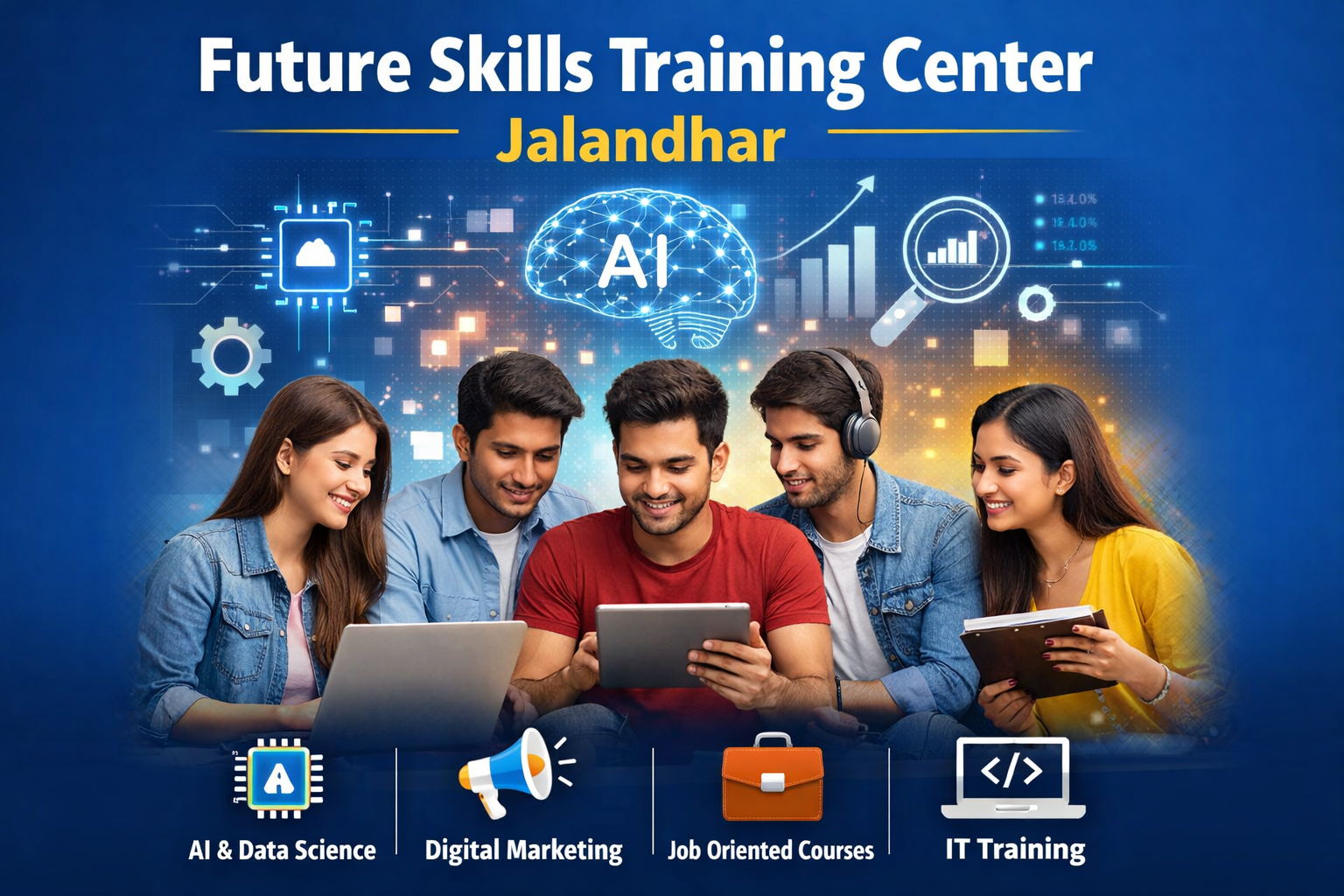
In the rapidly evolving global economy, the gap between academic knowledge and industry requirements is widening. This is where the concept of "Future Skills" becomes critical. These are the competencies—ranging from advanced digital literacy and artificial intelligence to soft skills like critical thinking and emotional intelligence—that will define the workforce of tomorrow. In the heart of Punjab, the Future Skills Training Center at CT Group of Institutions, Jalandhar, stands as a pioneering force in bridging this divide. By blending cutting-edge technology with a holistic educational philosophy, this center is not just preparing students for jobs; it is creating the next generation of leaders, innovators, and global citizens.
📍 Strategic Location and Vision
Established in 1997 under the CT Educational Society, the CT Group of Institutions has grown into a multi-faculty educational powerhouse with campuses in Shahpur and Maqsudan, Jalandhar. The Future Skills Training Center is strategically located to serve students from across the region, including those from rural backgrounds. Its vision is clear: to move beyond traditional rote learning and create leaders, winners, and achievers for the global corporate world. The institution is committed to an ever-improving educational system that ensures employability for its students by continuously adapting its delivery systems and maintaining an environment conducive to skill development.
🧠 Curriculum and Courses
The center offers a comprehensive curriculum that spans over 75 undergraduate and postgraduate programs in fields such as Engineering, Management, Pharmacy, Computer Applications, Hotel Management, and more. However, what sets the Future Skills Training Center apart is its emphasis on additional skill courses like Python, SAP, and other industry-oriented modules designed to make students industry-ready. The curriculum is continuously updated to reflect current market trends, and the center has successfully invited top companies like IBM, Coca Cola, Paytm, and JustDial for placements, demonstrating its strong industry connect.
🤝 Industry Collaborations and Centers of Excellence
A key pillar of the center’s success is its robust partnerships with global industry leaders. In a major step toward revolutionizing skill-based education, CT Group partnered with the Atos Foundation and ICT Academy to establish a cutting-edge Centre of Excellence at its North Campus in Maqsudan. This collaboration provides students with hands-on training, digital skills, and practical exposure, including a 100-hour specialized training program in Premier Banking for BBA and B.Com students.
Further enhancing its technological prowess, the North Campus became an official Cisco Networking Academy Partner. This prestigious partnership enables students to access world-class training in networking, cybersecurity, and IT skills, directly aligned with global industry needs. Additionally, the South Campus launched the Centre of Excellence for Research and Innovation (CERI) to promote research culture, where students develop working prototypes for solutions ranging from room automation to multipurpose industrial robots.
📈 Placement and Career Support
The ultimate goal of any skill training center is employability, and CT Group excels here. The dedicated Training & Placement department acts as an interface between industry and academia, providing mandatory industrial exposure and experiential learning. The center boasts a strong placement record, with students securing positions in top companies. The highest placement package has reached ₹51 lakh per annum, with average packages for B.Tech students ranging between ₹5-6 lakhs. The career planning and counselling center further guides students on selection processes, including interview techniques and group discussions.
🌍 Broader Impact and Community Engagement
The center’s impact extends beyond its enrolled students. It actively engages with the local community through initiatives like the Deen Dayal Upadhyaya Grameen Kaushalya Yojana (DDU-GKY) training center, which provides free, job-guaranteed courses to rural youth aged 18-35, aiming to transform them into an economically independent workforce. The center has also organized workshops like "Nextgen Drones: Technology and Applications" in collaboration with NIT Jalandhar, and awareness programs for grassroots innovators, showcasing its commitment to inclusive growth and cutting-edge technology dissemination.
🚀 Alignment with National Initiatives
The center’s vision aligns seamlessly with India’s national skill development agenda. The National Skill Development Corporation (NSDC) has outlined plans to establish 50 new Future Skills Centres and 10 International Academies to train over 2 lakh candidates in emerging technologies. CT Group’s initiatives, including its Cisco partnership and Centre of Excellence, mirror this national goal by focusing on industry-aligned programs in technologies like AI, cybersecurity, and data analytics.
🏫 Campus Infrastructure and Facilities
To support its ambitious curriculum, the center boasts state-of-the-art infrastructure. Key facilities include:
-
Hi-tech Computer and Language Labs: Equipped with the latest software and hardware.
-
Centralized Testing Facility: Capable of conducting tests for 5,000 students in one go.
-
Industry-Simulated Work Environments: For hands-on training in hospitality, engineering, and IT.
-
Dedicated Research Labs: Under CERI for prototyping and innovation.
-
Auditoriums and Seminar Halls: For guest lectures by eminent personalities from government, business, and academia.
💡 The Future Roadmap
Looking ahead, the Future Skills Training Center plans to expand its reach by introducing more micro-credential programs and collaborating with additional premium institutions. The focus will be on emerging technologies such as AI, ML, data analytics, and cloud computing, with an emphasis on global job opportunities. The institution is also working on setting up international language labs to equip candidates with multilingual capabilities, enhancing their global employability.
✍️ Conclusion
The Future Skills Training Center at CT Group of Institutions, Jalandhar, is more than an educational facility; it is a catalyst for change. By integrating future-ready skills into its core curriculum, fostering global industry partnerships, and maintaining a laser focus on employability, it is shaping the architects of tomorrow’s world. For students in Jalandhar and beyond, this center represents a gateway to not just a job, but a meaningful and dynamic career.
If you have any specific questions about admission procedures, course fees, or upcoming enrollment dates, feel free to ask!
Specialized Skill Tracks and Certifications
Beyond the general curriculum, the Future Skills Training Center offers micro-specializations designed for rapid upskilling. These include:
-
Artificial Intelligence & Machine Learning: Students learn supervised/unsupervised learning, neural networks, and natural language processing using Python libraries like TensorFlow and Scikit-learn. The center has partnered with NASSCOM FutureSkills Prime to offer industry-validated certifications.
-
Cybersecurity and Ethical Hacking: In collaboration with Cisco Networking Academy, students gain hands-on experience in network security, cryptography, and vulnerability assessment. Labs simulate real-world cyber-attacks, preparing students for certifications like CEH (Certified Ethical Hacker).
-
Data Science & Business Analytics: This track focuses on data visualization (Tableau, Power BI), SQL, and advanced Excel. Students work on live datasets from local businesses, helping them solve inventory, sales, and customer retention problems.
-
Robotic Process Automation (RPA) : Using tools like UiPath and Automation Anywhere, students automate repetitive business processes. This is particularly popular among B.Com and BBA students aiming for finance and operations roles.
-
Cloud Computing (AWS & Azure) : The center is an AWS Academy member, providing structured courses on cloud architecture, deployment, and security. Students earn micro-credentials that are recognized globally.
Each track culminates in a capstone project mentored by industry experts. For example, a team of B.Tech students recently developed an AI-powered chatbot for a local bank, reducing customer query resolution time by 40%. Another group built a low-cost IoT device to monitor air quality in Jalandhar’s industrial zones.
🧑🏫 Faculty Development and Industry Guest Faculty
The center’s teaching staff undergoes continuous Faculty Development Programs (FDPs) in partnership with IBM, Microsoft, and ICT Academy. Every semester, at least 20% of courses are taught by adjunct industry professionals—data scientists, cloud architects, and cybersecurity analysts from companies like Infosys, Wipro, and local startups. This ensures that classroom learning mirrors current industry practices.
The center also runs a "Train the Trainer" initiative where selected faculty members spend two weeks every year at corporate headquarters (e.g., Amazon’s development center in Hyderabad) to observe workflows and bring back real-world case studies.
🌟 Student Success Stories and Placement Highlights
To illustrate impact, here are anonymized success stories:
-
Rajveer Kaur (B.Tech CSE, 2024) : Completed the AI/ML specialization. She developed a Punjabi-language speech recognition model for agricultural advisories. Recruited by Microsoft India as a data analyst with a package of ₹12 LPA.
-
Amanpreet Singh (BBA, 2023) : Took the RPA and Premier Banking certification. He automated invoice processing for a logistics firm during his internship. Hired by Paytm as a business analyst.
-
Nidhi Sharma (BCA, 2025) : Focused on cybersecurity. She identified a vulnerability in a college website and reported it responsibly. Now placed at Cisco as a junior security consultant.
-
Gurvinder Singh (Rural youth, DDU-GKY batch) : From a village in Hoshiarpur, he completed the 6-month digital literacy and customer service course. Placed at JustDial as a customer support executive, now leading a small team.
The center maintains a placement tracker with over 90% placement for students who complete any Future Skills certification, compared to 65% for those who do not. Average salary uplift after certification is ₹2.5 LPA higher than non-certified peers.
🧪 Research and Innovation at CERI
The Centre of Excellence for Research and Innovation (CERI) is the heartbeat of applied learning. It houses:
-
A 3D printing lab with industrial-grade printers for rapid prototyping.
-
A robotics arena where students build line-followers, drones, and pick-and-place robots.
-
An IoT sensor lab with Arduino, Raspberry Pi, and LoRa modules.
Every year, CERI organizes an "Innovation Mela" where students showcase prototypes to local entrepreneurs. Past innovations include:
-
A smart helmet for two-wheeler riders that detects alcohol consumption and alerts emergency contacts.
-
A low-cost braille printer using recycled materials, developed by mechanical engineering students.
-
A solar-powered water purifier for rural Punjab villages, now being piloted by a local NGO.
The center also files patents on behalf of students. In 2024 alone, three student projects received provisional patents from the Government of India.
🌍 Social Impact and Outreach Programs
The Future Skills Training Center extends its reach beyond enrolled students through several initiatives:
1. Digital Saksham Program
Free basic computer literacy and financial literacy courses for women in nearby villages (Jalandhar Cantt, Kartarpur, Nakodar). Over 500 women have been trained since 2023, many of whom now work as banking correspondents or run small e-commerce businesses.
2. School Skill Integration
The center has adopted five government high schools in Jalandhar district, where it conducts weekend workshops on coding (Scratch, Python basics), robotics, and career guidance. This aims to build a pipeline of future talent.
3. Vocational Training for Differently-Abled
In partnership with the Punjab State Disability Commission, the center runs accessible labs (screen readers, voice-controlled software) for visually impaired and orthopedically challenged youth. Courses include data entry, customer relationship management (CRM), and assistive technology.
4. COVID-19 Resilience Skill Program
During the pandemic, the center pivoted to online mode and offered free short courses on remote collaboration tools (Zoom, Slack, Trello), digital marketing, and mental wellness. Over 2,000 participants enrolled from across Punjab.
📊 Performance Metrics and Accreditation
The center is ISO 9001:2015 certified for its training processes. It is also an approved Skill Development Centre under the Punjab Skill Development Mission (PSDM). Key performance indicators tracked:
-
Student satisfaction rate: 94% (annual survey)
-
Employability improvement: 72% of students move from "unemployable" to "industry-ready" after 6 months
-
Industry partner satisfaction: 4.6/5 from 50+ active recruiters
-
Certification pass rate: 88% for external certifications (Cisco, AWS, Microsoft)
🏛️ Governance and Advisory Board
The center is guided by a Skill Advisory Board comprising:
-
Dr. Manoj Kumar (Director, NIELIT Chandigarh)
-
Ms. Preeti Seth (HR Head, IBM Punjab)
-
Mr. Rajesh Khanna (Startup mentor, TiE Chandigarh)
-
Prof. S.S. Gill (Retired Dean, NIT Jalandhar)
This board meets quarterly to review curriculum, suggest new courses, and facilitate student internships.
🚧 Challenges and Solutions
No institution is without challenges. The center faced initial hurdles like:
-
Resistance from traditional faculty to adopt new technology. Solution: Mandatory FDPs and performance incentives.
-
High cost of lab equipment (e.g., robotics kits, cloud credits). Solution: Grants from NSDC and corporate CSR (Cisco donated ₹50 lakh worth of equipment).
-
Rural students’ lack of prior digital exposure. Solution: Bridge courses and peer mentoring.
These challenges have been largely overcome, making the center a model for other institutions in North India.
📅 Future Expansion Plans (2025–2030)
Looking ahead, the center has submitted a ₹5 crore proposal to the Government of Punjab to:
-
Launch a "Future Skills Mobile Lab" – a bus equipped with laptops, VR headsets, and 3D printers that will visit remote villages weekly.
-
Establish an International Placement Cell to help students secure jobs in Canada, Germany, and Japan (where skill shortages exist in IT and manufacturing).
-
Create an EdTech platform for online self-paced courses in Punjabi and Hindi, making future skills accessible to non-English speakers.
-
Set up a "Women in Tech" hostel with 24/7 security and high-speed internet, encouraging more female students from conservative backgrounds to join technical courses.
💬 Testimonials from Stakeholders
-
Harpreet Kaur, parent of a student : “My daughter was shy and unsure about her future. After completing the digital marketing course, she now manages social media for three local businesses. The center changed her life.”
-
Mr. Anil Gupta, HR Manager, JustDial : “CT Group’s trained candidates are our preferred hires. They need minimal ramp-up time and understand real-world workflows.”
-
Dr. Harsh Sadawarti, Campus Director : “Our vision is not just to produce graduates, but to produce solutionaries—people who can identify problems and use technology to solve them.”
🔚 Final Thoughts
The Future Skills Training Center in Jalandhar is not merely a response to industry demands; it is a proactive blueprint for how regional educational institutions can transform into engines of economic mobility. By combining infrastructure, industry partnerships, social outreach, and a relentless focus on employability, it serves as a lighthouse for other colleges across Punjab and beyond. For any student—whether from urban Jalandhar or a remote village—this center offers a tangible pathway to a dignified, skilled, and future-proof career.
If you would like specific information on admission deadlines, fee structures, or upcoming orientation dates, please let me know—I’m happy to assist further!
TechCadd Computer Education has established itself as one of the most sought-after IT training destinations in Jalandhar. In a landscape filled with countless coaching centers and computer institutes, what makes TechCadd stand out is not just the breadth of its courses but the depth of its commitment to student success. From comprehensive curriculums and industry-expert mentors to state-of-the-art labs and robust placement support, TechCadd offers a holistic ecosystem designed to transform learners into job-ready professionals. This article delves into the compelling reasons why choosing TechCadd is a strategic investment in your future.
📚 A Curriculum Forged in the Industry, Not Just in Textbooks
Many institutes in Jalandhar still rely on outdated syllabi that bear little relevance to what companies actually need today. TechCadd breaks away from this norm by offering a curriculum that is a living, breathing document, constantly evolving through direct feedback from its industry partners. This ensures that students learn the latest tools, technologies, and frameworks that are currently in high demand.
🔧 Tool-Based & Full-Stack Proficiency
TechCadd doesn't just teach programming languages; it integrates the most in-demand tools and platforms directly into the training. For instance, students learning ethical hacking work with Kali Linux, those in artificial intelligence get hands-on with TensorFlow, and web developers learn deployment using Docker. This tool-based approach is complemented by a full-stack proficiency that covers both front-end and back-end technologies, making students versatile and valuable candidates who can solve real-world business problems from day one.
🎯 Specialized Tracks for Every Aspiration
The institute offers a wide range of specialized courses that cater to various career paths:
-
Advanced Certification in Ethical Hacking: This course teaches students to think like a hacker and behave like a guardian, safeguarding critical data and systems. It includes real-time labs, simulated attacks, and live environments for penetration testing.
-
Advanced Data Science & AI: Combining Python, machine learning, and artificial intelligence, this program focuses on predictive modeling and data visualization using tools like Power BI and Tableau.
-
Website Designing & Development: From HTML/CSS fundamentals to advanced JavaScript, React, and UI/UX design, this course prepares students to create responsive, user-friendly websites.
-
Digital Marketing: Covering SEO, social media marketing, analytics, and more, this course provides practical strategies for growing brands online.
-
Cloud Computing (AWS): This course equips students with in-depth knowledge of cloud infrastructure, networking, and security through hands-on AWS environments.
-
Programming Languages: TechCadd offers professional courses in Python, Java, and the MERN stack, focusing on practical knowledge and hands-on experience.
This variety ensures that whether you are a beginner or an IT professional looking to upskill, there is a clear, guided path for you at TechCadd.
👨🏫 Mentorship from Industry Professionals
The quality of an instructor determines the depth of learning. TechCadd's trainers are not just academically qualified; they are seasoned developers, active cybersecurity experts, and lead data scientists who bring current industry challenges and best practices directly into the classroom.
👤 Mentorship, Not Just Lectures
At TechCadd, each student is assigned a mentor who guides them through their learning journey. These mentors don't just deliver lectures; they share war stories, debug code alongside students, and provide insights that textbooks cannot offer. This personalized attention ensures that no student is left behind, a commitment that large, assembly-line institutes simply cannot match. This expert guidance is further validated by positive student reviews, which consistently highlight the quality of the faculty.
💡 An Unmatched "Learn by Doing" Philosophy
Theory without practice is forgettable. TechCadd's pedagogy is built around a robust project-based learning model that simulates real IT company environments.
🛠️ Portfolio-Building & Real-World Labs
From the very first month, students start building projects. A web design student will build and deploy a live, responsive website; a data science student will complete a capstone project analyzing a real-world dataset. For ethical hacking students, TechCadd provides dedicated, isolated lab environments where they can safely practice penetration testing and vulnerability assessment without any legal concerns. These labs are equipped with high-end systems, licensed software, and high-speed internet, creating a professional and seamless learning environment.
📈 A Proven Track Record of Placements & Career Transformation
An institute's true value is measured by the success of its students. TechCadd's placement record in Jalandhar speaks for itself through its proactive corporate resource team.
💼 Dedicated Placement & Career Support
TechCadd provides comprehensive career support, including resume building, job placement assistance, and mock interviews. This support has helped many students advance their careers and find new opportunities. The institute has strong industry connections that facilitate internship opportunities and job placement assistance for its graduates.
🌟 Real Student Success Stories
The effectiveness of TechCadd's training is best reflected in its alumni. The institute proudly shares journeys of graduates who are now working as Python Developers, Data Analysts, Software Engineers, and Ethical Hackers in top companies. One notable success story is that of Angelina, a BCA graduate who transformed from a novice to a skilled ethical hacker through TechCadd's structured learning and expert mentorship. Her journey is a testament to the institute's ability to guide students from fundamental concepts to advanced offensive security techniques.
🤝 Strong Industry Connections & Certifications
TechCadd's curriculum is continuously refined through direct feedback from its industry partners, ensuring its relevance. This strong industry connect is further evidenced by a Memorandum of Understanding (MOU) signed with Sant Baba Bhag Singh University, Jalandhar, aimed at promoting skill development, outcome-based training, and placement services.
🏅 Globally Recognized Certifications
Students at TechCadd are prepared for globally recognized certifications. For example, the ethical hacking course prepares students for the Certified Ethical Hacker (CEH) certification, a gold standard in the cybersecurity industry. The AWS course also prepares participants for official AWS certifications, opening doors to global career opportunities.
🏢 State-of-the-Art Infrastructure
TechCadd provides a learning environment that is both conducive and technologically advanced. The infrastructure includes:
-
Specialized Labs: Dedicated, isolated lab environments for ethical hacking that mimic enterprise networks, cloud infrastructure, and IoT devices.
-
AWS Cloud Labs: Hands-on environments for learning cloud infrastructure, virtualization, and security.
-
High-End Computer Labs: Equipped with industry-standard tools, licensed software, and high-speed internet.
-
Access to Latest Software & Datasets: Students have access to the latest tools and real-world datasets for projects and analysis.
This infrastructure ensures that students are learning on the same tools and technologies they will encounter in their professional careers.
💰 Affordable & Flexible Learning Options
Quality education should be accessible, and TechCadd is committed to this principle. The institute offers competitive pricing and various payment options, including EMI facilities, to make learning affordable without compromising on quality.
📅 Flexible Schedules
Understanding that students have different schedules, TechCadd provides flexible learning options. Whether you prefer live online classes, self-paced learning, or in-person instruction, the institute has options to fit your lifestyle. This flexibility makes it possible for working professionals and students with other commitments to upskill without disrupting their daily routines.
🌍 A Supportive & Vibrant Community
Learning is not just about individual effort; it is also about the community you are a part of. TechCadd fosters a vibrant community of learners and professionals. Students can participate in forums, networking events, and collaborative projects that enhance their learning experience and provide valuable professional connections.
📍 Centrally Located in Jalandhar
TechCadd's central location in Jalandhar, near the bus stand and opposite the All India Radio Station, makes it easily accessible from all major areas of the city. This saves students hours of commute and allows them to focus their energy on learning.
🚀 Conclusion: Your Gateway to a Future-Proof Career
In a rapidly changing job market, choosing the right educational partner can make all the difference. TechCadd Computer Education in Jalandhar stands out as a premier institute because it offers a complete package: an industry-relevant curriculum, expert mentorship, hands-on project-based learning, a proven placement track record, state-of-the-art infrastructure, and a supportive community—all at an affordable price.
Whether you dream of becoming a cybersecurity expert defending against digital threats, a data scientist unlocking insights from big data, a creative web designer, or a digital marketing guru, TechCadd provides the launchpad you need. The institute's commitment to transforming students into job-ready professionals is evident in every aspect of its operations, from its dedicated placement cell to its alumni success stories.
Your career journey is a significant investment, and choosing TechCadd means choosing a partner that is as invested in your success as you are. Take the first step toward a future-proof career by exploring the courses at TechCadd and enrolling in a program that will equip you with the skills, knowledge, and confidence to excel in the industry.
experimental projects to full-scale deployment.
The demand for AI talent is enormous. A NASSCOM report projects that India will need over one million AI and data science professionals by 2026. Currently, India faces a significant talent gap, with demand for AI professionals outstripping supply by a large margin. This shortage is pushing companies to aggressively recruit talent, with compensation for specialist roles increasing by 15%.
Furthermore, the rise of Generative AI is not just creating new jobs but transforming existing ones. Infosys Chairman Nandan Nilekani predicts that while some traditional roles may decline, AI will open up at least 170 million new jobs globally. According to LinkedIn's 2026 report, the fastest-growing jobs in India are heavily AI-focused, with Prompt Engineer and AI Engineer ranking as the top two roles. This represents a shift towards "skills over degrees," where practical expertise in Large Language Models (LLMs), deep learning frameworks, and prompt design is becoming a primary hiring criterion.
🛡️ Cybersecurity: The Digital Guardian
As our world becomes more digital, the need to protect it becomes paramount. In 2026, end-user spending on information security in India is projected to reach a staggering $3.4 billion, an 11.7% increase from the previous year, driven by sophisticated AI-driven threats and new data protection laws. The demand for cybersecurity professionals is growing 51% as the function shifts from a discretionary IT expense to a core organizational necessity.
However, the supply of talent is failing to meet this demand. India currently has about 380,000 cybersecurity professionals against an enterprise demand of over 1.2 million. This massive talent gap of 25-50% for advanced digital skills, including cybersecurity, is a golden opportunity for job seekers. Senior roles like Security Architects and Chief Information Security Officers (CISOs) are particularly hard to fill, with some positions taking 90-120 days to close, and offering salaries up to ₹50 lakh annually.
The field is also evolving. With the implementation of India's Digital Personal Data Protection (DPDP) Act and the rise of agentic AI, professionals skilled in identity threat detection, cloud security, and digital forensics will be in particularly high demand.
📊 Data Science: Fueling Decisions
Data is the new oil, and data scientists are the ones refining it. Organizations across sectors—from finance and healthcare to e-commerce and logistics—rely on data-driven insights to make strategic decisions. NASSCOM estimates the current demand for Data Science & AI professionals at about 629,000, with a gap of 51% between demand and supply. Roles like ML Engineer, Data Scientist, and Data Architect have a demand-supply disparity ranging between 60% and 73%, making them some of the most sought-after positions in the tech industry.
The entry point into this field is often through roles like Data Analyst, which has a high transition propensity towards more specialized data science roles. With a growth of 34% in AI/ML job roles alone, the opportunities in data science are not just abundant but also come with significant growth prospects and higher-than-average compensation.
☁️ Cloud Computing & DevOps: The Infrastructure of Innovation
Cloud computing has become the backbone of modern IT infrastructure, and the Government of India is actively positioning the country as a global hub for cloud and AI data centers. The Union Budget 2026-27 introduced a tax holiday for foreign cloud providers using India-based data centers, a move expected to attract massive global investment, with a projected data center buildout of over $100 billion by 2030.
This policy push will directly translate into job creation. As enterprises migrate to cloud-native architectures, the demand for professionals skilled in AWS, Azure, GCP, DevOps tools, and container orchestration (Docker, Kubernetes) is skyrocketing. The cloud computing and DevOps field offers a clear career progression path and is becoming an essential skill set for modern developers and IT architects. Early-career professionals have also shown high confidence in cloud tools, indicating it's a fertile ground for newcomers to build expertise.
📈 Digital Marketing: The Art & Science of Connection
The future of marketing is digital, data-driven, and personalized. India's advertising market is projected to cross the ₹2 lakh crore mark in 2026, with digital advertising accounting for nearly 68% of this spending. This represents a decisive shift from traditional media to outcome-focused digital channels.
Within digital marketing, the fastest-growing segment is commerce-led advertising (retail, quick commerce, social commerce), projected to grow at a rate of 24.2%. The rise of AI is also transforming marketing, with AI agents beginning to operate campaigns, shifting the role of marketers from tool operators to workflow orchestrators. This evolution means that skills in performance marketing, marketing analytics, SEO/SEM, and understanding consumer behavior in a digital context are more valuable than ever.
💻 Web & Full-Stack Development: Adapting for the AI Era
While AI tools are automating some front-end tasks, the role of a web developer is far from obsolete; it is simply evolving. The demand for full-stack developers with AI integration skills has risen by 45%, indicating that the future developer will need to be versatile and knowledgeable about integrating AI features into applications.
NASSCOM estimates India's digital economy will require more than 1 million additional technology professionals in emerging areas, including full-stack development, by the middle of this decade. Full-stack developers are now expected to architect scalable systems, integrate AI, optimize performance, and ship production-grade products quickly. A specialization in the MERN stack, for example, is in high demand, with salary ranges between ₹10-28 LPA for skilled professionals.
🚀 Emerging Roles & The Path Forward
Beyond these core domains, several exciting new roles are defining the future of work. Nandan Nilekani highlighted five new AI-powered roles: AI Engineers, AI Forensic Analysts, Forward-Deployed Engineers, Agentic Workflow Architects, and Data Annotators. LinkedIn's fastest-growing jobs list also includes roles like Manager of Artificial Intelligence and Strategic Advisor, signaling that leadership and strategic thinking are becoming as important as technical skills.
For students in Jalandhar, the message is clear: the future belongs to those who are adaptable, curious, and committed to continuous learning. Whether you choose to defend digital frontiers as a cybersecurity expert, build intelligent systems as an AI engineer, or decode consumer behavior as a digital marketer, the opportunities are boundless. The key is to choose a path that aligns with your passion and to equip yourself with the right skills today to be a leader of tomorrow.
Emerging Niches: Beyond the Mainstream
While AI, cybersecurity, data science, cloud computing, digital marketing, and full-stack development dominate the conversation, several niche domains are quietly gaining momentum and promise exceptional career growth for early adopters.
🔗 Blockchain and Web3 Technologies
Blockchain is no longer just about cryptocurrency. Industries like supply chain management, healthcare (for secure patient records), real estate (smart contracts), and even voting systems are adopting decentralized ledger technology. India’s National Blockchain Strategy, launched by the Ministry of Electronics and IT (MeitY), aims to create a shared blockchain infrastructure for government services. This has spurred demand for blockchain developers, smart contract auditors, and Web3 product managers. Platforms like Ethereum, Solana, and Hyperledger are becoming essential skills. By 2027, the global blockchain market is expected to exceed $94 billion, with India contributing a significant share of talent.
🧬 Internet of Things (IoT) and Edge Computing
With the proliferation of smart devices—from wearables to industrial sensors—IoT is creating a connected world. The Indian government’s Smart Cities Mission has deployed thousands of IoT sensors for traffic management, waste management, and environmental monitoring. Edge computing, which processes data closer to the source rather than in a centralized cloud, is reducing latency and bandwidth usage. Professionals skilled in Arduino, Raspberry Pi, MQTT protocols, and edge analytics will find opportunities in manufacturing (Industry 4.0), agriculture (precision farming), and healthcare (remote patient monitoring). The IoT market in India is projected to grow at a CAGR of 13% through 2030, creating over 2 million jobs.
🎮 Extended Reality (XR): AR, VR, and MR
Extended Reality, encompassing Augmented Reality (AR), Virtual Reality (VR), and Mixed Reality (MR), is transforming training, education, retail, and entertainment. Companies like Reliance, Tata, and Infosys are investing in XR labs for virtual employee training and immersive customer experiences. The demand for Unity 3D and Unreal Engine developers, 3D modelers, and XR interaction designers is rising sharply. In Jalandhar, local real estate firms are already using VR tours for property showcases, and educational institutions are exploring AR-based learning modules. The global XR market is expected to reach $500 billion by 2030, with India becoming a major content development hub.
🤖 Robotic Process Automation (RPA) and Hyperautomation
RPA involves using software robots to automate repetitive, rule-based tasks such as data entry, invoice processing, and customer onboarding. When combined with AI and machine learning, it becomes hyperautomation—automating even complex decision-making processes. Tools like UiPath, Automation Anywhere, and Blue Prism are in high demand across banking, insurance, and BPO sectors. As Indian companies strive for operational efficiency, RPA developers and automation architects are commanding salaries comparable to software engineers. The RPA market in India is growing at over 20% annually, with thousands of positions unfilled due to a skill shortage.
🧑🤝🧑 The Indispensable Human Skills
No matter how advanced technology becomes, human-centric soft skills will remain irreplaceable. Employers increasingly seek candidates who can:
-
Communicate effectively – Explaining technical concepts to non-technical stakeholders.
-
Think critically and solve problems – Diagnosing issues beyond obvious symptoms.
-
Collaborate in teams – Working across departments, often remotely.
-
Adapt and learn continuously – The half-life of technical skills is now just 2.5 years.
-
Demonstrate emotional intelligence – Managing stress, conflict, and diverse teams.
In fact, LinkedIn’s 2026 Workplace Learning Report found that 89% of recruiters say a lack of soft skills is the reason for new hires failing to perform. Therefore, any future-ready professional must actively develop these competencies alongside technical expertise.
📍 Regional Opportunities: Why Jalandhar is a Growing Hub
Jalandhar, traditionally known for its sports goods and hand tools manufacturing, is quietly transforming into a technology talent hub. The city boasts several factors that make it ideal for IT careers:
-
Lower cost of living compared to metros like Bangalore or Gurgaon, allowing professionals to save more or work remotely for higher salaries.
-
Government initiatives like the Punjab IT Policy 2022, which offers subsidies and infrastructure support for IT startups and training centers.
-
Proximity to Chandigarh (IT Park) and Amritsar (emerging tech corridor), creating regional job mobility.
-
Growing demand from local businesses – From small export houses needing e-commerce websites to hospitals requiring digital record systems, local demand for skilled IT professionals is rising.
-
Remote work culture – Many Jalandhar-based professionals now work for national and international companies from home, eliminating the need to relocate.
TechCadd and similar institutes are capitalizing on this by offering placement assistance not just in metros but also in emerging regional tech hubs like Mohali, Ludhiana, and even Jalandhar itself.
🔑 Final Advice for Aspiring Professionals
To secure your future in this dynamic landscape, adopt a lifelong learning mindset. Certifications, online courses, open-source contributions, and attending industry meetups should be part of your routine. Build a portfolio of real projects—not just certificates. Network with professionals on LinkedIn, participate in hackathons, and never stop being curious. The future belongs to those who prepare for it today.