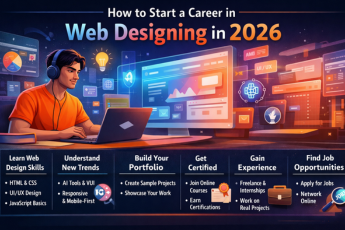
How to Start a Career in Web Designing in 2026
In today’s fast-evolving digital landscape, web designing continues to be one of the most in-demand and rewarding career paths. As we step into 2026, businesses, startups, and individuals are increasingly investing in their online presence, creating a strong demand for skilled web designers. Whether you are a student, a job seeker, or someone looking to switch careers, web designing offers a flexible, creative, and future-proof profession.
This comprehensive guide will walk you through everything you need to know to start a successful career in web designing in 2026.
1. Understand What Web Designing Really Is
Before diving into this field, it’s important to understand what web designing actually involves. Web designing is not just about making websites look attractive—it’s about creating user-friendly, functional, and responsive digital experiences.
A web designer focuses on:
Layout and structure of websites
Color schemes and typography
User interface (UI) design
User experience (UX) optimization
Mobile responsiveness
In 2026, web design goes beyond static pages. It includes interactive designs, animations, accessibility, and performance optimization.
2. Learn the Essential Skills
To build a strong foundation, you need to learn both technical and creative skills.
a) Basic Technologies
Start with the core building blocks of web design:
HTML (structure of web pages)
CSS (styling and layout)
JavaScript (interactivity)
These are must-have skills for every web designer.
b) UI/UX Design Principles
Grasping how users engage with websites is essential—focus on learning.
Wireframing and prototyping
User journey mapping
Design thinking
Accessibility standards
c) Design Tools
Modern designers rely on tools like:
Figma
Adobe XD
Photoshop
Canva (for beginners)
Figma is especially popular in 2026 due to its collaborative features.
d) Responsive Design
With mobile users dominating the internet, designing for different screen sizes is essential. Learn:
Flexbox and Grid
Media queries
Mobile-first design approach
3. Choose the Right Learning Path
A formal degree is not a mandatory requirement to build a successful career in web designing.
There are multiple ways to learn:
a) Online Courses
Platforms like Udemy, Coursera, and YouTube offer affordable and flexible learning.
b) Offline Training Institutes
Joining a professional course can provide structured learning, mentorship, and hands-on projects.
c) Self-Learning
If you are disciplined, you can learn through free resources, blogs, and practice.
d) Bootcamps
Short-term intensive programs that prepare you for job-ready skills in a few months.
4. Build a Strong Portfolio
Your portfolio is your biggest asset as a web designer. Employers and clients don’t just look at your qualifications—they want to see your work.
What to Include:
Personal projects
Website redesigns
UI/UX case studies
Real client work (if available)
Tips:
Focus on quality over quantity
Showcase your design process
Keep updating your portfolio regularly
In 2026, having a personal website portfolio is a must.
5. Gain Practical Experience
Hands-on experience plays a crucial role in becoming proficient in web design.
Ways to Gain Experience:
Freelancing on platforms like Fiverr and Upwork
Internships with local companies
Working on live projects
Collaborating with developers
Even small projects can help you build confidence and improve your skills.
6. Learn Basic Coding (Optional but Recommended)
While web designers primarily focus on design, having coding knowledge gives you an advantage.
Learn:
Basic JavaScript
CSS frameworks like Bootstrap or Tailwind
Version control (Git & GitHub)
This makes you more versatile and increases job opportunities.
7. Stay Updated with Trends
Web design trends change rapidly. In 2026, some key trends include:
AI-assisted design tools
Dark mode UI
Minimalist layouts
Micro-interactions and animations
Voice-based interfaces
Follow design blogs, communities, and social media to stay updated.
8. Develop Soft Skills
Technical skills alone are not enough. You also need:
Communication skills (to understand client requirements)
Creativity and problem-solving
Time management
Attention to detail
Good designers combine creativity with logic.
9. Choose Your Career Path
Web designing offers multiple career options:
1. Freelancer
Freelancing is a great option for those who prefer flexibility and independence. As a freelance web designer, you can work with clients from different industries and even across the globe. You have the freedom to choose your projects, set your pricing, and manage your own schedule. However, freelancing also requires strong self-discipline, communication skills, and the ability to find clients consistently. Building a strong portfolio and maintaining client relationships is key. Over time, experienced freelancers can earn significantly more than salaried professionals and even scale their work into an agency or personal brand.
2. Full-Time Job
A full-time job provides stability, consistent income, and structured career growth. As a web designer in a company, you will work on real-world projects, collaborate with developers and marketers, and gain industry experience. This path is ideal for beginners who want to learn in a professional environment. Companies often provide training, mentorship, and exposure to advanced tools and technologies. While the workload may be fixed and less flexible than freelancing, it offers job security and long-term career development. With experience, you can grow into senior roles like UI/UX designer, creative lead, or product designer.
3. Agency Work
Working in a web design or digital marketing agency offers a dynamic and fast-paced environment. You get the opportunity to work on multiple projects for different clients, which helps you build diverse skills quickly. Agencies usually have teams of designers, developers, and marketers, allowing you to learn collaboration and workflow processes. This path is ideal for those who enjoy variety and continuous learning. Deadlines can be tight, and the workload may be demanding, but the exposure to different industries is valuable. Agency experience can significantly boost your portfolio and prepare you for higher-level roles.
4. Entrepreneur
Starting your own web design business is ideal for those who want to build something of their own. As an entrepreneur, you can create a design agency, offer services, or even launch digital products like templates and UI kits. This path requires not only design skills but also business knowledge, including marketing, sales, and client management. It may take time to establish yourself, but the long-term rewards can be substantial. You have full control over your brand, pricing, and growth strategy. With dedication and smart planning, you can scale your business and create a strong presence in the industry.
Each path has its own benefits. Freelancing offers flexibility, while jobs provide stability.
10. Create a Personal Brand
In 2026, personal branding is extremely important.
How to Build Your Brand:
Share your work on social media
Create design content on LinkedIn or Instagram
Start a blog or YouTube channel
Participate in design communities
This helps you attract clients and job opportunities.
11. Prepare for Jobs and Interviews
When applying for jobs:
Create a strong resume
Highlight your portfolio
Practice design-related interview questions
Common interview topics:
UI/UX principles
Design tools
Problem-solving scenarios
Employers often give practical tasks, so be ready to showcase your skills.
12. Understand the Income Potential
Web designing offers great earning opportunities.
Beginner Level:
₹10,000 – ₹25,000/month (internships or entry-level)
Mid-Level:
₹30,000 – ₹70,000/month
Experienced Designers:
₹1,00,000+ per month
Freelancers can earn even more depending on their skills and clients.
13. Keep Learning and Growing
The learning process never stops in web design.
What to Learn Next:
Advanced UI/UX
Animation tools (like Framer)
Web development frameworks
AI tools for design
Continuous learning helps you stay ahead in the industry.
14. Common Mistakes to Avoid
Focusing only on design, ignoring usability
Not building a portfolio early
Copying designs without understanding concepts
Ignoring feedback
Not practicing regularly
Avoiding these mistakes will speed up your growth.
15. Future Scope of Web Designing in 2026
The future of web designing is extremely promising. With the rise of:
E-commerce businesses
Startups and digital platforms
AI-driven applications
Remote work culture
Real-world practice is essential for developing true expertise in web design.
Companies are looking for designers who can create engaging, fast, and user-friendly experiences.
Conclusion
Starting a career in web designing in 2026 is one of the smartest decisions you can make. It is a field that combines creativity, technology, and innovation, offering endless opportunities for growth.
To succeed, focus on building strong fundamentals, practicing regularly, and creating a solid portfolio. Stay updated with trends, improve your skills continuously, and don’t hesitate to start small.
Whether you choose freelancing, a full-time job, or your own business, web designing gives you the freedom to shape your career the way you want.
With dedication, consistency, and the right approach, you can build a successful and rewarding career in web designing in 2026 and beyond.
Why Choose TechCadd to Start a Career in Web Designing in 2026
In 2026, web designing has become one of the most promising and in-demand career options. With businesses rapidly shifting online, the need for creative and skilled web designers continues to grow. However, to build a successful career in this field, choosing the right training institute is essential. TechCadd has emerged as a trusted name for web designing training, offering industry-focused learning and practical exposure to help students succeed.
Industry-Relevant Curriculum
TechCadd provides a well-structured curriculum designed according to the latest industry standards. Instead of focusing only on theory, the course emphasizes practical and job-oriented skills. Students learn essential technologies like HTML, CSS, and JavaScript, along with modern design tools such as Figma and Adobe XD. The curriculum is regularly updated to match current trends, ensuring students stay competitive in 2026.
Experienced Trainers
One of the biggest strengths of TechCadd is its team of experienced trainers. They bring real-world industry knowledge into the classroom, helping students understand how web designing works in professional environments. Their step-by-step teaching approach makes even complex concepts easy to grasp, building both confidence and technical expertise.
Practical Learning Approach
Web designing is a skill-based field, and TechCadd strongly focuses on hands-on training. Students work on assignments, live projects, and real design scenarios that help them apply what they learn. This practical exposure ensures they are job-ready and capable of handling real-world challenges.
Portfolio Development
A strong portfolio is essential for any web designer, and TechCadd helps students build one. Through project-based learning, students create real websites and UI designs that showcase their skills. A well-developed portfolio increases job opportunities and leaves a strong impression on employers.
Job Placement Support
TechCadd offers dedicated placement assistance to help students start their careers. From resume building and interview preparation to mock interviews and job referrals, the institute supports students at every step. This guidance makes it easier for beginners to enter the job market with confidence.
Affordable and Flexible Learning
TechCadd offers high-quality training at affordable fees, making it accessible to many students. It also provides flexible learning options, including weekday and weekend batches, as well as online and offline classes. This flexibility allows students and working professionals to learn at their own pace.
Training on Latest Tools and Technologies
In 2026, web designing involves more than just coding. TechCadd ensures students are trained in modern tools like Figma, Photoshop, and responsive frameworks. Learning these tools helps students stay updated and improves their chances of getting hired.
Soft Skills and Personality Development
Apart from technical training, TechCadd also focuses on soft skills. Students improve their communication, presentation, and teamwork abilities. These skills are essential for client interaction, job interviews, and professional growth.
Supportive Learning Environment
TechCadd provides a friendly and motivating learning environment where students can ask questions and learn comfortably. Trainers are approachable and provide continuous support, helping students stay motivated throughout their learning journey.
Freelancing and Career Opportunities
TechCadd not only prepares students for jobs but also guides them in freelancing. Students learn how to find clients, manage projects, and build a personal brand. This opens up multiple career opportunities and income sources.
Conclusion
Choosing the right institute is the first step toward a successful career in web designing. TechCadd stands out by offering practical training, experienced guidance, and strong career support. With its industry-focused approach and commitment to student success, it provides everything needed to build a rewarding career in web designing in 2026.
write a content on Why choose TechCadd to Start a Career in Web Designing in 2026 in 1500 words
Why Choose TechCadd to Start a Career in Web Designing in 2026
In 2026, web designing has become one of the most dynamic and rewarding career options in the digital world. With businesses, startups, and even small local brands moving online, the demand for skilled web designers is at an all-time high. However, success in this field depends not only on your interest but also on the quality of training you receive. Choosing the right institute can shape your entire career, and this is where TechCadd stands out as a reliable and career-focused choice.
If you are planning to start your journey in web designing, here is a detailed explanation of why TechCadd can be the ideal institute for you in 2026.
Industry-Oriented Curriculum
One of the key reasons to choose TechCadd is its industry-relevant curriculum. Unlike traditional education systems that focus more on theoretical knowledge, TechCadd emphasizes practical, job-ready skills that match current industry demands.
The course is designed to cover essential web designing technologies such as HTML, CSS, and JavaScript, along with advanced concepts like responsive design, UI/UX principles, and modern design trends. Students also get hands-on experience with tools like Figma, Adobe XD, and Photoshop.
The curriculum is regularly updated to keep pace with evolving industry trends, ensuring that students learn what employers are actually looking for in 2026.
Experienced and Supportive Trainers
Another major advantage of studying at TechCadd is the presence of experienced trainers who bring real-world knowledge into the classroom. They do not just teach concepts—they guide students through practical applications and real project scenarios.
Their teaching approach is simple, structured, and easy to follow, making it suitable even for beginners with no technical background. Trainers also provide individual attention, helping students overcome their doubts and improve their skills.
This mentorship plays a crucial role in building confidence and preparing students for real-world challenges.
Strong Focus on Practical Training
Web designing is not just about learning theory; it is about applying knowledge in real situations. TechCadd understands this and places a strong emphasis on practical training.
Students are encouraged to:
This hands-on approach ensures that students gain actual experience, making them job-ready by the end of the course. Practical learning also helps students understand industry workflows and improves their problem-solving abilities.
Live Projects and Portfolio Development
In the web designing industry, your portfolio speaks louder than your qualifications. TechCadd helps students build a professional portfolio that showcases their skills and creativity.
Students get the opportunity to work on live projects or project-based assignments, which they can include in their portfolio. These projects may include business websites, landing pages, and UI/UX case studies.
A strong portfolio not only increases your chances of getting hired but also helps you stand out in a competitive job market.
Job Placement Assistance
Starting a career can be challenging, especially for freshers. TechCadd provides dedicated placement support to help students transition smoothly into the professional world.
The placement assistance includes:
-
Resume building sessions
-
Interview preparation
-
Mock interviews
-
Job referrals
The institute’s industry connections and placement support increase the chances of students securing jobs after completing their course. This makes TechCadd a great choice for those who are serious about starting a career in web designing.
Affordable and Value-for-Money Training
One of the biggest concerns for students is the cost of education. TechCadd offers high-quality training at affordable fees, making it accessible to a wide range of learners.
Compared to expensive degree programs, TechCadd provides practical, career-focused training at a fraction of the cost. This makes it a cost-effective option for students who want to gain real skills without spending a large amount of money.
The return on investment is high, as students gain job-ready skills and career opportunities.
Flexible Learning Options
In 2026, flexibility in learning has become more important than ever. TechCadd offers multiple learning options to suit different needs and schedules.
Students can choose:
-
Weekday or weekend batches
-
Online or offline classes
-
Regular or fast-track courses
This flexibility allows students, job seekers, and working professionals to learn at their own pace without affecting their daily routine.
Training on Latest Tools and Technologies
The web designing field is constantly evolving, and staying updated with the latest tools is essential. TechCadd ensures that students are trained in modern tools and technologies used in the industry.
These include:
-
Figma for UI/UX design
-
Adobe Photoshop for graphics
-
Bootstrap for responsive design
-
Basic JavaScript for interactivity
Learning these tools helps students stay competitive and improves their employability in 2026.
Focus on Soft Skills and Personality Development
Relying only on technical skills is not sufficient to thrive in a professional career.
TechCadd also focuses on developing soft skills that are essential in the workplace.
Students are trained in:
-
Communication skills
-
Presentation skills
-
Team collaboration
-
Client interaction
These skills help students perform better in interviews, communicate effectively with clients, and work efficiently in teams.
Real-World Industry Exposure
TechCadd goes beyond classroom learning by exposing students to real-world industry practices. Students learn about current trends, client expectations, and project workflows.
This exposure helps them understand how the industry actually works and prepares them for real job roles. It also builds confidence and reduces the gap between learning and working.
Opportunities for Freelancing
TechCadd not only prepares students for jobs but also guides them in starting freelancing careers. Students learn how to find clients, manage projects, and build a personal brand.
Freelancing provides the freedom to work on your own terms, maintain independence, and achieve strong income potential.
. With the right skills and guidance, students can start earning even before completing their course.
Entrepreneurial Growth Opportunities
For those who dream of starting their own business, TechCadd provides a strong foundation. Students can use their web designing skills to launch their own agency or service-based business.
They learn how to:
-
Handle clients
-
Manage projects
-
Market their services
With time and experience, they can scale their business and build a successful brand.
Supportive Learning Environment
A positive learning environment is essential for growth.. TechCadd provides a friendly and supportive atmosphere where students feel comfortable asking questions and learning.
Trainers and staff are always ready to help, ensuring that students stay motivated throughout their journey. This supportive environment makes learning more effective and enjoyable.
Certification and Career Value
Upon finishing the course, students are awarded a certification from TechCadd.While skills are the most important factor, certification adds credibility and strengthens your resume.
It helps in:
-
Gaining employer trust
-
Improving job prospects
-
Showcasing your training
Proven Track Record of Success
TechCadd has a strong track record of successfully trained students who have built careers in web designing. Many students have secured jobs, started freelancing, or launched their own businesses.
This success reflects the quality of training and the effectiveness of the institute’s approach.
Why TechCadd is the Right Choice in 2026
In 2026, competition in the web designing field is increasing, and employers are looking for skilled professionals who can deliver results. TechCadd focuses on practical knowledge, real-world experience, and career development.
It combines:
This makes it an ideal choice for anyone looking to start a career in web designing.
Conclusion
Starting a career in web designing requires the right skills, guidance, and opportunities. Choosing the right institute can make a huge difference in your journey.
TechCadd stands out as a trusted and career-focused training institute that equips students with the knowledge and practical experience needed to succeed in 2026. From industry-oriented curriculum and experienced trainers to placement assistance and portfolio development, it provides everything required to build a strong foundation.
If you are serious about building a successful career in web designing, TechCadd can be the perfect place to start. With dedication, practice, and the right training, you can achieve your goals and build a rewarding future in the digital world.
## Future of Starting a Career in Web Designing in 2026
The future of web designing in 2026 is more exciting, dynamic, and opportunity-rich than ever before. As the digital world continues to expand at a rapid pace, websites have become the backbone of businesses, personal brands, and online services. From e-commerce platforms to educational portals and entertainment websites, every sector relies on effective web design to connect with users. This growing dependence on digital platforms makes web designing a highly promising career choice for the future.
If you are planning to start a career in web designing in 2026, understanding future trends, opportunities, and industry demands is essential. Let’s explore in detail what the future holds for aspiring web designers.
---
## Rapid Growth of the Digital Economy
The global digital economy is expanding at an unprecedented rate. Businesses are investing heavily in their online presence to reach a wider audience and stay competitive. In 2026, even small and local businesses are prioritizing websites and digital platforms.
This growth directly increases the demand for web designers who can create visually appealing, functional, and user-friendly websites. As more companies go digital, the need for skilled professionals will continue to rise, ensuring long-term career stability for web designers.
---
## Increasing Demand for Skilled Web Designers
The demand for web designers is expected to grow significantly in the coming years. Companies are not just looking for basic designers—they want professionals who understand design, technology, and user behavior.
Employers prefer candidates who can:
* Design responsive and mobile-friendly websites
* Understand user experience (UX)
* Work with modern tools and frameworks
* Deliver creative and innovative designs
This means that individuals who invest time in learning and improving their skills will have a strong advantage in the job market.
---
## Impact of Artificial Intelligence (AI)
Artificial Intelligence is transforming the way websites are designed and developed. In 2026, AI-powered tools can assist in creating layouts, suggesting color combinations, and even generating design elements.
However, AI is not replacing web designers—it is enhancing their productivity. Designers who learn how to use AI tools effectively can work faster and more efficiently. The human touch, creativity, and problem-solving abilities remain essential.
The future belongs to designers who can combine AI tools with their creative thinking to produce better results.
---
## Focus on User Experience (UX) and User Interface (UI)
In the future, user experience will be one of the most critical aspects of web design. Websites are no longer just about aesthetics—they must provide smooth navigation, fast loading speeds, and a seamless user journey.
UI/UX design will play a major role in:
* Improving user satisfaction
* Increasing engagement
* Boosting conversions
Designers who specialize in UI/UX will have excellent career opportunities. Understanding user behavior and creating intuitive designs will be a key skill in 2026 and beyond.
---
## Rise of Mobile-First and Responsive Design
As most users now browse websites on mobile devices, adopting a mobile-first design approach has become essential.
In 2026, web designers must ensure that websites perform flawlessly on all screen sizes.
Responsive design is no longer optional—it is a standard requirement. Designers need to focus on:
* Flexible layouts
* Adaptive images
* Fast loading times on mobile networks
This trend will continue to grow, making mobile-friendly design skills essential for every web designer.
---
## Growth of Freelancing and Remote Work
One of the biggest changes in recent years is the rise of freelancing and remote work. In 2026, web designers have the flexibility to work from anywhere in the world.
Freelancing platforms and remote job opportunities allow designers to:
* Work with global clients
* Set their own schedules
* Earn competitive income
This flexibility makes web designing an attractive career option for students, professionals, and even entrepreneurs. With the right skills and portfolio, designers can build a successful freelance career.
---
## Expansion of E-Commerce and Online Businesses
E-commerce is booming, and this trend will continue in 2026. Businesses are constantly launching online stores and upgrading their websites to attract customers.
This creates a huge demand for web designers who can:
* Design user-friendly shopping websites
* Optimize product pages
* Improve checkout experiences
As online shopping grows, web designers will play a crucial role in shaping customer experiences and driving business success.
---
## Importance of Continuous Learning
The web design industry is constantly evolving, and staying updated is essential for long-term success. Fresh tools, innovations, and design trends continue to evolve on a regular basis.
In 2026, successful web designers will be those who:
* Continuously upgrade their skills
* Learn new tools and frameworks
* Follow industry trends
Learning is a lifelong process in this field. Designers who adapt to changes quickly will stay ahead of the competition.
---
## Emerging Technologies in Web Design
Several new technologies are shaping the future of web designing:
### 1. Voice User Interface (VUI)
With the rise of voice assistants, websites are integrating voice-based navigation. Designers need to consider how users interact with voice commands.
### 2. Motion UI and Animations
Interactive animations and micro-interactions are becoming popular.They boost user interaction and create a more engaging overall experience.
### 3. Augmented Reality (AR)
AR is being used in industries like e-commerce and real estate to provide immersive experiences. Web designers may need to integrate such features into websites.
### 4. Dark Mode Design
Dark mode has become a popular trend, and designers must create visually appealing interfaces for both light and dark themes.
---
## Career Opportunities in Web Designing
In 2026, web designing offers multiple career paths, including:
* Web Designer
* UI/UX Designer
* Front-End Developer
* Freelance Designer
* Design Consultant
Each role offers different opportunities and growth potential. Designers can choose a path based on their interests and skills.
---
## High Earning Potential
Web designing offers excellent earning opportunities. As skills and experience increase, so does income.
* Beginners can start with entry-level salaries
* Mid-level designers earn competitive packages
* Experienced professionals and freelancers can earn significantly higher
Freelancers and entrepreneurs have the potential to earn even more by working with multiple clients or running their own businesses.
---
## Role of Creativity and Innovation
Creativity remains at the heart of web designing. In 2026, businesses are looking for unique and engaging designs that stand out from the competition.
Designers who can:
* Think creatively
* Solve problems effectively
* Deliver innovative solutions
will always be in demand. Creativity combined with technical skills is the key to success in this field.
---
## Global Opportunities
Web designing is a global career. Designers are not limited to local job markets—they can work with clients and companies from around the world.
This global reach provides:
* Better earning opportunities
* Exposure to different industries
* Diverse project experience
With remote work becoming more common, the future of web designing is truly borderless.
---
## Challenges in the Future
While the future is promising, there are some challenges:
### Increasing Competition
As web designing becomes a popular career choice, the number of skilled professionals in the field is steadily growing. This leads to increased competition in both job markets and freelancing platforms. Employers and clients now look for designers who not only have basic knowledge but also strong portfolios, creativity, and practical experience. To stand out, aspiring designers must focus on building unique projects, improving their design thinking, and staying updated with trends. Developing a personal brand and continuously enhancing skills can help overcome competition and create better career opportunities.
---
### Rapidly Changing Technologies
The web design industry evolves quickly, with new tools, frameworks, and technologies emerging regularly. What is trending today may become outdated in a short time. Designers must adapt to changes such as AI-powered tools, advanced UI/UX practices, and responsive design techniques. Keeping up with these changes can be challenging but is essential for long-term success. By staying informed about new developments and experimenting with modern tools, designers can remain relevant and competitive in the industry. Adaptability and willingness to learn are key traits for success.
---
### Need for Continuous Learning
Continuous learning is essential in web designing because the industry is constantly evolving. Designers cannot rely only on what they learn initially; they must keep upgrading their skills to stay relevant. This includes learning new tools, improving design techniques, and understanding user behavior. Regular practice, online courses, and staying updated with industry trends help designers grow professionally. Continuous learning not only improves technical knowledge but also boosts creativity and confidence. Those who invest in learning consistently are more likely to succeed and achieve long-term career growth in web designing.
However, these challenges can be overcome with dedication, practice, and a willingness to adapt.
---
## Why 2026 is the Best Time to Start
2026 is an ideal time to start a career in web designing because:
* The demand for designers is high
* Learning resources are easily available
* Remote work opportunities are growing
* Technology is advancing rapidly
Starting now allows you to build skills and experience early, giving you a strong advantage in the future.
---
## Conclusion
The future of starting a career in web designing in 2026 is incredibly promising. With the rapid growth of the digital world, the demand for skilled designers will continue to rise. From AI-powered tools to mobile-first design and global freelancing opportunities, the field offers endless possibilities.
Success in this career depends on continuous learning, creativity, and practical experience. Those who stay updated with trends and focus on building strong skills will enjoy long-term growth and stability.
If you are passionate about design and technology, web designing in 2026 can open the door to a rewarding and future-proof career.