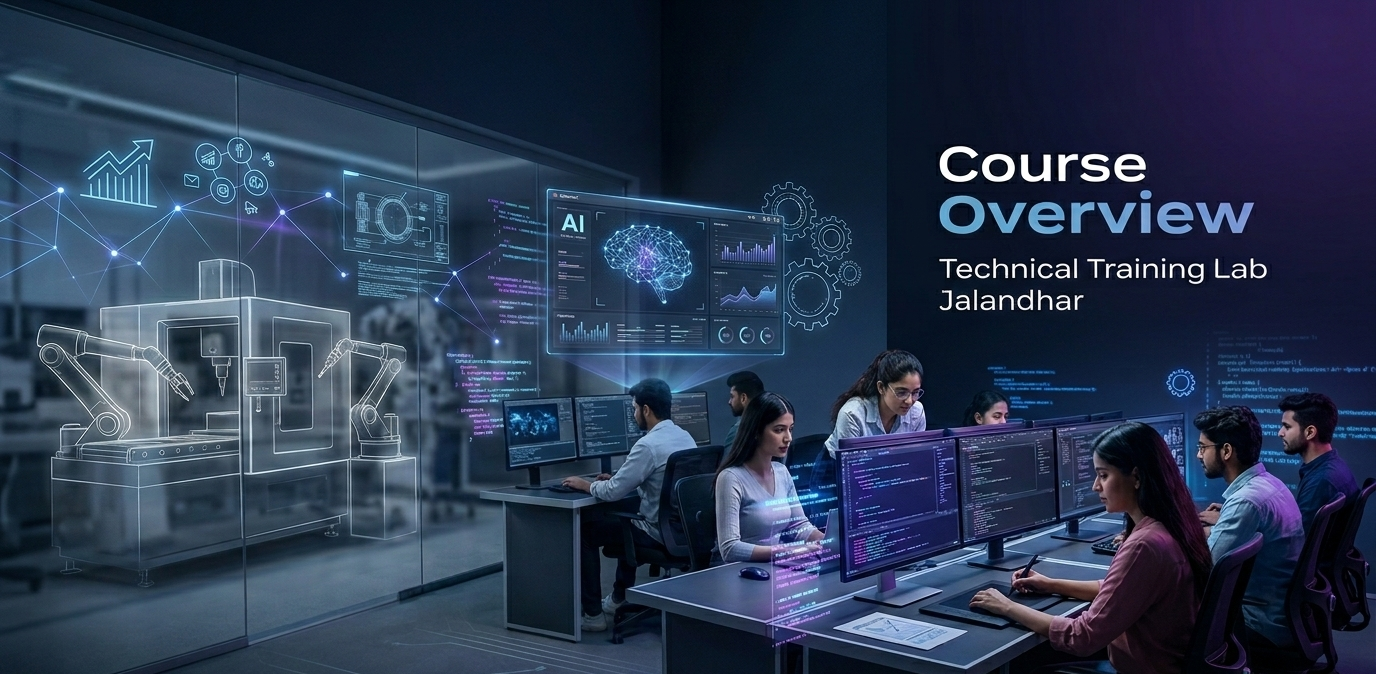
Course Overview
Technical Skill Courses in Jalandhar
Introduction
Technical Skill Courses in Jalandhar are designed to bridge the gap between academic education and real industry requirements. In today’s fast-changing professional environment, companies are looking for candidates who possess practical expertise, technical proficiency, and the ability to solve real-world problems. Traditional degree programs often emphasize theoretical knowledge, but employers increasingly prefer individuals who can apply skills immediately in workplace settings.
This course overview presents a detailed explanation of technical skill training programs offered in Jalandhar. It covers course objectives, structure, curriculum components, specialization tracks, teaching methodology, career opportunities, and future scope. The purpose of these programs is to prepare students, graduates, and working professionals with job-oriented training that aligns with modern industry standards.
Jalandhar, being one of the leading educational and industrial hubs in Punjab, provides strong opportunities in sectors such as information technology, digital services, manufacturing, retail, and entrepreneurship. These technical skill courses are structured to support local and national employment needs while also enabling students to compete globally.
Vision and Mission of the Course
Vision
To create highly skilled professionals equipped with practical technical knowledge, industry exposure, and professional ethics who can contribute effectively to the digital and industrial economy.
Mission
-
To provide industry-oriented training aligned with current market trends.
-
To offer hands-on practical exposure through projects and workshops.
-
To develop problem-solving and analytical skills among students.
-
To enhance employability through professional skill development.
-
To encourage innovation, creativity, and entrepreneurship.
Objectives of Technical Skill Courses
The primary objectives of these technical skill courses are:
-
To provide practical training in modern technologies.
-
To prepare students for industry-specific roles.
-
To enhance technical and analytical thinking abilities.
-
To develop confidence in handling real projects.
-
To make students job-ready in a short duration.
-
To reduce the skill gap between education and employment.
-
To support self-employment and startup initiatives.
These objectives ensure that learners not only understand concepts but also gain the ability to implement them effectively.
Target Audience
Technical skill courses in Jalandhar are suitable for:
-
Students after 10th or 12th standard
-
Undergraduate and postgraduate students
-
Engineering and diploma holders
-
Working professionals seeking upskilling
-
Entrepreneurs wanting technical knowledge
-
Job seekers preparing for industry roles
The flexible eligibility criteria make these courses accessible to a wide range of learners.
Course Structure and Duration
The course structure is designed to provide progressive learning from basic to advanced levels.
Duration Options
-
Short-Term Courses (1–3 months)
-
Focused skill training
-
Suitable for beginners
-
Basic certification
-
Certificate Courses (3–6 months)
-
Diploma Programs (6–12 months)
-
Advanced Diploma (1–2 years)
Each program includes theoretical sessions, lab practice, assignments, assessments, and final projects.
Major Course Categories
Technical skill courses in Jalandhar are offered across multiple domains to meet diverse career goals.
1. Information Technology and Software Development
The IT sector remains one of the most demanding and rewarding fields. These courses are designed to build strong programming and development skills.
Core Modules
-
Fundamentals of Computer Systems
-
Programming Logic and Algorithms
-
C and C++ Programming
-
Java Programming
-
Python Programming
-
Data Structures and Algorithms
-
Database Management Systems
-
Web Development (HTML, CSS, JavaScript)
-
Backend Development
-
Full Stack Development
-
Software Testing
Advanced Topics
Learning Outcomes
-
Ability to build websites and applications
-
Strong coding and debugging skills
-
Database handling and management
-
Real-time project development
-
Deployment and testing knowledge
Career roles include Software Developer, Web Developer, Application Developer, Data Analyst, and IT Support Engineer.
2. Digital Marketing and Online Business
Digital transformation has made digital marketing skills essential for businesses. These courses focus on online brand promotion and business growth strategies.
Course Modules
-
Introduction to Digital Marketing
-
Search Engine Optimization
-
Social Media Marketing
-
Google Ads and Paid Campaigns
-
Content Marketing
-
Email Marketing
-
Affiliate Marketing
-
E-commerce Management
-
Web Analytics and Reporting
Practical Exposure
Career roles include Digital Marketing Executive, SEO Specialist, Social Media Manager, Content Strategist, and Online Business Consultant.
3. Industrial and Engineering Skills
Jalandhar’s industrial base creates demand for skilled technicians and operators. These programs emphasize practical workshop training.
Key Training Areas
-
CNC Machine Operation
-
Mechanical Workshop Practice
-
Electrical Installation and Maintenance
-
Welding Techniques
-
Industrial Safety and Quality Control
-
Automobile Technology
-
Mechatronics Basics
Learning Focus
-
Equipment handling
-
Technical drawing interpretation
-
Safety standards compliance
-
Production process understanding
Career opportunities include Machine Operator, Technician, Maintenance Engineer, and Industrial Supervisor.
4. Computer Applications and Office Automation
These courses focus on essential office and administrative technical skills.
Modules Covered
These skills are valuable in corporate offices, small businesses, and financial institutions.
5. Graphic Design and Multimedia
Creative professionals can build careers through multimedia and design training.
Curriculum Includes
Skills Developed
Career roles include Graphic Designer, Video Editor, Animator, and UI/UX Designer.
6. Hardware and Networking
These programs train students to manage IT infrastructure systems.
Core Modules
-
Computer Hardware Assembly
-
Troubleshooting Techniques
-
Networking Fundamentals
-
Router and Switch Configuration
-
Server Administration
-
Network Security Basics
Graduates can work as Network Administrator, Hardware Engineer, or IT Support Specialist.
Teaching Methodology
The teaching approach focuses on practical application and real-world scenarios.
Methods Used
-
Classroom instruction
-
Practical lab sessions
-
Case studies
-
Live projects
-
Workshops and seminars
-
Industry guest lectures
-
Internship opportunities
Students are encouraged to build portfolios showcasing their work and projects.
Assessment and Certification
Evaluation methods include:
-
Practical assignments
-
Module tests
-
Project submissions
-
Viva examinations
-
Final skill assessment
Successful candidates receive certification, which enhances their professional credibility.
Professional Skill Development
Along with technical training, students receive professional development sessions covering:
These skills ensure holistic development and improve placement success rates.
Placement Assistance
Many technical skill programs offer placement support services such as:
-
Resume preparation
-
Interview scheduling
-
Company tie-ups
-
Internship programs
-
Job fair participation
Students are guided to apply their skills confidently in job interviews.
Infrastructure and Learning Environment
Training institutes in Jalandhar providing technical skill courses typically include:
A strong infrastructure enhances practical learning experience.
Benefits of Enrolling in Technical Skill Courses
-
Quick career entry
-
High job demand
-
Industry-relevant skills
-
Practical exposure
-
Affordable fee structures
-
Flexible learning schedules
-
Entrepreneurship opportunities
-
Global career prospects
These benefits make technical skill training a valuable investment.
Career Growth Opportunities
Technical skill courses open pathways for long-term career growth. Professionals can:
-
Work in multinational companies
-
Start freelancing careers
-
Launch their own startups
-
Upgrade skills for promotions
-
Pursue advanced certifications
Continuous learning ensures sustained professional development.
Future Scope
The demand for technical skills continues to grow due to:
-
Digital transformation
-
Automation and AI integration
-
Expansion of e-commerce
-
Industry 4.0 advancements
-
Growing startup ecosystem
Emerging technologies will create new job roles and increase the need for specialized training programs.
Specialized Training Modules and Advanced Learning Tracks
Technical skill courses in Jalandhar are not limited to foundational or generic skills. Many institutes offer specialized modules that allow students to gain in-depth knowledge in a particular domain. These modules are structured to ensure that learners can specialize in high-demand areas, increasing their employability and career potential.
1. Advanced IT and Software Development Tracks
Advanced software courses go beyond basic programming and web development to focus on cutting-edge technologies. Examples include:
-
Artificial Intelligence (AI) and Machine Learning (ML):
Students learn to design intelligent systems capable of predictive analysis, pattern recognition, and automation. Training includes Python programming, neural networks, natural language processing, and machine learning algorithms. Practical projects include building AI chatbots, predictive analytics models, and recommendation systems.
-
Data Science and Big Data Analytics:
Students gain expertise in handling large datasets, data visualization, statistical analysis, and database management. Tools like Python, R, Hadoop, Spark, and Tableau are used to convert raw data into actionable insights. Students may work on projects such as analyzing sales data for e-commerce or predicting trends in industrial production.
-
Cloud Computing and DevOps:
These modules prepare students for deploying applications in cloud environments like AWS, Azure, or Google Cloud. Topics include server management, containerization (Docker), continuous integration, and automation. Students learn to maintain cloud infrastructure and ensure system scalability.
-
Cybersecurity:
With increasing online threats, cybersecurity training equips students with knowledge of network security, ethical hacking, penetration testing, and secure coding practices. Hands-on labs include simulating security breaches and implementing protective measures.
These advanced tracks prepare students not only for entry-level roles but also for positions requiring specialized expertise, such as AI developer, data analyst, cybersecurity consultant, or cloud engineer.
2. Digital and Online Marketing Specializations
Digital marketing has evolved beyond social media posts and Google ads. Advanced courses cover multiple layers of digital strategy:
-
Search Engine Optimization (SEO) Advanced Techniques:
In addition to basics, students learn technical SEO, backlink analysis, algorithm updates, keyword research, and analytics interpretation. Projects may include optimizing a local business website to improve visibility.
-
Social Media Strategy and Branding:
Learners develop campaigns for multiple platforms (Facebook, Instagram, LinkedIn, Twitter) using content calendars, analytics dashboards, and audience engagement strategies.
-
E-commerce and Online Sales Optimization:
Training includes marketplace management (Amazon, Flipkart), product listing optimization, ad campaigns, and performance analysis. Students may simulate launching an online store, managing inventory, and generating sales reports.
-
Content Marketing and Multimedia Integration:
Students explore video content, infographics, blogs, and podcasts. Emphasis is placed on storytelling, brand voice, and audience targeting.
Digital marketing specialists from these programs often find work in agencies, startups, or as independent consultants for clients worldwide.
3. Industrial and Technical Trade Courses
For students interested in manufacturing, engineering, or mechanical trades, technical courses in Jalandhar focus on hands-on industrial experience.
-
CNC Machining and Automation:
Students are trained to operate CNC machines, perform precision cutting, and manage production schedules. Practical exposure helps them understand quality control, maintenance, and optimization of industrial workflows.
-
Electrical and Mechanical Training:
Students gain practical skills in wiring, troubleshooting, assembly, and maintenance. They learn industry safety standards and emergency protocols to handle real-world industrial environments.
-
Industrial Safety and Quality Assurance:
Emphasis is placed on creating safe work environments, following ISO standards, and implementing continuous quality improvement.
These programs often include live industrial internships, allowing students to interact with professionals, observe operations, and apply learned techniques directly.
4. Creative Multimedia and Design Specializations
The demand for digital creatives continues to grow in entertainment, advertising, education, and technology sectors. Advanced multimedia programs focus on:
-
Animation and Motion Graphics:
Students learn 2D and 3D animation using tools like Blender, Maya, and Adobe After Effects. Projects include animated explainer videos, advertisements, and interactive educational content.
-
UI/UX and App Design:
Learners explore user interface and user experience principles, wireframing, prototyping, and usability testing. Practical assignments include designing mobile apps or website interfaces based on real-world requirements.
-
Video Production and Editing:
Training covers shooting techniques, lighting, editing software (Adobe Premiere Pro, Final Cut Pro), and storytelling. Students may produce short films, promotional videos, or social media content.
These courses combine creativity and technology, equipping students for roles in digital media, design studios, e-learning, or advertising agencies.
5. Entrepreneurship and Freelancing Integration
Technical skill courses in Jalandhar also prepare students to become independent professionals. Many courses include modules on entrepreneurship, freelancing, and business development:
-
How to start a small IT or digital marketing consultancy
-
Freelancing platforms, bidding, and client management
-
Basic financial management, invoicing, and taxes
-
Startup idea validation and business planning
This approach allows learners to not only gain employment but also create their own business opportunities. Some institutes organize startup bootcamps and incubators, providing mentorship and industry networking opportunities.
Teaching Methodologies and Pedagogical Approaches
The strength of technical skill courses lies in their practical, applied learning methodologies. Common approaches include:
-
Hands-on Lab Sessions: Students spend significant time using software, machinery, or digital platforms.
-
Project-Based Learning: Learners complete real-world assignments simulating professional challenges.
-
Workshops and Seminars: Experts from industry share experiences, trends, and best practices.
-
Internships and Live Projects: Many programs include industrial attachments, enabling students to apply knowledge in actual workplace environments.
-
Blended Learning Models: Combining classroom sessions, online tutorials, and self-paced modules.
These teaching methodologies ensure that students do not just memorize concepts but develop the ability to apply knowledge effectively.
Infrastructure and Technological Support
Institutes providing technical courses in Jalandhar invest heavily in infrastructure:
-
Modern computer labs with high-performance machines
-
Industry-standard software and licenses
-
Workshop areas with machines and equipment
-
High-speed internet for cloud-based and online learning
-
Simulation labs for AI, robotics, and industrial training
-
Creative studios for multimedia and design courses
A strong infrastructure enhances student experience and ensures that graduates are industry-ready.
Assessment, Certification, and Recognition
Assessment in technical skill courses is multi-faceted:
-
Continuous evaluation through assignments and quizzes
-
Practical project assessment
-
Final examinations for theory and practical knowledge
-
Peer and instructor reviews of live projects
Upon completion, students receive industry-recognized certificates or diplomas. These certifications are recognized by employers and can also support higher education or advanced skill programs.
Professional and Soft Skills Integration
Apart from technical knowledge, soft skills are integral to career success. Courses often include:
-
Communication and presentation skills
-
Resume writing and interview preparation
-
Leadership and teamwork
-
Time management and productivity techniques
-
Problem-solving and critical thinking
Students who combine technical and professional skills have a distinct advantage in securing employment and performing effectively in their roles.
Placement Opportunities
Many institutes in Jalandhar provide dedicated placement support, including:
-
Resume and portfolio development
-
Interview preparation workshops
-
Networking sessions with industry professionals
-
Job fairs and recruitment drives
-
Internship placement assistance
Institutes maintain relationships with companies across IT, manufacturing, digital marketing, and creative industries, increasing the likelihood of successful job placement.
Career Prospects and Global Opportunities
Graduates of technical skill courses have diverse career paths:
-
IT and software development roles in multinational companies
-
Digital marketing positions in agencies and startups
-
Industrial technical roles in manufacturing and production
-
Freelancing opportunities in coding, digital marketing, and creative design
-
Entrepreneurial ventures in IT services, online education, or creative solutions
Global demand for skilled professionals in AI, cybersecurity, data science, and multimedia continues to rise, providing opportunities beyond India.
Future Outlook
The future of technical skill courses in Jalandhar is promising due to:
-
Rapid technological advancement across sectors
-
Growth of e-commerce, IT services, and digital marketing
-
Expansion of industrial automation and smart manufacturing
-
Government initiatives promoting skill development and vocational training
-
Increased awareness among youth regarding employability-focused education
Emerging technologies, such as AI, IoT, Robotics, and Cloud Computing, will create further demand for specialized skills. Students trained in these areas can secure high-paying and dynamic careers.
Why TechCADD – Comprehensive Overview
Introduction
In the modern education and career landscape, the demand for practical, industry-oriented technical skills has never been higher. Traditional academic programs often focus primarily on theory, leaving students inadequately prepared for real-world professional challenges. This gap between academic knowledge and industry requirements has created an increasing need for specialized training programs that emphasize practical learning, skill development, and career readiness.
TechCADD has emerged as a leading solution for students, graduates, and professionals who aspire to gain cutting-edge technical skills. Based in Jalandhar, Punjab, TechCADD provides a wide array of courses designed to enhance employability, promote career growth, and enable learners to thrive in competitive industries. This detailed overview explains why TechCADD is considered the preferred choice for technical skill training, its unique features, teaching methodologies, industry alignment, student benefits, and long-term career impact.
Vision and Mission of TechCADD
Vision
TechCADD envisions creating a generation of highly skilled professionals who are equipped with practical knowledge, modern technical expertise, and professional ethics to excel in the global workforce.
Mission
The mission of TechCADD is multifold:
-
To provide industry-relevant technical training that bridges the gap between education and employment.
-
To offer hands-on practical exposure through projects, workshops, and real-world case studies.
-
To foster innovation and problem-solving abilities among learners.
-
To enhance employability and entrepreneurial potential through career guidance and skill development.
-
To support continuous learning and professional growth in line with evolving technological trends.
The Need for TechCADD
Addressing the Skill Gap
One of the primary reasons TechCADD has become a trusted institution is its focus on addressing the skill gap prevalent in the modern job market. Many students, even after completing formal education, find it challenging to meet the expectations of employers. Employers increasingly prefer candidates who possess:
-
Practical and hands-on technical knowledge
-
Ability to work on real-world projects
-
Knowledge of modern tools and technologies
-
Professional communication and problem-solving skills
TechCADD bridges this gap by offering comprehensive training programs that combine theoretical understanding with applied skills, ensuring students are industry-ready.
Industry-Aligned Curriculum
TechCADD’s curriculum is meticulously designed in alignment with current industry requirements. Regular updates ensure that students are trained on the latest technologies, software, and tools, keeping them competitive in a rapidly evolving job market.
Accessibility and Flexibility
TechCADD courses cater to learners from diverse backgrounds: school pass-outs, college students, working professionals, and entrepreneurs. With flexible learning options, including weekend batches, online modules, and short-term certifications, TechCADD ensures accessibility for all.
Key Features That Make TechCADD Unique
1. Wide Range of Courses
TechCADD offers a diverse portfolio of technical skill programs, catering to multiple industries and career paths:
-
Information Technology (IT) and Software Development – Programming, Full Stack Development, Web Development, Mobile App Development, Software Testing, AI & Machine Learning.
-
Digital Marketing – SEO, Social Media Marketing, Google Ads, Email Marketing, E-commerce Management.
-
Industrial and Engineering Trades – CNC Operation, Mechanical Workshop, Electrical Training, Mechatronics, Welding.
-
Creative Multimedia & Design – Graphic Designing, Animation, Video Editing, UI/UX Design.
-
Office Automation & Computer Applications – MS Office, Advanced Excel, Tally, Data Entry, Accounting Software.
-
Soft Skills & Professional Development – Communication, Leadership, Time Management, Presentation Skills.
This wide array ensures that students can choose courses that align with their career aspirations and personal interests.
2. Experienced and Industry-Oriented Faculty
TechCADD prides itself on having a highly experienced faculty comprising industry professionals, technical experts, and educators. These instructors bring real-world experience into the classroom, providing students with insights beyond textbooks.
-
Faculty are well-versed in latest technologies and industry trends.
-
Students benefit from mentorship and guidance on career planning.
-
Hands-on demonstrations by faculty ensure practical learning alongside theoretical understanding.
This combination of academic knowledge and practical experience sets TechCADD apart from traditional training institutes.
3. Hands-On Practical Training
At TechCADD, learning is project-centric and practical. The institute believes that practical experience is the cornerstone of skill development.
-
Lab Sessions: Students work in modern labs equipped with advanced tools and software.
-
Live Projects: Real-world projects simulate workplace challenges, enabling students to apply concepts practically.
-
Case Studies: Students analyze actual business scenarios and technical challenges to develop problem-solving abilities.
This emphasis on learning by doing ensures that graduates are job-ready from day one.
4. Industry-Relevant Certifications
TechCADD offers certifications recognized by industry partners and employers, which significantly enhance employability. These certifications demonstrate technical competence and practical expertise, providing an edge in competitive job markets.
-
Certifications cover both foundational and advanced skill levels.
-
Students receive guidance on portfolio development, showcasing their projects and achievements.
-
Certification programs are updated regularly to include emerging technologies and industry trends.
5. Advanced Infrastructure and Learning Environment
TechCADD provides a modern learning environment equipped with advanced infrastructure:
-
High-performance computer labs with updated software
-
Industrial workshops for mechanical, electrical, and CNC training
-
Multimedia and animation studios for creative learning
-
Digital classrooms with projectors and interactive tools
-
High-speed internet and cloud-enabled learning platforms
A strong infrastructure ensures that students gain practical exposure in simulated real-world environments, enhancing their learning outcomes.
6. Personalized Mentorship and Career Guidance
TechCADD believes in holistic development, guiding students not only in technical skills but also in career planning.
-
Career counselors provide one-on-one mentorship.
-
Resume preparation workshops help students present their skills effectively.
-
Mock interviews and assessment sessions boost confidence and prepare students for real interviews.
-
Guidance on freelancing, entrepreneurship, and higher studies is provided.
This personalized approach ensures that students have a clear roadmap for career success.
7. Placement Assistance and Industry Tie-Ups
One of the most important aspects that make TechCADD a preferred choice is its strong placement support.
-
Partnerships with IT companies, digital agencies, manufacturing units, and startups.
-
Internship opportunities during training, giving students practical exposure and industry connections.
-
Placement drives organized by the institute for direct recruitment.
-
Alumni networks and professional connections provide guidance for career growth.
Students completing courses at TechCADD have access to various employment opportunities and a support system that facilitates their entry into professional roles.
8. Comprehensive Skill Development Approach
TechCADD emphasizes the integration of technical and soft skills to ensure overall professional development.
-
Technical Skills: In-depth expertise in specific domains such as IT, digital marketing, industrial trades, and creative design.
-
Soft Skills: Communication, teamwork, leadership, problem-solving, adaptability, and time management.
-
Entrepreneurial Skills: Business planning, freelancing guidance, startup incubation, and financial literacy.
This integrated approach ensures that students are well-rounded professionals, capable of succeeding in any organizational or entrepreneurial setting.
Why Students Prefer TechCADD
Several factors contribute to TechCADD’s popularity among students and working professionals:
-
Practical, Job-Oriented Learning – Students gain hands-on experience in real-world scenarios.
-
Industry-Relevant Curriculum – Courses are aligned with current technology trends and employer expectations.
-
Experienced Faculty – Guidance from industry professionals and technical experts.
-
Flexible Learning Options – Weekend, evening, and online classes allow professionals to upskill without disrupting work.
-
Affordable Fee Structure – Courses are priced competitively, providing high value for money.
-
Placement Support – Internships, live projects, and recruitment assistance facilitate job opportunities.
-
Holistic Skill Development – Integration of technical, professional, and entrepreneurial skills.
-
Strong Infrastructure – Modern labs, workshops, and digital learning facilities enhance practical training.
-
Recognition and Credibility – Certifications are recognized by industry partners, boosting employability.
Career Opportunities for TechCADD Graduates
TechCADD equips students with skills that open doors to high-demand careers in multiple domains:
-
Information Technology: Software Developer, Web Developer, Mobile App Developer, Data Analyst, AI Specialist.
-
Digital Marketing: SEO Executive, Social Media Manager, Content Strategist, E-commerce Manager.
-
Industrial Trades: CNC Operator, Mechanical Technician, Electrical Technician, Production Supervisor.
-
Creative Multimedia: Graphic Designer, Animator, Video Editor, UI/UX Designer.
-
Professional Services: IT Support Executive, Office Automation Specialist, Freelance Consultant.
Graduates can also pursue higher education, professional certifications, or entrepreneurial ventures after completing courses at TechCADD.
Future Scope of TechCADD Training
With rapid technological advancements and a dynamic global job market, the future scope of TechCADD training programs is immense:
-
AI, Machine Learning, and Big Data analytics skills will see increasing demand.
-
Digital marketing and e-commerce expertise will be essential for modern businesses.
-
Industrial automation and smart manufacturing will require skilled technicians.
-
Freelancing and entrepreneurship will offer independent career pathways for graduates.
-
Continuous learning modules and advanced certifications will allow students to stay updated with evolving technologies.
TechCADD ensures that students are not just prepared for today’s job market but are future-ready professionals capable of adapting to industry trends.
Testimonials and Alumni Success
TechCADD has built a strong reputation through its successful alumni network:
-
Many graduates have secured employment in top IT and digital marketing companies.
-
Alumni have started their own businesses and freelance careers.
-
Students credit TechCADD for providing practical exposure, industry insights, and mentorship that helped them achieve career goals.
This proven track record reflects the institute’s commitment to quality education and skill development.
Why TechCADD is the Best Choice in Jalandhar
While many training institutes offer technical courses, TechCADD stands out in Jalandhar for its holistic approach, industry alignment, and result-oriented training. Understanding why TechCADD is considered the preferred option requires examining multiple factors that directly influence students’ learning outcomes and career growth.
Local Industry Relevance
Jalandhar is known for its thriving industrial, sports goods, manufacturing, and service sectors. For students aiming to secure jobs locally or nationally, TechCADD’s training programs are uniquely tailored to bridge the skills gap in these industries.
-
Industrial Sector: Courses in CNC machining, mechanical workshops, electrical training, and mechatronics ensure that students are ready for roles in manufacturing units.
-
IT and Digital Sector: Web development, app development, AI, and digital marketing courses prepare students for companies expanding their digital presence in Punjab and across India.
-
Creative Sector: Graphic designing, animation, and multimedia courses cater to advertising agencies, media companies, and startups in the region.
By aligning course content with local industry requirements, TechCADD ensures that students gain skills that are immediately employable.
Comparative Advantage over Other Institutes
TechCADD differentiates itself from other training centers through several unique advantages:
-
Comprehensive Curriculum:
Unlike many institutes that focus solely on theory or a single skill, TechCADD provides a well-rounded curriculum that includes technical, professional, and soft skills.
-
Hands-On Learning:
Many competitors offer classroom-based learning without sufficient practical exposure. TechCADD emphasizes live projects, labs, and real-world simulations, enabling students to apply theoretical knowledge.
-
Expert Faculty:
Instructors at TechCADD are not just teachers but industry practitioners with years of experience, offering mentorship and insights that are otherwise unavailable in traditional institutes.
-
Infrastructure and Tools:
TechCADD’s modern labs, creative studios, and industrial workshops are equipped with latest software, hardware, and tools, providing a professional environment for skill acquisition.
-
Placement Support:
While other institutes may leave students to find jobs independently, TechCADD provides structured placement assistance, including internships, career counseling, mock interviews, and recruitment drives.
-
Flexible Learning Options:
Understanding the needs of working professionals, TechCADD offers weekend batches, online modules, and hybrid learning, ensuring accessibility without compromising quality.
-
Industry Partnerships:
TechCADD maintains strong ties with local and national companies, ensuring curriculum relevance and facilitating student placements.
-
Global Exposure:
Some programs, particularly in IT, digital marketing, and AI, provide training aligned with global standards, preparing students for opportunities not just in India but internationally.
Focus on Student Success
TechCADD’s reputation is built on real student success stories. Testimonials from alumni highlight key benefits:
-
Immediate Employability: Graduates report being confident in job interviews due to hands-on training and project experience.
-
Entrepreneurial Success: Many alumni have launched small IT firms, freelancing businesses, or digital marketing agencies.
-
Skill Confidence: Students frequently mention the practical knowledge gained at TechCADD allowed them to transition smoothly into professional roles.
-
Portfolio Development: By completing live projects, students leave the institute with a demonstrable portfolio, which is highly valued by recruiters.
These outcomes reflect TechCADD’s focus on results-oriented education rather than just certificate distribution.
Integration of Emerging Technologies
TechCADD ensures students are trained on cutting-edge technologies, preparing them for the future of work:
-
Artificial Intelligence & Machine Learning: Students learn to create intelligent applications and predictive models.
-
Cloud Computing & DevOps: Courses prepare learners for cloud infrastructure management and automation.
-
Big Data Analytics: Students develop skills in processing, analyzing, and visualizing large datasets.
-
Cybersecurity: Graduates gain knowledge in protecting networks and systems from cyber threats.
-
Industrial IoT & Automation: Technical training for smart factories and automated systems aligns with Industry 4.0 standards.
This focus on emerging technologies ensures students are not just job-ready today but future-ready for evolving career opportunities.
Personalized Mentorship and Career Guidance
TechCADD differentiates itself with its personalized mentorship programs, which guide students through career decisions and professional growth:
-
One-on-One Mentoring: Students receive individualized attention from faculty and career counselors.
-
Resume and Portfolio Building: TechCADD assists students in creating professional resumes and digital portfolios showcasing skills and projects.
-
Mock Interviews and Assessment Sessions: Realistic interview simulations build confidence and prepare students for corporate recruitment.
-
Freelancing and Entrepreneurship Guidance: Students learn how to start small businesses, pitch clients, and manage projects independently.
This mentorship ensures learners are well-prepared to navigate the professional landscape effectively.
Holistic Development Approach
TechCADD emphasizes both technical and soft skills, ensuring learners are competent in all aspects of professional life:
-
Communication Skills: Crucial for client interaction, teamwork, and workplace presentations.
-
Leadership and Teamwork: Students learn project management, leadership techniques, and collaboration skills.
-
Time Management and Productivity: Techniques for efficient task completion and meeting deadlines.
-
Problem-Solving & Critical Thinking: Training encourages analytical thinking and innovative solutions.
By integrating soft skills, TechCADD ensures that students are not only technically competent but also professional, adaptable, and confident in diverse work environments.
Focus on Real-World Projects
One of TechCADD’s key strengths is its emphasis on project-based learning:
-
Industry-Simulated Projects: Students work on tasks that replicate real company requirements.
-
Portfolio Creation: Every learner graduates with a body of work demonstrating technical proficiency.
-
Collaborative Projects: Students often work in teams, mirroring corporate project environments.
-
Problem-Solving Challenges: Assignments focus on analyzing real-world problems and designing effective solutions.
Such exposure ensures that graduates can immediately contribute in professional roles, reducing the need for prolonged on-the-job training.
Community and Alumni Network
TechCADD’s strong alumni network and community programs provide long-term benefits:
-
Alumni collaborate on projects and business ventures.
-
Networking opportunities facilitate mentorship and guidance for new students.
-
Success stories of alumni inspire current learners to achieve high standards.
-
Graduates often refer new students, reinforcing TechCADD’s reputation as a trusted institute.
This community approach provides learners with continuous professional support even after course completion.
Contribution to Local Economic Growth
By training skilled professionals, TechCADD also contributes to the local economy:
-
Local industries in Jalandhar benefit from a workforce that is technically competent and ready to contribute.
-
Graduates engage in entrepreneurial activities, creating jobs and promoting economic development.
-
Digital marketing and IT professionals trained at TechCADD help local businesses expand their digital footprint, boosting growth and competitiveness.
Through skill development, TechCADD plays a pivotal role in bridging the local employment gap and supporting regional industrial growth.
Testimonials and Success Stories
Students often highlight the following reasons for choosing TechCADD:
-
“I gained practical skills in web development that helped me land a job immediately after course completion.”
-
“The mentorship and live project training prepared me for interviews and client interactions.”
-
“TechCADD’s focus on emerging technologies like AI and digital marketing gave me a competitive advantage.”
-
“I started freelancing after completing my course, and the guidance I received helped me manage clients successfully.”
-
“The supportive environment and hands-on learning made all the difference compared to other institutes.”
These testimonials reinforce TechCADD’s commitment to student success and career readiness.
Long-Term Career Impact
TechCADD graduates enjoy significant long-term benefits:
-
Higher Employability: Industry-ready skills increase chances of securing jobs in competitive markets.
-
Career Growth: Advanced skills, certifications, and project experience open pathways to higher positions.
-
Freelancing and Entrepreneurship: Training encourages independent ventures, enabling financial independence.
-
Global Opportunities: Training aligned with international standards equips students for global careers.
-
Continuous Learning: Exposure to emerging technologies encourages lifelong learning and professional adaptation.
By investing in TechCADD courses, students position themselves for sustainable career growth and long-term success.
Future Scope of Technical Skill Courses in Jalandhar
Introduction
The global professional landscape is undergoing a rapid transformation driven by technology, automation, digitalization, and evolving industry requirements. Traditional academic education alone is no longer sufficient to ensure employability or career growth. Employers are seeking candidates who possess practical technical skills, problem-solving abilities, and industry-ready expertise.
Technical skill courses have emerged as a critical solution to bridge this gap. In Jalandhar, Punjab—a region known for its industrial base, educational institutions, and emerging digital ecosystem—technical skill training is playing an increasingly vital role in shaping careers. These courses provide learners with hands-on experience, industry-aligned knowledge, and practical expertise in areas ranging from Information Technology, Digital Marketing, Industrial Trades, Creative Design, and Multimedia, to entrepreneurship and business applications.
This detailed content examines the future scope of technical skill courses in Jalandhar, highlighting emerging trends, career opportunities, industry demand, global relevance, and the long-term professional impact of skill-based training.
The Growing Importance of Technical Skills
Bridging the Skill Gap
Despite the rise in higher education enrollment, many graduates lack the practical skills required in the workforce. Studies indicate that employers are struggling to find job-ready candidates in IT, manufacturing, digital marketing, and creative industries. Technical skill courses address this gap by focusing on:
-
Hands-on project experience
-
Industry-standard tools and software
-
Practical problem-solving and analytical skills
-
Real-world exposure through internships and live projects
By bridging the gap between theoretical knowledge and applied skills, these courses ensure that learners are prepared for immediate professional engagement.
Meeting Industry Demand
Jalandhar’s industrial, educational, and IT sectors are expanding rapidly. Technical skill courses cater to the workforce needs of:
-
Information Technology (IT): Software development, web development, AI, cloud computing
-
Digital Services: Digital marketing, SEO, social media management, e-commerce management
-
Industrial Trades: CNC machining, electrical maintenance, mechanical operations, industrial automation
-
Creative Fields: Graphic design, animation, multimedia, UI/UX design
-
Entrepreneurship & Freelancing: Startup development, consultancy, digital freelancing
The demand for skilled professionals is projected to grow as local industries integrate modern technologies and automation.
Emerging Trends Driving the Future Scope
Several global and local trends are driving the increasing importance of technical skills:
1. Digital Transformation Across Industries
Businesses worldwide are embracing digital tools, online platforms, and automation to improve efficiency and competitiveness. This creates opportunities for trained professionals in:
-
IT and software development: Building websites, apps, AI solutions, and cloud systems
-
Digital marketing: Managing online presence, SEO optimization, social media campaigns
-
E-commerce and analytics: Handling online sales, interpreting digital data, and improving customer engagement
Technical skill courses equip learners with expertise in these domains, enabling them to adapt to digital-first work environments.
2. Automation and Industry 4.0
The rise of smart manufacturing, robotics, and automation has created new career avenues for skilled professionals in industrial trades:
Courses focused on mechanical, electrical, and industrial automation prepare learners for these high-demand, future-oriented roles.
3. AI, Machine Learning, and Big Data
Artificial Intelligence, Machine Learning, and Big Data are transforming industries from healthcare to retail. Skills in:
-
Data analysis and predictive modeling
-
Neural network development
-
AI application in business processes
are becoming increasingly valuable. Technical skill courses provide a foundation for students to enter AI and data-driven roles.
4. Freelancing and Gig Economy
The gig economy and freelancing opportunities have expanded globally, allowing individuals to:
-
Offer IT, digital marketing, and design services
-
Manage clients and projects independently
-
Build entrepreneurial careers with minimal investment
Technical skill courses equip students with freelance-ready skills, portfolios, and industry exposure, opening pathways for independent careers.
5. Creative Industry Growth
With digital content consumption rising rapidly, careers in graphic design, multimedia, animation, and UI/UX design are thriving. Companies, startups, and online content platforms require professionals with creative, technical, and design thinking skills.
Career Opportunities for Technical Skill Course Graduates
Technical skill courses prepare learners for a diverse range of career opportunities. Some of the major sectors and roles include:
1. Information Technology
-
Software Developer – Designing, coding, and maintaining software applications
-
Web Developer – Building responsive websites and e-commerce platforms
-
App Developer – Developing mobile applications for Android, iOS, or cross-platform
-
Data Analyst – Interpreting data to inform business decisions
-
AI/ML Engineer – Developing intelligent systems and predictive models
-
Cloud Engineer – Deploying and managing cloud-based infrastructure
2. Digital Marketing
-
SEO Executive – Optimizing websites to rank on search engines
-
Social Media Manager – Managing content and campaigns on social media platforms
-
Content Strategist – Planning and producing marketing content for businesses
-
Digital Analyst – Interpreting marketing data to improve ROI
-
E-commerce Manager – Handling online sales, product listings, and customer engagement
3. Industrial and Engineering Roles
-
CNC Operator – Operating and maintaining precision machines
-
Electrical Technician – Installing, troubleshooting, and maintaining electrical systems
-
Mechanical Technician – Maintaining machinery, equipment, and industrial systems
-
Industrial Automation Engineer – Implementing smart factory technologies and automated processes
-
Production Supervisor – Managing workflows, quality control, and operational efficiency
4. Creative and Multimedia Careers
-
Graphic Designer – Creating visual content for digital and print media
-
Animator – Producing animated videos, advertisements, and entertainment content
-
Video Editor – Editing raw footage into professional-quality videos
-
UI/UX Designer – Designing user-friendly interfaces for websites and applications
-
Digital Illustrator – Producing visual illustrations for media and branding
5. Entrepreneurship and Freelancing
-
Startup Founder – Launching small businesses in IT, design, digital marketing, or consulting
-
Freelance Consultant – Providing specialized services remotely to clients worldwide
-
Digital Content Creator – Monetizing skills through YouTube, social media, or freelance platforms
-
IT Services Provider – Offering software development, web design, or app development services
Future Scope by Industry Sector
1. IT and Software Development
India is emerging as a global IT hub, and Punjab’s cities, including Jalandhar, are contributing to this growth. With ongoing digital transformation, careers in software, web, and app development will continue to expand. Professionals with practical skills, certifications, and project portfolios will have high employability and earning potential.
2. Digital Marketing
As businesses increasingly move online, digital marketing skills will remain in high demand, especially for SMEs and startups seeking online visibility. Opportunities include SEO, social media marketing, content creation, and analytics roles. Freelancing and remote digital marketing services will also grow, enabling global work from local locations.
3. Industrial Trades
Industrial automation, manufacturing growth, and smart factory initiatives (Industry 4.0) create sustainable employment for skilled technicians. Technical skill courses focused on CNC machining, electrical work, mechanical systems, and industrial automation will prepare learners for long-term career growth.
4. Creative and Multimedia Industry
With online education, entertainment, and digital media growing exponentially, careers in multimedia design, animation, and UI/UX will continue to thrive. Demand for skilled professionals in these creative fields is expected to grow rapidly, both locally and internationally.
5. Freelancing and Entrepreneurship
Freelancing platforms such as Upwork, Fiverr, and Freelancer, combined with low-cost digital tools, allow learners to build independent careers. Technical skills enable students to start IT, design, or digital marketing businesses, promoting self-employment and economic independence.
Future Skills That Will Gain Importance
Students who invest in technical skill courses today will benefit from emerging skills that are projected to shape the future:
-
Artificial Intelligence & Machine Learning
-
Cloud Computing & DevOps
-
Data Analytics & Business Intelligence
-
Cybersecurity & Ethical Hacking
-
Automation & Robotics
-
Digital Marketing Analytics
-
Graphic Design, Animation, and Multimedia Production
-
UI/UX Design for Web and Mobile Applications
Mastering these skills ensures learners remain competitive and future-ready in rapidly evolving job markets.
Global Opportunities
Technical skill courses in Jalandhar also prepare students for global careers:
-
IT professionals can work remotely or relocate to IT hubs worldwide
-
Digital marketers can manage international campaigns
-
Freelancers can collaborate with clients across countries
-
Entrepreneurs can leverage global platforms to scale their startups
The international relevance of technical skills makes these courses future-proof, allowing students to pursue opportunities beyond geographic boundaries.
Entrepreneurship and Startups
The startup ecosystem in India is growing exponentially, and Punjab is becoming an emerging hub for small businesses and startups. Technical skills enable students to:
-
Launch IT or digital marketing ventures
-
Provide design, animation, or multimedia services
-
Start manufacturing or industrial service-based businesses
-
Utilize freelancing platforms to generate revenue
Entrepreneurial training in technical skill courses helps students identify market opportunities, plan businesses, and execute projects successfully.
Lifelong Learning and Upskilling
The future workforce will require continuous learning to adapt to changing technologies. Technical skill courses lay the foundation for lifelong learning by:
-
Introducing students to practical, applied knowledge
-
Encouraging familiarity with industry-standard tools
-
Preparing students to pursue advanced certifications and specialization programs
Upskilling ensures career sustainability and growth in dynamic professional environments.
Future Scope of Technical Skill Courses in Jalandhar
Introduction
The global professional landscape is undergoing a rapid transformation driven by technology, automation, digitalization, and evolving industry requirements. Traditional academic education alone is no longer sufficient to ensure employability or career growth. Employers are seeking candidates who possess practical technical skills, problem-solving abilities, and industry-ready expertise.
Technical skill courses have emerged as a critical solution to bridge this gap. In Jalandhar, Punjab—a region known for its industrial base, educational institutions, and emerging digital ecosystem—technical skill training is playing an increasingly vital role in shaping careers. These courses provide learners with hands-on experience, industry-aligned knowledge, and practical expertise in areas ranging from Information Technology, Digital Marketing, Industrial Trades, Creative Design, and Multimedia, to entrepreneurship and business applications.
This detailed content examines the future scope of technical skill courses in Jalandhar, highlighting emerging trends, career opportunities, industry demand, global relevance, and the long-term professional impact of skill-based training.
The Growing Importance of Technical Skills
Bridging the Skill Gap
Despite the rise in higher education enrollment, many graduates lack the practical skills required in the workforce. Studies indicate that employers are struggling to find job-ready candidates in IT, manufacturing, digital marketing, and creative industries. Technical skill courses address this gap by focusing on:
-
Hands-on project experience
-
Industry-standard tools and software
-
Practical problem-solving and analytical skills
-
Real-world exposure through internships and live projects
By bridging the gap between theoretical knowledge and applied skills, these courses ensure that learners are prepared for immediate professional engagement.
Meeting Industry Demand
Jalandhar’s industrial, educational, and IT sectors are expanding rapidly. Technical skill courses cater to the workforce needs of:
-
Information Technology (IT): Software development, web development, AI, cloud computing
-
Digital Services: Digital marketing, SEO, social media management, e-commerce management
-
Industrial Trades: CNC machining, electrical maintenance, mechanical operations, industrial automation
-
Creative Fields: Graphic design, animation, multimedia, UI/UX design
-
Entrepreneurship & Freelancing: Startup development, consultancy, digital freelancing
The demand for skilled professionals is projected to grow as local industries integrate modern technologies and automation.
Emerging Trends Driving the Future Scope
Several global and local trends are driving the increasing importance of technical skills:
1. Digital Transformation Across Industries
Businesses worldwide are embracing digital tools, online platforms, and automation to improve efficiency and competitiveness. This creates opportunities for trained professionals in:
-
IT and software development: Building websites, apps, AI solutions, and cloud systems
-
Digital marketing: Managing online presence, SEO optimization, social media campaigns
-
E-commerce and analytics: Handling online sales, interpreting digital data, and improving customer engagement
Technical skill courses equip learners with expertise in these domains, enabling them to adapt to digital-first work environments.
2. Automation and Industry 4.0
The rise of smart manufacturing, robotics, and automation has created new career avenues for skilled professionals in industrial trades:
Courses focused on mechanical, electrical, and industrial automation prepare learners for these high-demand, future-oriented roles.
3. AI, Machine Learning, and Big Data
Artificial Intelligence, Machine Learning, and Big Data are transforming industries from healthcare to retail. Skills in:
-
Data analysis and predictive modeling
-
Neural network development
-
AI application in business processes
are becoming increasingly valuable. Technical skill courses provide a foundation for students to enter AI and data-driven roles.
4. Freelancing and Gig Economy
The gig economy and freelancing opportunities have expanded globally, allowing individuals to:
-
Offer IT, digital marketing, and design services
-
Manage clients and projects independently
-
Build entrepreneurial careers with minimal investment
Technical skill courses equip students with freelance-ready skills, portfolios, and industry exposure, opening pathways for independent careers.
5. Creative Industry Growth
With digital content consumption rising rapidly, careers in graphic design, multimedia, animation, and UI/UX design are thriving. Companies, startups, and online content platforms require professionals with creative, technical, and design thinking skills.
Career Opportunities for Technical Skill Course Graduates
Technical skill courses prepare learners for a diverse range of career opportunities. Some of the major sectors and roles include:
1. Information Technology
-
Software Developer – Designing, coding, and maintaining software applications
-
Web Developer – Building responsive websites and e-commerce platforms
-
App Developer – Developing mobile applications for Android, iOS, or cross-platform
-
Data Analyst – Interpreting data to inform business decisions
-
AI/ML Engineer – Developing intelligent systems and predictive models
-
Cloud Engineer – Deploying and managing cloud-based infrastructure
2. Digital Marketing
-
SEO Executive – Optimizing websites to rank on search engines
-
Social Media Manager – Managing content and campaigns on social media platforms
-
Content Strategist – Planning and producing marketing content for businesses
-
Digital Analyst – Interpreting marketing data to improve ROI
-
E-commerce Manager – Handling online sales, product listings, and customer engagement
3. Industrial and Engineering Roles
-
CNC Operator – Operating and maintaining precision machines
-
Electrical Technician – Installing, troubleshooting, and maintaining electrical systems
-
Mechanical Technician – Maintaining machinery, equipment, and industrial systems
-
Industrial Automation Engineer – Implementing smart factory technologies and automated processes
-
Production Supervisor – Managing workflows, quality control, and operational efficiency
4. Creative and Multimedia Careers
-
Graphic Designer – Creating visual content for digital and print media
-
Animator – Producing animated videos, advertisements, and entertainment content
-
Video Editor – Editing raw footage into professional-quality videos
-
UI/UX Designer – Designing user-friendly interfaces for websites and applications
-
Digital Illustrator – Producing visual illustrations for media and branding
5. Entrepreneurship and Freelancing
-
Startup Founder – Launching small businesses in IT, design, digital marketing, or consulting
-
Freelance Consultant – Providing specialized services remotely to clients worldwide
-
Digital Content Creator – Monetizing skills through YouTube, social media, or freelance platforms
-
IT Services Provider – Offering software development, web design, or app development services
Future Scope by Industry Sector
1. IT and Software Development
India is emerging as a global IT hub, and Punjab’s cities, including Jalandhar, are contributing to this growth. With ongoing digital transformation, careers in software, web, and app development will continue to expand. Professionals with practical skills, certifications, and project portfolios will have high employability and earning potential.
2. Digital Marketing
As businesses increasingly move online, digital marketing skills will remain in high demand, especially for SMEs and startups seeking online visibility. Opportunities include SEO, social media marketing, content creation, and analytics roles. Freelancing and remote digital marketing services will also grow, enabling global work from local locations.
3. Industrial Trades
Industrial automation, manufacturing growth, and smart factory initiatives (Industry 4.0) create sustainable employment for skilled technicians. Technical skill courses focused on CNC machining, electrical work, mechanical systems, and industrial automation will prepare learners for long-term career growth.
4. Creative and Multimedia Industry
With online education, entertainment, and digital media growing exponentially, careers in multimedia design, animation, and UI/UX will continue to thrive. Demand for skilled professionals in these creative fields is expected to grow rapidly, both locally and internationally.
5. Freelancing and Entrepreneurship
Freelancing platforms such as Upwork, Fiverr, and Freelancer, combined with low-cost digital tools, allow learners to build independent careers. Technical skills enable students to start IT, design, or digital marketing businesses, promoting self-employment and economic independence.
Future Skills That Will Gain Importance
Students who invest in technical skill courses today will benefit from emerging skills that are projected to shape the future:
-
Artificial Intelligence & Machine Learning
-
Cloud Computing & DevOps
-
Data Analytics & Business Intelligence
-
Cybersecurity & Ethical Hacking
-
Automation & Robotics
-
Digital Marketing Analytics
-
Graphic Design, Animation, and Multimedia Production
-
UI/UX Design for Web and Mobile Applications
Mastering these skills ensures learners remain competitive and future-ready in rapidly evolving job markets.
Global Opportunities
Technical skill courses in Jalandhar also prepare students for global careers:
-
IT professionals can work remotely or relocate to IT hubs worldwide
-
Digital marketers can manage international campaigns
-
Freelancers can collaborate with clients across countries
-
Entrepreneurs can leverage global platforms to scale their startups
The international relevance of technical skills makes these courses future-proof, allowing students to pursue opportunities beyond geographic boundaries.
Entrepreneurship and Startups
The startup ecosystem in India is growing exponentially, and Punjab is becoming an emerging hub for small businesses and startups. Technical skills enable students to:
-
Launch IT or digital marketing ventures
-
Provide design, animation, or multimedia services
-
Start manufacturing or industrial service-based businesses
-
Utilize freelancing platforms to generate revenue
Entrepreneurial training in technical skill courses helps students identify market opportunities, plan businesses, and execute projects successfully.
Lifelong Learning and Upskilling
The future workforce will require continuous learning to adapt to changing technologies. Technical skill courses lay the foundation for lifelong learning by:
-
Introducing students to practical, applied knowledge
-
Encouraging familiarity with industry-standard tools
-
Preparing students to pursue advanced certifications and specialization programs
Upskilling ensures career sustainability and growth in dynamic professional environments.