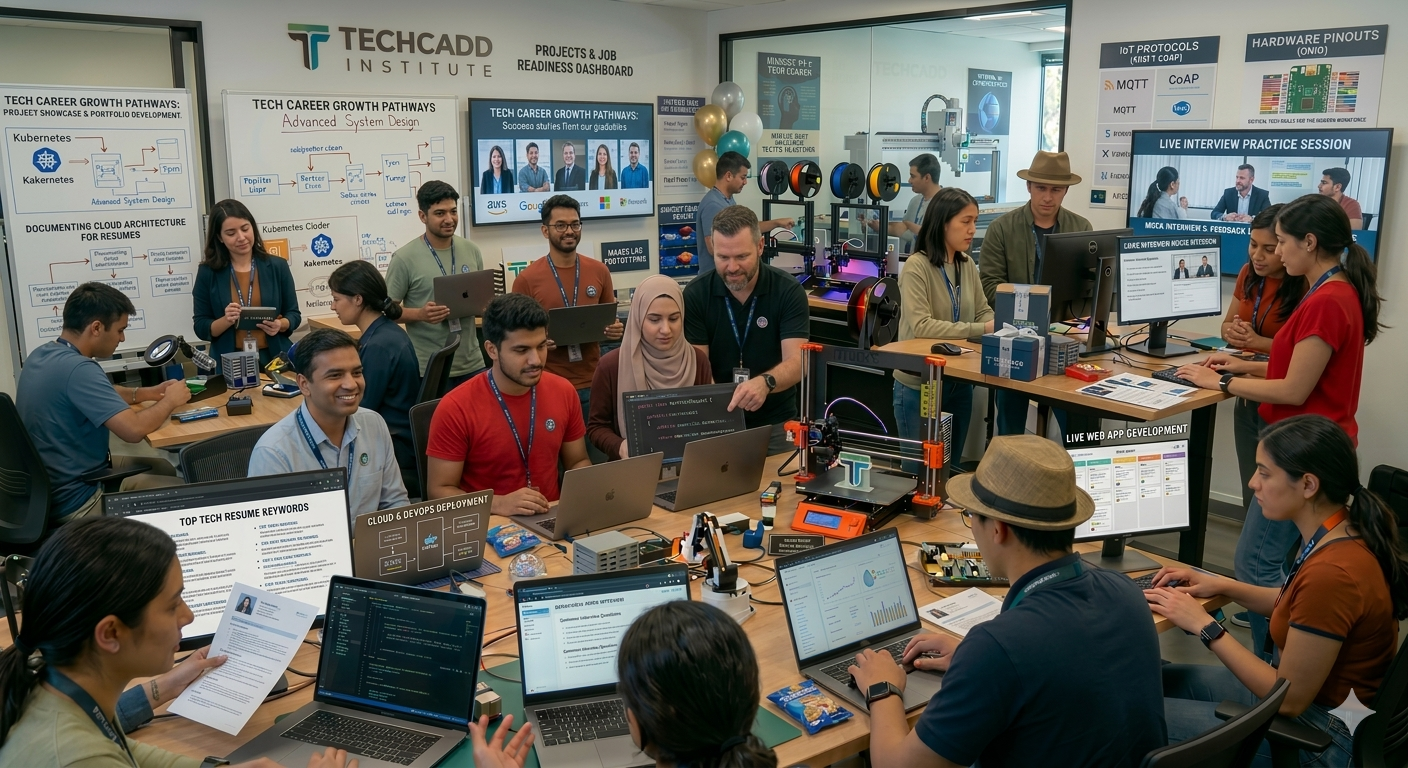
Career skills are essential for students who want to succeed in today’s competitive professional environment. While academic knowledge provides a foundation, practical skills and professional abilities help individuals apply their knowledge effectively in real-world situations. The Techcadd student career skills training program focuses on helping learners develop the technical and professional competencies needed to build successful careers in technology and digital industries. The image represents a dynamic learning environment where students are actively developing their career skills through hands-on practice and mentorship.
At Techcadd, career skills development is integrated into the training process. Students are not only taught technical subjects but are also guided in building the skills required to succeed in professional roles. These career skills may include programming, web development, data analysis, digital marketing strategies, and cloud computing technologies. By learning these skills, students gain practical knowledge that can be applied directly in professional environments.
One of the key aspects of career skills training is practical learning. Students work on laptops and development tools while completing exercises and projects that simulate real industry tasks. This hands-on experience allows learners to understand how technology is used to solve problems and build solutions. Practical learning helps students gain confidence and develop the ability to work independently on technical tasks.
The classroom environment encourages collaboration and teamwork. Students often work together on projects, discuss technical challenges, and share ideas for solutions. This collaborative approach helps learners understand how teamwork functions in professional workplaces where multiple individuals contribute to a single project.
Mentorship plays an important role in developing career skills. Trainers and instructors guide students through complex concepts and help them understand industry practices. Their experience allows them to provide insights into real-world work environments and professional expectations. With proper mentorship, students can improve their technical abilities and learn how to approach challenges effectively.
Another important aspect of career skills development is communication. In professional environments, individuals must be able to present ideas, explain technical solutions, and collaborate with team members. During training, students are encouraged to participate in discussions, ask questions, and explain their projects. This helps them develop confidence and communication skills that are valuable during job interviews and professional interactions.
Career skills training also focuses on problem-solving and analytical thinking. Technology professionals frequently encounter challenges that require creative solutions. By working on practical projects and assignments, students learn how to analyze problems and develop effective strategies to solve them.
Portfolio development is another important element of career preparation. As students complete projects during their training, they compile their work into professional portfolios. These portfolios showcase their skills, projects, and technical knowledge to potential employers. Having a strong portfolio increases a student’s chances of securing internships or job opportunities.
In addition to technical knowledge, students learn professional habits such as time management, project organization, and responsibility. These qualities help individuals adapt to professional environments where meeting deadlines and maintaining productivity are essential.
The image of students learning career skills reflects dedication, curiosity, and ambition. Each learner is focused on improving their abilities and preparing for future opportunities. The presence of instructors and collaborative discussions creates an atmosphere that encourages continuous learning and professional growth.
Overall, the Techcadd student career skills training program prepares learners for real-world opportunities by combining theoretical knowledge with practical experience. Through hands-on projects, mentorship, and collaborative learning, students develop the abilities needed to succeed in the rapidly evolving technology industry. This training environment empowers students to transform their education into meaningful career paths and long-term professional success.