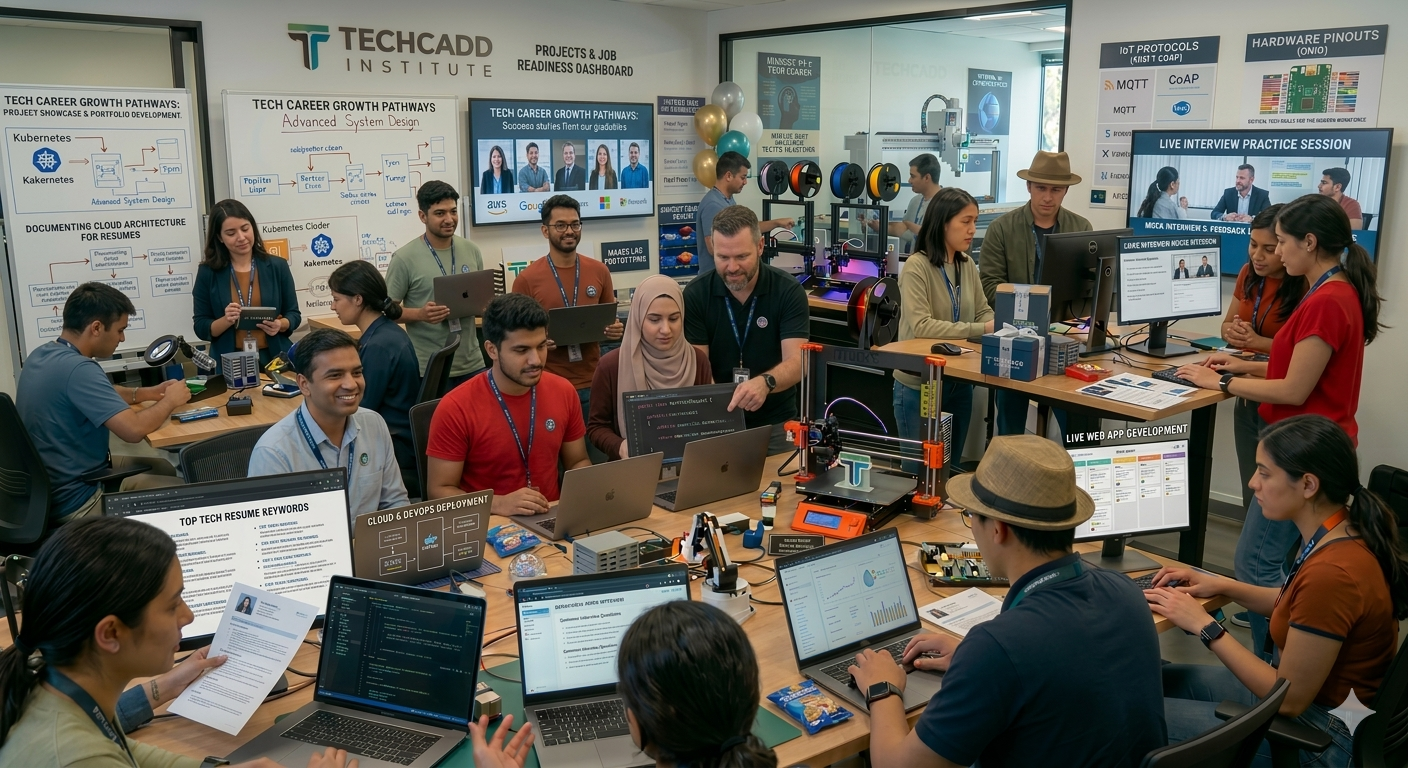
Coding has become one of the most valuable and in-demand skills in today’s digital world. As technology continues to transform industries and everyday life, the ability to write and understand computer code has become essential for many modern careers. The Techcadd student coding training program is designed to help learners develop strong programming skills and gain practical experience in software development. The image represents a modern training classroom where students are actively learning programming languages and working on coding exercises under the guidance of experienced instructors.
At Techcadd, coding training focuses on teaching students the fundamentals of programming. Students are introduced to important programming concepts such as variables, loops, conditional statements, data structures, and algorithms. These concepts form the building blocks of software development and help learners understand how computer programs are created and executed.
The training environment encourages active learning and practical practice. Students work on laptops while writing code and testing their programs. Trainers demonstrate coding techniques and explain how different programming languages work. By following along with coding exercises and examples, students gain a clear understanding of programming logic and problem-solving methods.
One of the key aspects of coding training is learning multiple programming languages that are widely used in the technology industry. Students may learn languages such as Python, Java, JavaScript, or C++. Each language has its own strengths and applications, and learning these languages allows students to explore different areas of software development such as web development, application development, and data analysis.
Hands-on practice is an important part of the learning process. Instead of focusing only on theory, students are encouraged to write their own programs and experiment with coding solutions. This practical experience helps them understand how programming concepts work in real-world scenarios and improves their confidence in solving technical challenges.
Project-based learning is another key feature of the Techcadd coding training program. Students often work on small projects that simulate real software development tasks. These projects may include creating simple applications, developing interactive websites, or building tools that solve specific problems. Working on such projects helps students apply their knowledge in practical situations and develop their creativity as programmers.
The collaborative learning environment also plays an important role in coding education. Students frequently work together to solve programming problems, share ideas, and debug errors in their code. This teamwork encourages knowledge sharing and helps learners develop communication skills that are important in professional software development teams.
Mentorship from experienced trainers helps students progress effectively through the coding training program. Trainers provide guidance during coding exercises, explain complex programming concepts, and help students correct mistakes in their code. Their support ensures that learners develop strong programming habits and continue improving their skills.
Another advantage of coding training is the opportunity to build a portfolio of programming projects. As students complete assignments and projects, they create applications and programs that demonstrate their technical abilities. This portfolio can be very valuable when applying for internships or job opportunities in the technology industry.
The image of students working on programming tasks reflects focus, creativity, and determination. Each student is engaged in writing code and learning how to transform ideas into functional software solutions. The classroom becomes a space where learners develop the technical expertise required to succeed in the rapidly evolving technology sector.
Overall, the Techcadd student coding training program provides learners with the knowledge and practical experience needed to become skilled programmers. Through hands-on learning, project-based practice, and expert mentorship, students gain the confidence and technical abilities required to pursue successful careers in software development and technology.