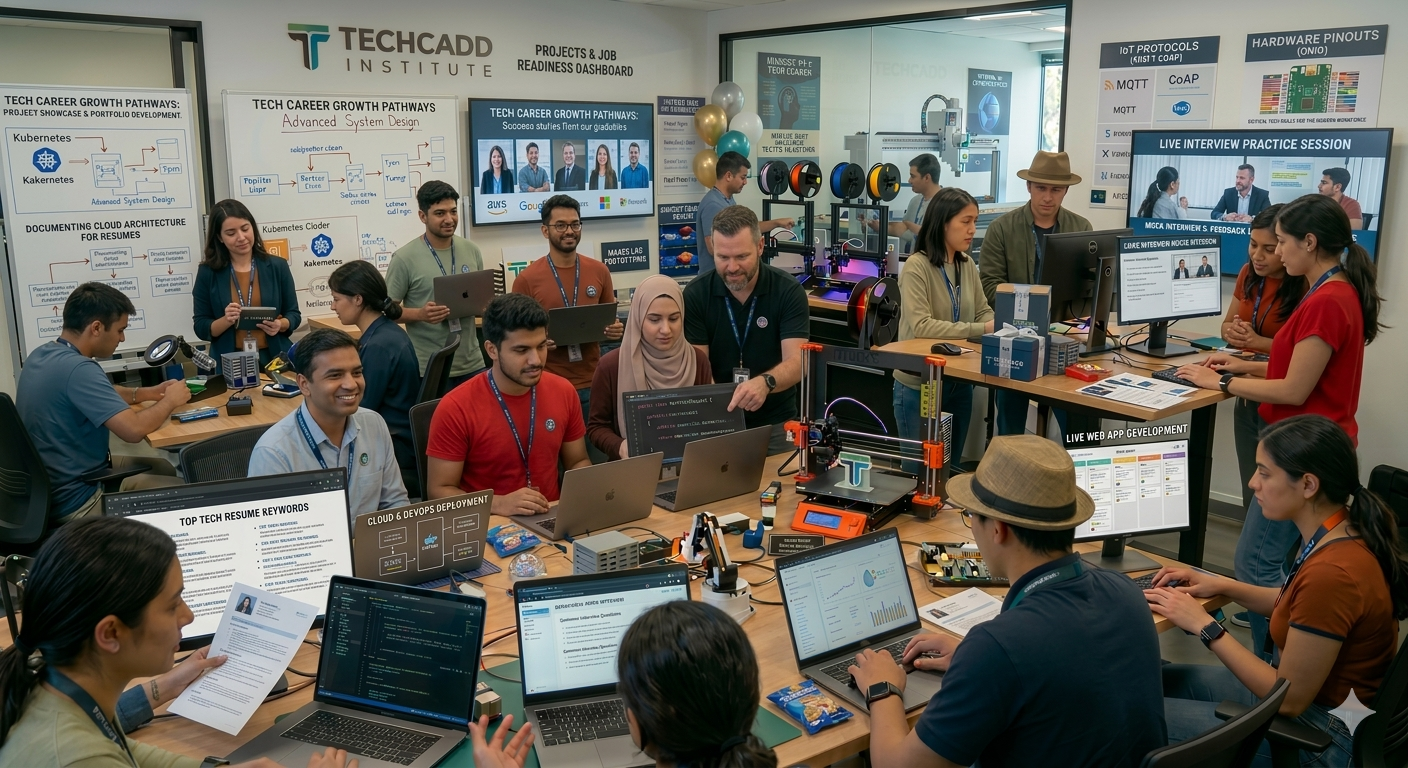
Industry training plays a crucial role in preparing students for real-world careers. While academic education provides theoretical knowledge, industry-focused training helps learners understand how those concepts are applied in professional environments. The Techcadd student industry training program is designed to bridge the gap between classroom learning and industry requirements by providing practical experience, modern tools, and real-world project exposure. The image represents a professional learning environment where students are actively participating in training sessions and working on industry-relevant tasks.
At Techcadd, industry training focuses on equipping students with the skills that employers expect from technology professionals. Students learn how to apply their knowledge in practical situations such as software development, web development, data analytics, digital marketing, and cloud computing. These fields require not only technical knowledge but also the ability to work on real projects and collaborate with teams.
The training environment encourages hands-on learning. Students use laptops and specialized software tools to complete assignments and projects that replicate real industry scenarios. For example, programming students may develop applications, while data analytics learners work with datasets and dashboards. Digital marketing students might create campaign strategies and analyze online engagement data. This practical approach allows students to understand how their skills can solve real-world problems.
Mentorship from experienced trainers is a key part of the industry training experience. Trainers often have professional experience and understand the skills required in the workplace. They guide students through technical concepts, demonstrate industry practices, and provide feedback on project work. This mentorship helps learners develop confidence and gain valuable insights into professional standards.
Another important aspect of industry training is teamwork and collaboration. Many technology projects require multiple individuals to work together and combine their expertise. Students are encouraged to participate in group projects where they discuss ideas, share responsibilities, and solve technical challenges collectively. This collaborative learning environment prepares them for team-based professional settings.
Industry training also emphasizes problem-solving and critical thinking. In real workplaces, professionals frequently encounter unexpected challenges and must develop effective solutions. Through practical assignments and project work, students learn how to analyze problems and approach them with logical thinking and creativity.
In addition to technical skills, the program also helps students develop professional habits and workplace readiness. Students learn how to manage time, meet project deadlines, communicate with team members, and present their work professionally. These soft skills are essential for success in professional environments.
Portfolio development is another significant outcome of industry training. As students complete projects during their training, they build portfolios that showcase their abilities and achievements. These portfolios become valuable tools when applying for internships or job opportunities because they demonstrate practical experience rather than just theoretical knowledge.
The image of students engaged in industry training reflects dedication and ambition. Each learner is focused on acquiring practical skills and preparing for professional roles in the technology industry. The presence of modern tools, digital screens, and collaborative discussions highlights the importance of technology-driven learning.
Industry training also provides exposure to the latest tools and technologies used in the professional world. By working with modern platforms and development tools, students stay updated with industry trends and practices. This exposure increases their employability and prepares them for evolving technological environments.
Overall, the Techcadd student industry training program aims to transform learners into skilled professionals who are ready to contribute to the technology industry. Through practical training, expert mentorship, collaborative projects, and real-world applications, students gain valuable experience that prepares them for successful careers. The training environment encourages continuous learning and innovation, ensuring that students develop the knowledge and confidence needed to succeed in modern technology-driven workplaces.