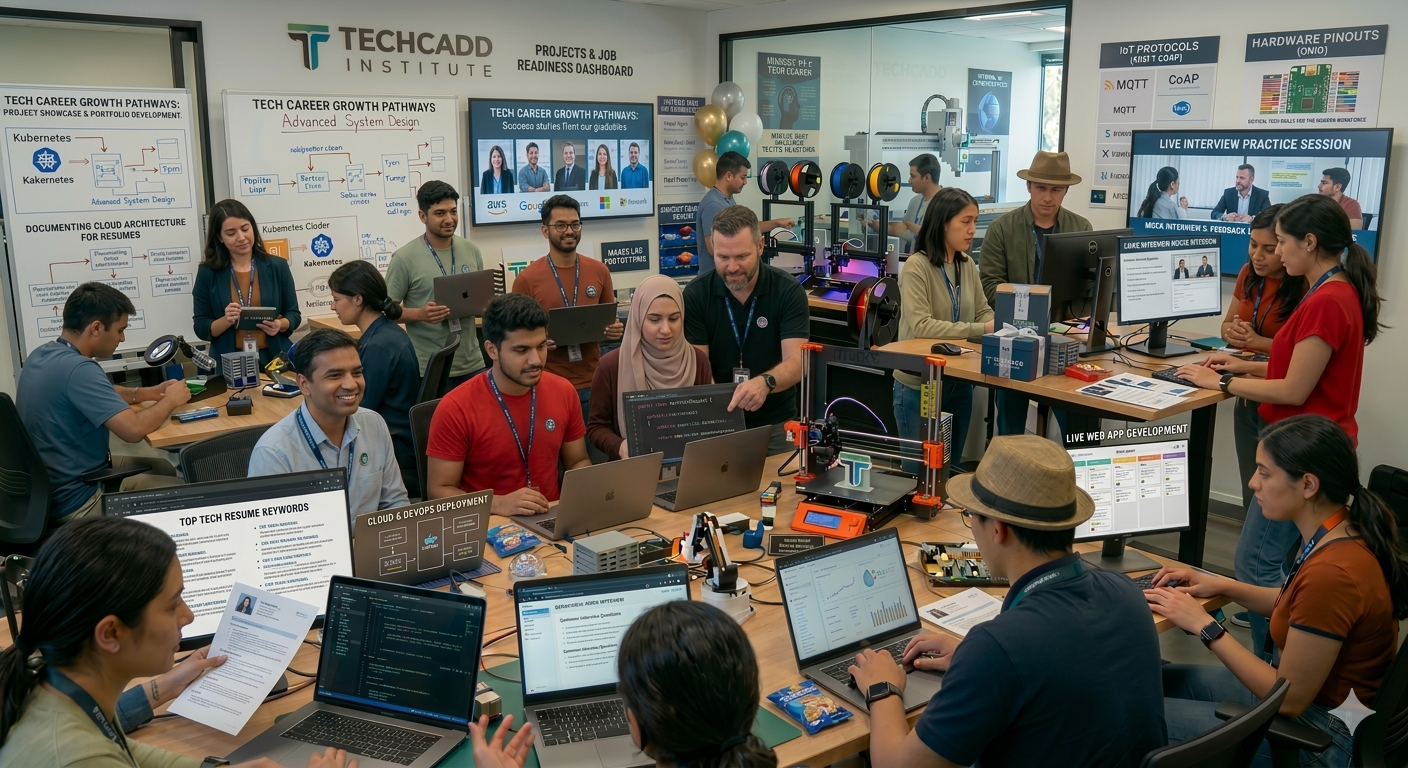
Information Technology training has become an essential part of modern education as industries across the world increasingly rely on digital systems and technological innovation. The Techcadd student IT training program focuses on equipping learners with the knowledge, practical experience, and technical skills required to succeed in the technology industry. The image represents a professional learning environment where students are actively engaged in learning IT concepts, practicing coding, and exploring different technological tools under the guidance of experienced instructors.
At Techcadd, IT training is designed to combine theoretical learning with practical implementation. Students are introduced to important technical concepts that form the foundation of modern technology careers. These may include programming languages, web development technologies, cloud computing platforms, networking systems, cybersecurity fundamentals, and various software tools used in the IT industry. By learning these technologies, students develop a strong base that helps them pursue different career paths in the technology sector.
The classroom environment plays a crucial role in enhancing the IT training experience. Students typically work on laptops or desktop computers while following instructions from trainers. The instructor may explain programming concepts, demonstrate software tools, or guide students through technical exercises. This interactive learning process allows students to ask questions, practice new skills, and develop a deeper understanding of the topics they study.
Hands-on learning is a major component of the Techcadd IT training approach. Instead of relying solely on theoretical lectures, students are encouraged to practice coding, build applications, and experiment with technology platforms. These practical activities help learners apply their knowledge to real-world situations and improve their problem-solving abilities.
Another important aspect of IT training at Techcadd is project-based learning. Students may work on projects that simulate real industry tasks. For example, they might develop websites, create simple software applications, configure cloud services, or design digital solutions for specific challenges. These projects provide valuable experience and help students understand how technology is used in professional environments.
Collaboration among students is also encouraged during the training process. Learners often work in teams where they discuss technical problems, exchange ideas, and help each other complete assignments. This collaborative environment promotes teamwork and communication skills, which are essential qualities for professionals working in technology-driven industries.
Mentorship and guidance from experienced trainers play a key role in helping students succeed during their IT training. Trainers provide detailed explanations of technical concepts, offer feedback on assignments, and assist students in overcoming challenges during practical exercises. Their guidance helps learners stay motivated and ensures that they gain the maximum benefit from their training experience.
IT training also prepares students for future career opportunities. As they gain experience and complete projects, students begin building portfolios that showcase their technical abilities. These portfolios serve as valuable assets when applying for internships or jobs in the technology field. Employers often look for candidates who can demonstrate practical experience, and these projects help students stand out.
The image of students learning in a modern IT training classroom reflects curiosity, dedication, and the pursuit of knowledge. Each student is actively working to develop the skills required to succeed in a technology-driven world. The classroom becomes a place where learners transform their interest in technology into practical abilities that can lead to rewarding careers.
Overall, the Techcadd student IT training program is designed to empower learners with the skills and confidence needed to thrive in the digital age. Through a combination of theoretical education, practical training, mentorship, and project-based learning, students gain the knowledge required to build successful careers in the ever-evolving field of information technology.