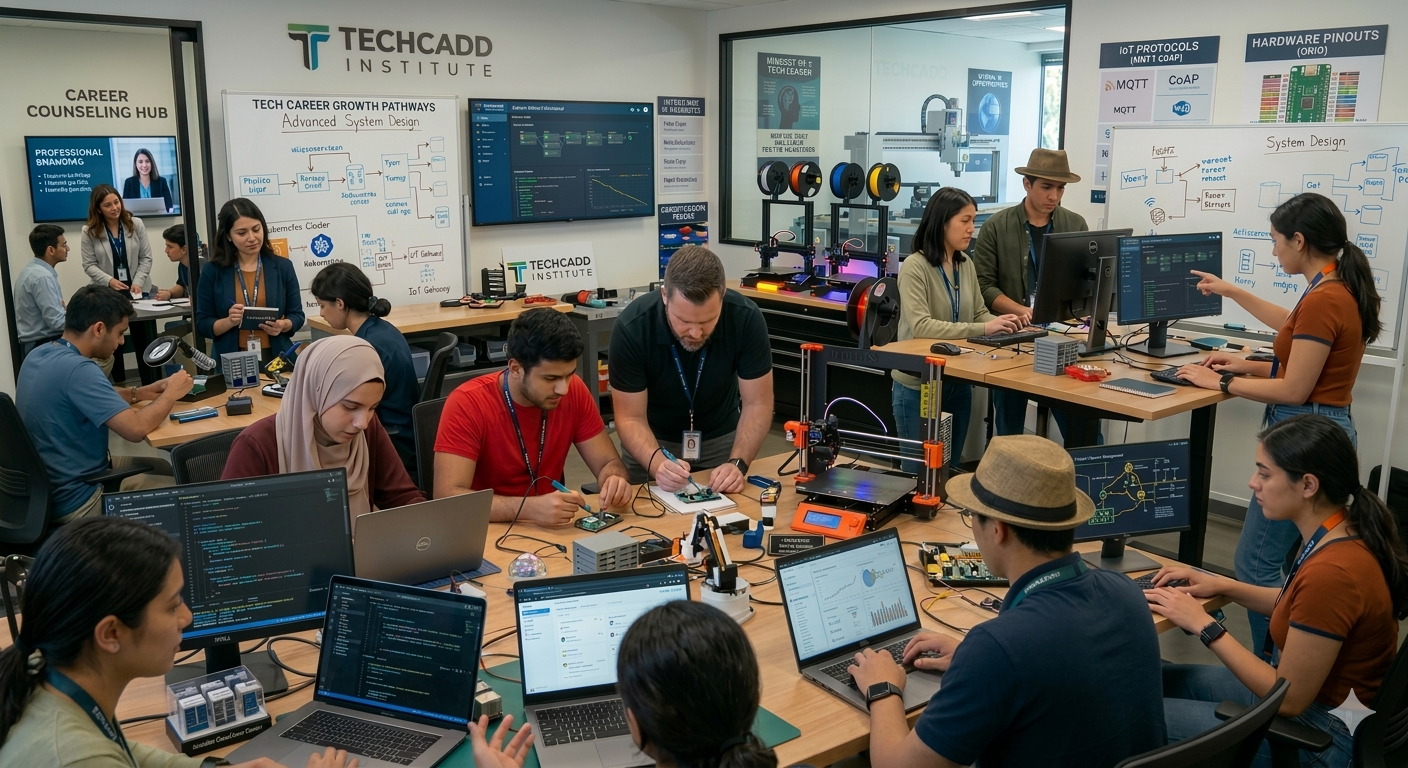
Live project training is one of the most effective ways for students to gain real-world experience in the technology field. The Techcadd student live project training program is designed to provide learners with practical exposure to real industry projects, helping them understand how technology is used to solve actual business and technical challenges. The image represents a modern training environment where students are actively engaged in working on live projects, collaborating with their peers, and receiving guidance from experienced mentors.
At Techcadd, live project training is an important part of the learning process. After students complete the basic theoretical and practical training in areas such as programming, web development, cloud computing, networking, or digital marketing, they are introduced to live project work. This stage allows students to apply the knowledge they have gained in a more realistic and professional context.
Working on live projects helps students move beyond classroom exercises and explore real-world applications of technology. These projects often simulate the types of tasks that professionals handle in the IT industry. For example, students may work on developing websites, building applications, configuring cloud services, or implementing digital solutions for different types of scenarios. By participating in such projects, learners gain valuable insights into how technology solutions are designed, developed, and delivered.
The training environment during live project sessions is collaborative and interactive. Students typically work in small teams where they share responsibilities and contribute their ideas to the project. Each team member may focus on a specific aspect of the project, such as coding, testing, designing, or documentation. This teamwork encourages communication and collaboration, which are essential skills for working in professional technology environments.
Mentorship plays a crucial role in the success of live project training. Experienced trainers guide students throughout the development process by explaining project requirements, reviewing progress, and providing feedback. Mentors also help students troubleshoot technical challenges and ensure that projects follow proper development practices. This guidance helps students learn how professionals approach problem-solving and project management in real work situations.
Another important benefit of live project training is the opportunity to gain practical problem-solving skills. Unlike classroom exercises, live projects often present unexpected challenges that require creative thinking and technical expertise. Students must analyze problems, explore different solutions, and implement the most effective approach. This process strengthens their analytical abilities and prepares them for real-world professional tasks.
Live project training also helps students build confidence in their technical skills. Completing a real project from start to finish gives learners a sense of accomplishment and demonstrates their ability to contribute to practical technology solutions. These experiences are valuable when students apply for internships or full-time jobs in the IT industry.
In addition to technical knowledge, live project training helps students develop important professional qualities such as time management, responsibility, and teamwork. Students learn how to manage deadlines, coordinate with team members, and maintain high-quality standards in their work. These professional habits are essential for success in modern workplaces.
The projects completed during live training sessions also become part of the student’s professional portfolio. Having a portfolio of live project work allows students to showcase their skills and experience to potential employers. Many companies prefer candidates who have practical project experience, as it demonstrates the ability to work in real development environments.
The image of students working together on live projects represents dedication, collaboration, and continuous learning. Each student is actively involved in creating solutions, gaining experience, and preparing for future professional roles. The training lab becomes a place where theoretical knowledge is transformed into practical expertise.
Overall, the Techcadd student live project training program provides learners with the opportunity to gain valuable industry experience before entering the job market. Through real-world projects, mentorship, and collaborative learning, students develop the technical and professional skills needed to succeed in the fast-growing technology industry.