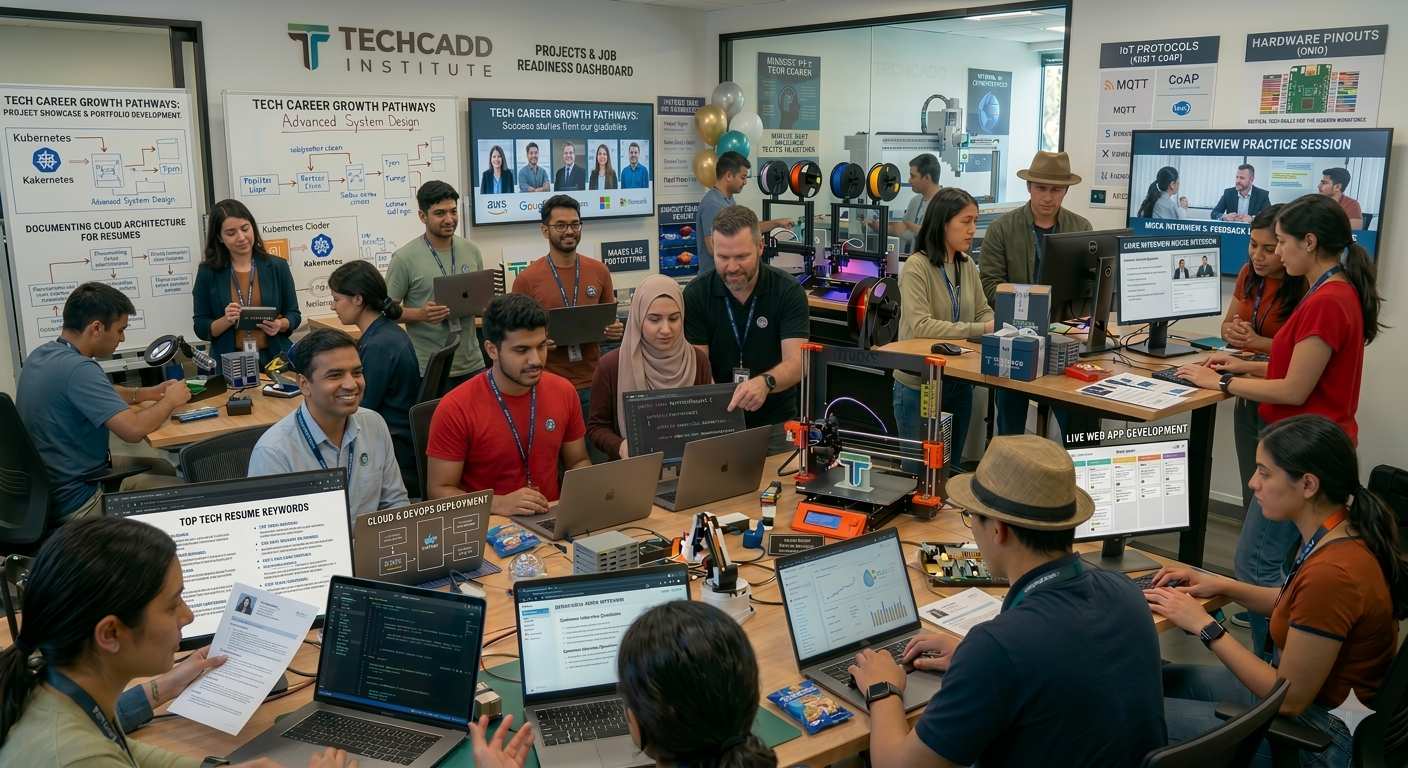
In today’s competitive job market, having a strong professional portfolio has become an essential step for students who want to demonstrate their skills and stand out to potential employers. A portfolio is a collection of projects, assignments, and practical work that showcases an individual’s abilities and knowledge. The Techcadd student portfolio building program focuses on helping learners create professional portfolios that highlight their technical skills and project experience. The image represents a modern learning environment where students are actively working on their projects, organizing their work, and preparing professional portfolios with the guidance of instructors.
At Techcadd, portfolio building is an important part of the training process. Students are encouraged to document the work they complete during their courses and present it in a structured and professional way. This portfolio may include coding projects, website designs, software applications, data analysis reports, or digital marketing campaigns, depending on the course the student is pursuing.
The process of building a portfolio begins with project-based learning. During their training programs, students work on multiple projects that simulate real-world tasks. For example, web development students may create complete websites, programming students may develop small applications, and data analytics students may build dashboards and reports. These projects provide practical experience and become valuable components of a student’s portfolio.
The classroom environment encourages creativity and innovation while building portfolios. Students use laptops and development tools to create projects and refine their work. Trainers guide them through the process of improving their projects, organizing their code, and presenting their work in a professional manner. This guidance ensures that students develop portfolios that clearly demonstrate their technical skills.
Another important aspect of portfolio building is learning how to present work effectively. Students learn how to explain their projects, describe the technologies they used, and highlight the problems they solved. This ability to present their work clearly helps them communicate their skills during interviews or professional discussions.
Collaboration among students also contributes to the portfolio-building process. Learners often share ideas, review each other’s projects, and provide suggestions for improvement. This collaborative learning environment helps students develop better projects and encourages them to explore new approaches and creative solutions.
Mentorship from experienced trainers plays a significant role in portfolio development. Trainers review student projects, provide constructive feedback, and suggest improvements that help enhance the quality of the portfolio. Their industry knowledge helps students understand what employers look for when evaluating candidate portfolios.
Another advantage of portfolio building is that it helps students gain confidence in their abilities. As they complete projects and see their progress, they realize how much they have learned during their training. This confidence motivates them to continue improving their skills and exploring new opportunities in the technology field.
A well-developed portfolio can be a powerful tool when applying for internships or job opportunities. Employers often prefer candidates who can demonstrate practical experience rather than only theoretical knowledge. By presenting real projects and applications, students can show that they have the skills required to contribute to professional work environments.
The image of students working on portfolio projects reflects dedication, creativity, and preparation for future careers. Each learner is focused on refining their work and organizing their projects in a way that highlights their abilities. The classroom becomes a place where learning is transformed into professional achievements.
Overall, the Techcadd student portfolio building program helps learners prepare for successful careers by showcasing their practical skills and project experience. Through hands-on learning, mentorship, and collaborative project development, students create professional portfolios that demonstrate their expertise and readiness for opportunities in the technology industry.