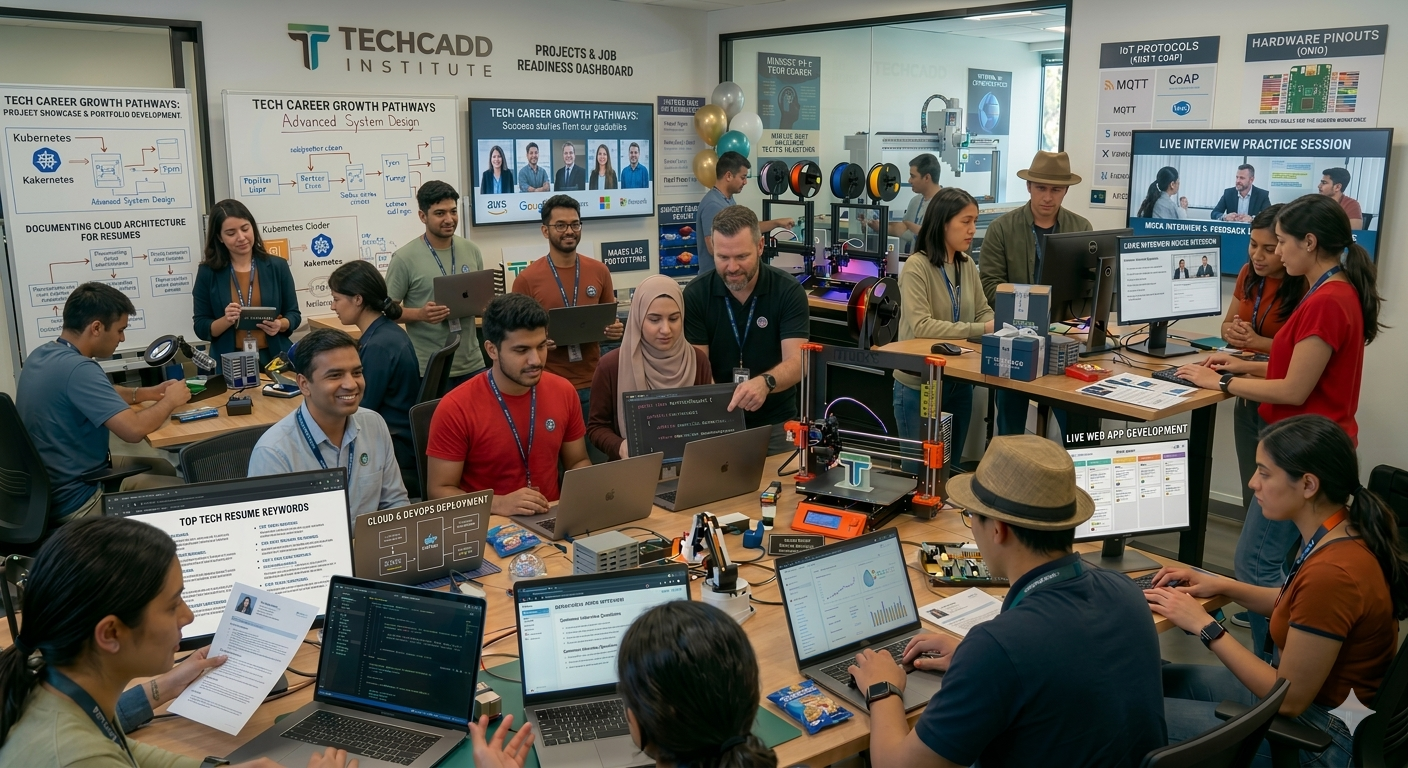
Practical learning is one of the most effective ways for students to understand and apply technical knowledge. Instead of only focusing on theoretical lessons, practical training allows learners to gain real experience by working on projects and solving problems. The Techcadd student practical learning program is designed to help students develop strong technical skills through hands-on activities, real-world simulations, and project-based education. The image represents a modern classroom environment where students are actively working on laptops, practicing technology skills, and learning through practical experience.
At Techcadd, practical learning plays a central role in the training process. Students are encouraged to apply the concepts they learn during lectures by working on assignments and projects. This approach helps them understand how theoretical knowledge can be used to solve real problems in professional environments. Practical training ensures that students not only know the concepts but also know how to implement them.
In the classroom environment shown in the image, students are using laptops and digital tools to practice their skills. Some students may be writing code, while others are working on data analysis tasks or developing websites. By working with actual software tools and platforms, students gain familiarity with technologies that are widely used in the industry.
One of the main advantages of practical learning is that it builds confidence. When students successfully complete tasks and projects, they realize that they are capable of applying their knowledge independently. This confidence motivates them to take on more complex challenges and continue improving their abilities.
Another important aspect of practical learning is problem-solving. While working on assignments, students often encounter errors or technical issues that require logical thinking and experimentation. By identifying problems and testing different solutions, learners develop analytical skills that are essential for careers in technology.
The role of instructors is also crucial in practical learning environments. Trainers guide students as they work on projects and provide support when challenges arise. Instead of simply delivering lectures, instructors act as mentors who help students understand how to approach real-world problems. Their feedback helps learners improve their projects and refine their skills.
Collaboration among students further enhances the learning process. In many training sessions, students work together in small groups to complete projects or discuss technical ideas. This teamwork helps them learn from each other and understand different perspectives. In professional workplaces, collaboration is an essential skill, and practical learning environments help students develop this ability early.
Practical learning also allows students to build project portfolios. Each project completed during training becomes a demonstration of the student’s skills and knowledge. These portfolios are extremely useful when applying for internships or job opportunities because they show employers that the candidate has real experience working with technology tools.
Another benefit of hands-on learning is exposure to industry-relevant technologies. Students become familiar with coding environments, data tools, cloud platforms, and other digital technologies that are commonly used in modern workplaces. This exposure ensures that students remain aligned with current industry practices and expectations.
The classroom environment depicted in the image reflects a culture of curiosity, innovation, and active learning. Students are not simply listening to lectures; they are participating in the learning process by experimenting with tools, building projects, and solving technical problems. This active involvement makes the learning experience more engaging and effective.
Overall, the Techcadd student practical learning program helps transform theoretical knowledge into real-world skills. Through hands-on projects, mentorship, and collaborative learning, students gain the experience needed to succeed in technology careers. Practical training prepares learners to confidently apply their knowledge in professional environments and contribute effectively to modern digital industries.