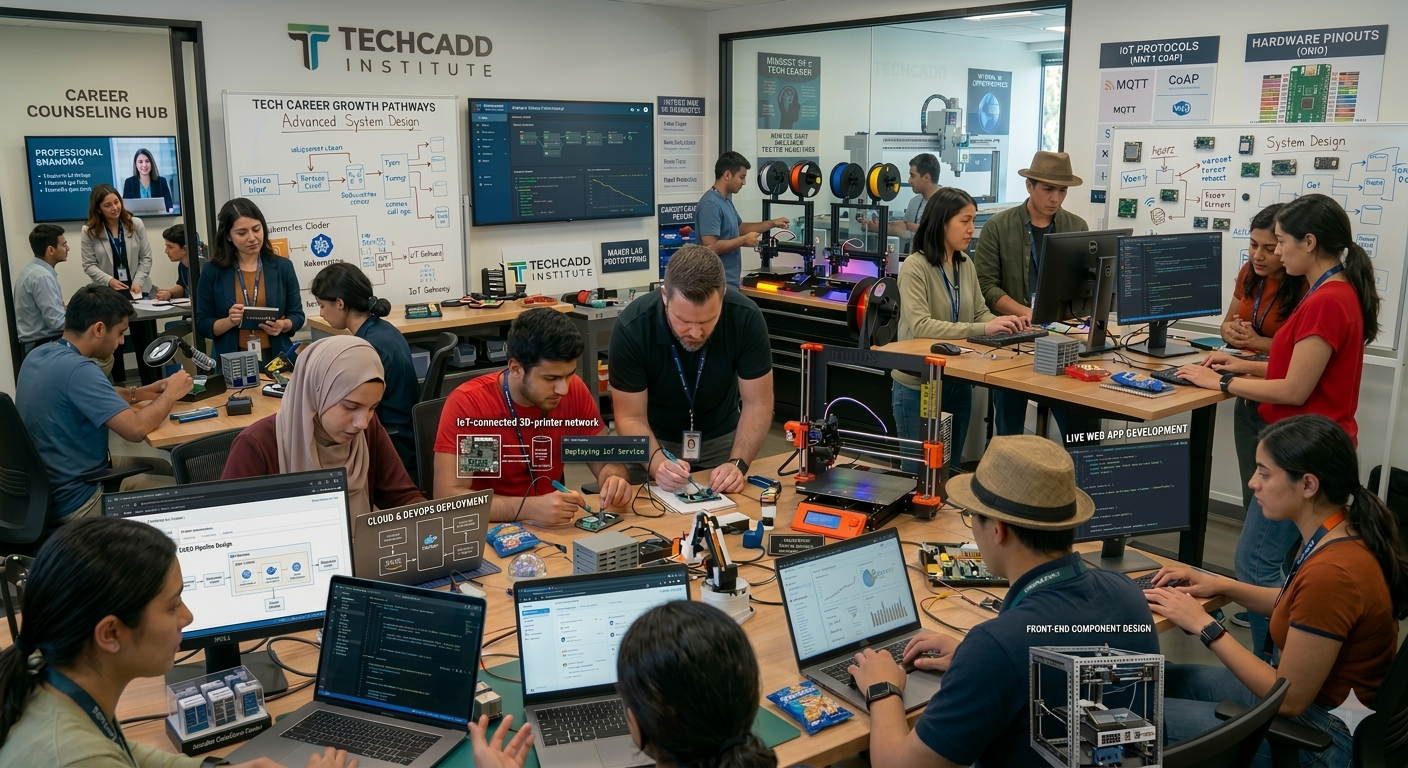
Practical training is an essential component of effective education, especially in the field of technology. The Techcadd student practical training program focuses on providing learners with hands-on experience that helps them develop real-world skills and technical expertise. In today’s digital age, students must move beyond theoretical knowledge and gain practical understanding of how technology works in professional environments. The image represents a modern classroom where students are actively engaged in practicing technical skills, working on laptops, and receiving guidance from experienced instructors.
At Techcadd, practical training plays a central role in the learning process. Students are encouraged to apply their knowledge through hands-on exercises and practical assignments. This approach allows them to understand how different technologies function and how they can be used to create solutions for real-world problems. By practicing coding, working with digital tools, and experimenting with technology platforms, students gradually develop confidence in their abilities.
The training programs at Techcadd cover a wide range of modern technologies that are relevant in today’s job market. Students may receive practical training in programming languages, web development, cloud computing, networking, cybersecurity, and other technology-related fields. These skills are highly valued by employers and open up numerous career opportunities in the technology industry.
The classroom environment during practical training sessions is interactive and collaborative. Students work on computers while following instructions provided by trainers. Instructors explain concepts, demonstrate techniques, and guide students through practical exercises step by step. This method ensures that learners understand the process and gain hands-on experience with the tools and technologies they are studying.
Hands-on practice helps students develop problem-solving skills and analytical thinking. When students work on practical tasks, they often encounter challenges that require them to think critically and explore different solutions. This process encourages creativity and innovation, helping students learn how to approach technical problems effectively.
Another important aspect of practical training is project work. Students may work on small projects that allow them to apply the concepts they have learned during training. These projects can involve building websites, developing software applications, configuring cloud services, or implementing other digital solutions. Project-based learning helps students understand how theoretical concepts translate into practical results.
Collaboration is also encouraged during practical training sessions. Students often work in teams where they share ideas, discuss challenges, and help each other complete assignments. This teamwork improves communication skills and prepares students for professional environments where collaboration is essential for completing complex projects.
Mentorship is a key factor that supports successful practical training at Techcadd. Experienced trainers provide continuous guidance and support throughout the learning process. They review students’ work, offer feedback, and suggest improvements that help learners refine their technical skills. This mentorship ensures that students stay motivated and continue improving their abilities.
Practical training also prepares students for future career opportunities. By the time students complete their training, they often have a collection of projects and practical assignments that demonstrate their technical expertise. These examples of their work can be included in portfolios and shared with potential employers during job applications.
The image of students practicing technology skills reflects dedication, curiosity, and continuous learning. Each learner is actively working to develop the abilities required to succeed in the technology field. The training environment becomes a space where knowledge is transformed into practical experience and where students prepare themselves for professional success.
Overall, the Techcadd student practical training program provides a strong foundation for building successful careers in technology. Through hands-on exercises, collaborative learning, and mentorship from experienced trainers, students gain the practical knowledge and confidence needed to thrive in the fast-growing digital world.