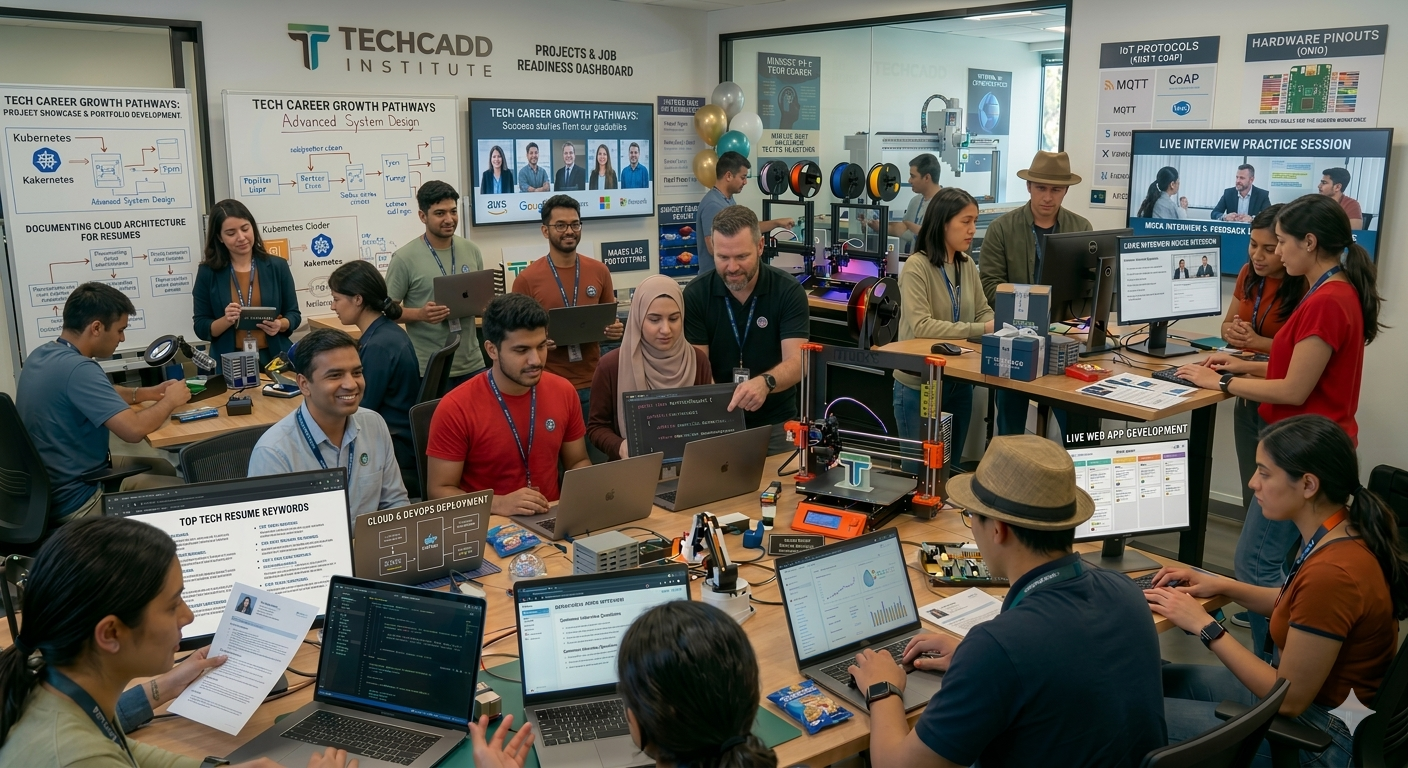
Programming has become a core skill in today’s technology-driven world. From mobile applications and websites to complex software systems, programming plays a major role in building the digital tools used by businesses and individuals every day. The Techcadd student programming training program is designed to help learners develop strong programming skills and gain practical knowledge of software development. The image represents a modern learning environment where students are actively learning programming concepts, writing code, and collaborating on technical exercises.
At Techcadd, programming training begins with teaching students the fundamental concepts that form the basis of software development. Students learn about variables, loops, conditional statements, functions, and data structures. These core concepts help learners understand how programs are structured and how computers process instructions. By mastering these fundamentals, students develop logical thinking and problem-solving skills that are essential for programming.
The classroom environment encourages active participation and practical practice. Students sit at computers or laptops while writing code and experimenting with programming tasks. Trainers explain programming concepts using examples and guide students through exercises that help them understand how different parts of a program work together. This interactive approach ensures that students not only learn theory but also apply their knowledge through hands-on practice.
One of the main features of the Techcadd programming training program is the opportunity to learn multiple programming languages. Students may be introduced to languages such as Python, Java, C++, or JavaScript. Each programming language is used for different types of applications, and learning these languages allows students to explore various areas of technology such as software development, web development, and application programming.
Hands-on coding practice is a major part of the learning process. Students are encouraged to write their own programs, experiment with coding solutions, and test their applications. Through this process, they gain confidence in their programming abilities and develop the skills needed to solve technical problems effectively.
Project-based learning also plays an important role in programming training. Students often work on small projects that simulate real software development tasks. These projects may involve building simple applications, creating interactive programs, or developing small software tools. By working on such projects, students gain experience in designing and implementing solutions that address specific problems.
The collaborative learning environment further enhances the training experience. Students frequently work together in teams to solve programming challenges, debug code, and exchange ideas. This collaboration helps learners improve their communication skills and prepares them for professional development environments where teamwork is essential.
Mentorship from experienced trainers is another valuable aspect of the program. Trainers provide guidance during coding exercises, explain complex programming concepts, and help students correct errors in their programs. Their support ensures that learners continue progressing and developing their technical abilities.
Another important benefit of programming training is the opportunity to build a professional portfolio. As students complete projects and assignments, they create applications and coding solutions that demonstrate their programming skills. This portfolio can be used to showcase their abilities when applying for internships or job opportunities in the technology sector.
The image of students learning programming reflects concentration, creativity, and determination. Each learner is focused on writing code and understanding how software systems are developed. The classroom becomes a place where students transform ideas into functional programs and gain the technical expertise needed for technology careers.
Overall, the Techcadd student programming training program helps learners build a strong foundation in software development. Through practical coding exercises, project-based learning, and mentorship from experienced trainers, students gain the knowledge and confidence required to pursue successful careers in programming and information technology.