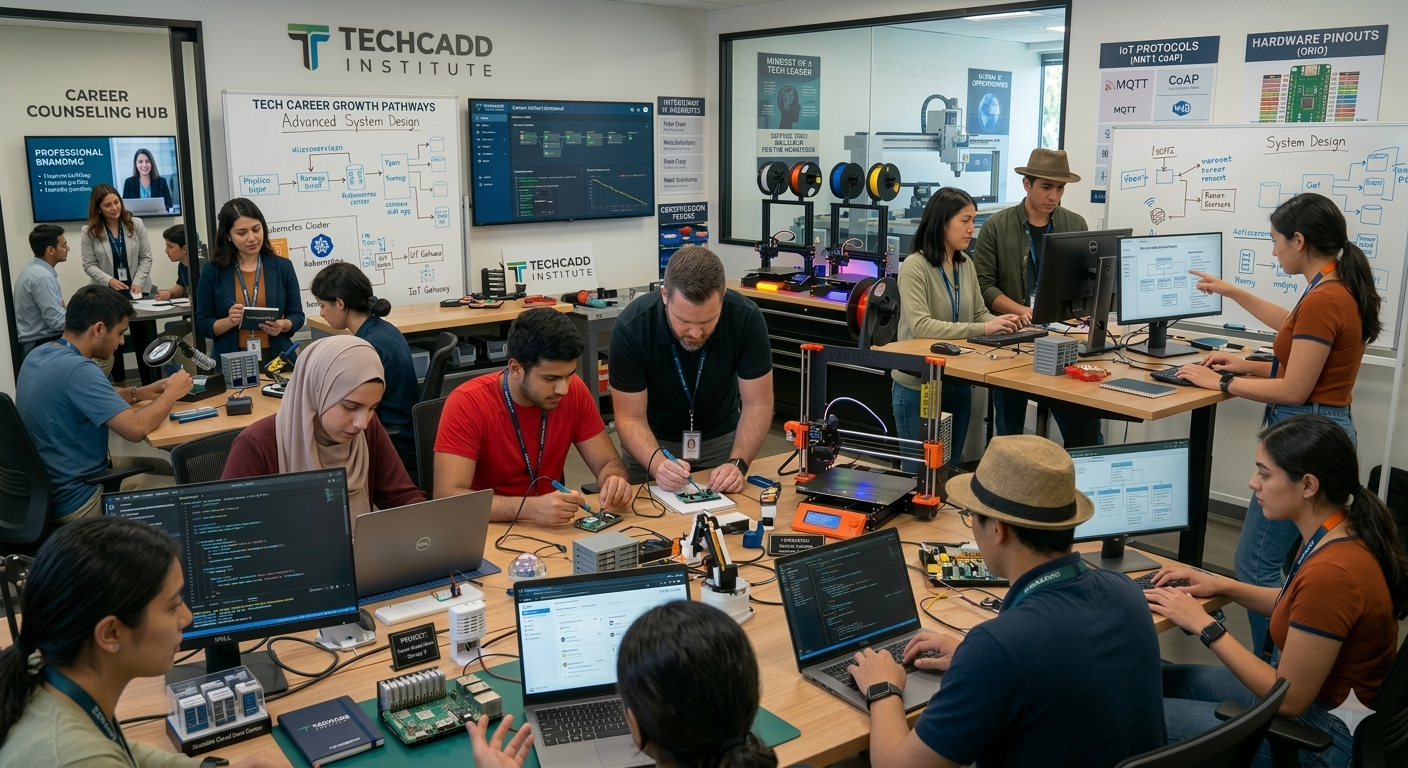
Project experience plays a vital role in shaping a student’s technical abilities and preparing them for professional careers in the technology industry. The Techcadd student project experience focuses on providing learners with practical opportunities to apply their knowledge to real-world scenarios. Instead of only studying theoretical concepts, students actively participate in project-based learning where they create solutions, build applications, and explore different technological tools. The image represents a collaborative learning environment where students are working on laptops, discussing ideas, and developing projects under the guidance of experienced mentors.
At Techcadd, project experience begins once students have learned the fundamental concepts of their chosen field. Whether it is programming, web development, cloud computing, networking, or digital marketing, students first build a basic understanding of the subject. After gaining this foundation, they move on to practical assignments and projects that allow them to apply their knowledge in meaningful ways.
Project-based learning helps students bridge the gap between theoretical education and practical industry requirements. Many students understand concepts during classroom lectures but may struggle when applying them in real-life situations. Working on projects gives them the opportunity to experiment with different approaches, solve technical problems, and develop creative solutions. This process enhances their critical thinking and problem-solving abilities.
The classroom environment during project sessions is often highly interactive and collaborative. Students work in teams or individually on different tasks, such as writing code, designing applications, configuring digital tools, or analyzing project requirements. Trainers and mentors provide support throughout the process, ensuring that students understand each step and continue progressing toward completing their projects successfully.
One of the most valuable aspects of the Techcadd student project experience is the opportunity to work on real-world scenarios. Projects may involve building websites, developing software applications, implementing cloud solutions, or creating digital marketing strategies. These projects simulate actual tasks that professionals perform in the IT industry. By participating in such activities, students gain practical insights into how technology is used in professional environments.
Collaboration is another important element of project-based learning. Students often discuss their ideas, share knowledge, and help each other solve technical challenges. This teamwork not only improves learning outcomes but also helps students develop communication and interpersonal skills. In modern workplaces, collaboration is essential for completing complex projects, and these experiences prepare students for that reality.
Mentorship is also a key component of the Techcadd project experience. Trainers guide students through the development process, provide constructive feedback, and help them improve their technical work. Mentors encourage students to experiment with new ideas, learn from their mistakes, and continuously refine their solutions. This guidance ensures that students gain maximum benefit from their project work.
Another important advantage of working on projects is the creation of a professional portfolio. As students complete different assignments and projects, they begin building a collection of work that demonstrates their technical abilities. These portfolios can include websites, applications, software tools, or other digital solutions developed during training. When students apply for internships or jobs, these portfolios help them showcase their practical skills to potential employers.
Project experience also helps students develop confidence in their abilities. Successfully completing a project gives learners a sense of achievement and motivates them to continue learning. It also helps them realize that they are capable of solving real technical challenges and contributing to professional work environments.
The image of students collaborating on projects reflects dedication, teamwork, and the pursuit of innovation. Each learner is actively involved in creating solutions, exploring new technologies, and improving their technical skills. The training environment becomes a place where creativity and learning combine to produce meaningful outcomes.
Overall, the Techcadd student project experience plays a crucial role in preparing learners for successful careers in the technology field. Through hands-on projects, collaborative learning, and expert mentorship, students gain the practical knowledge and confidence required to thrive in the ever-evolving world of digital technology.