
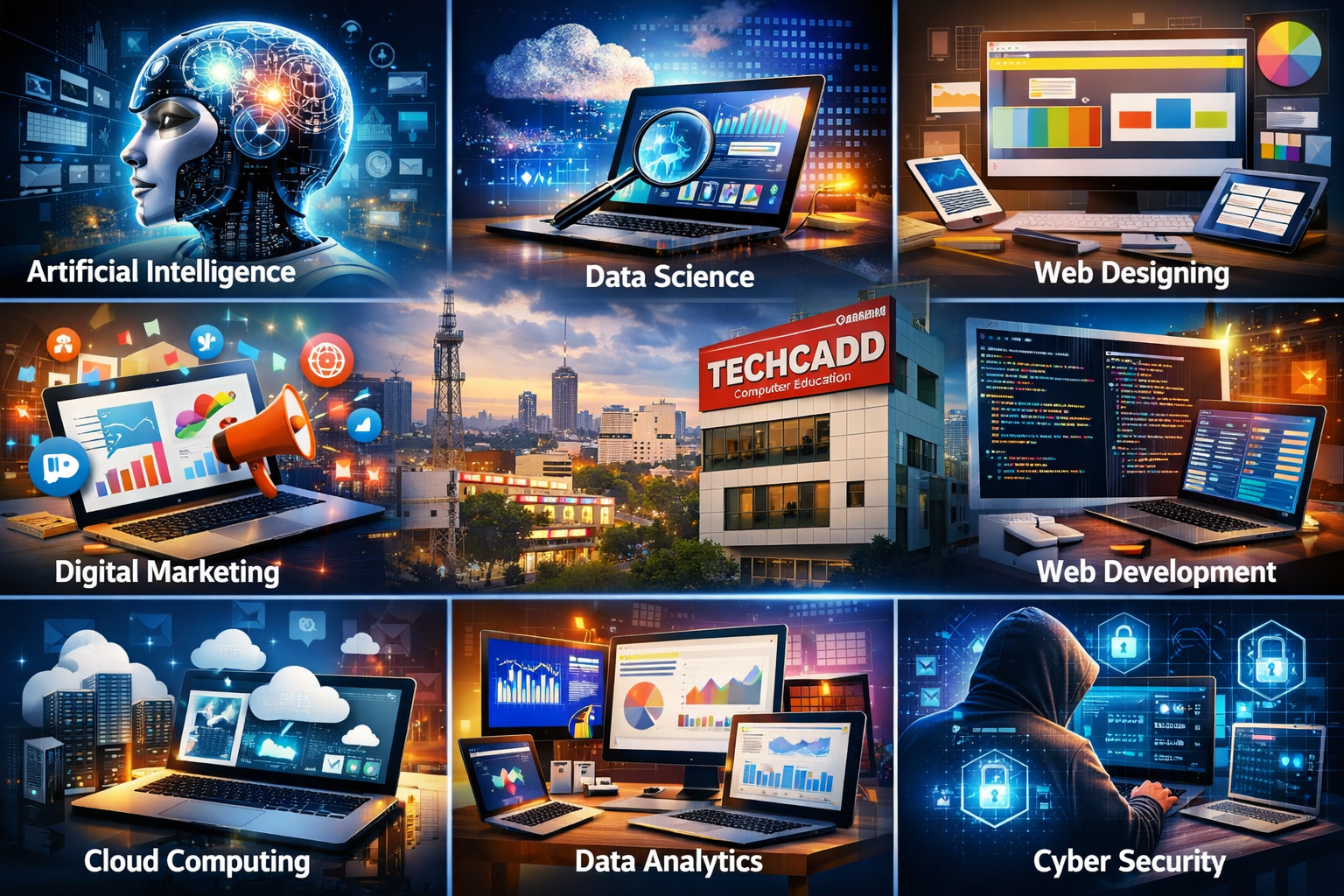
The information technology industry continues to grow rapidly, creating numerous career opportunities for students and professionals who want to build a future in the digital world. In 2026, technology skills are more valuable than ever as businesses rely on digital platforms, data analysis, cloud systems, and automation to operate efficiently. For beginners who want to start a career in the IT field, enrolling in a professional training course is one of the best ways to gain practical knowledge and industry-ready skills.
Jalandhar has become an emerging hub for technical education, offering a wide range of IT courses for students, graduates, and working professionals. Among the well-known training institutes, TechCADD Computer Education provides several beginner-friendly programs designed to help learners develop technical expertise and prepare for high-demand careers in technology. These courses focus on practical training, real-world projects, and industry-relevant tools, ensuring that students gain hands-on experience along with theoretical knowledge.
Below are some of the top IT courses in Jalandhar for beginners in 2026 that can help individuals start a successful career in the technology sector.
Artificial Intelligence (AI)
Artificial Intelligence is one of the most exciting and rapidly growing fields in the IT industry. AI focuses on creating intelligent machines that can perform tasks that normally require human intelligence, such as learning, decision-making, pattern recognition, and problem-solving.
A beginner-friendly AI course typically introduces students to the fundamentals of artificial intelligence and its real-world applications. Students learn programming languages like Python, which is widely used for AI development. The course also covers important topics such as machine learning algorithms, data processing, and neural networks.
AI technology is used in various industries including healthcare, finance, education, e-commerce, and transportation. For example, AI powers recommendation systems on online platforms, voice assistants, self-driving vehicles, and advanced data analysis tools.
By learning AI skills, beginners can open doors to career roles such as AI developer, machine learning engineer, and data scientist. Since the demand for intelligent systems continues to grow, AI training is considered one of the most promising career options for students interested in advanced technology.
Data Science
Data science has become one of the most important fields in modern technology because organizations rely heavily on data to make strategic decisions. Every day, businesses generate massive amounts of data from websites, mobile applications, social media, and customer interactions. Data scientists analyze this information to discover patterns, trends, and insights that help companies improve their operations.
A data science course for beginners usually includes programming with Python or R, statistics, data visualization, and machine learning fundamentals. Students also learn how to use popular tools such as Excel, SQL, and data visualization software to interpret complex datasets.
One of the key benefits of studying data science is the wide range of career opportunities available in different industries. Data science professionals can work in finance, healthcare, marketing, retail, and many other sectors where data-driven decision-making is essential.
For beginners who enjoy working with numbers, analyzing information, and solving complex problems, data science can be an excellent career path.
Web Designing
Web designing is one of the most popular and beginner-friendly IT courses available today. It focuses on creating visually appealing and user-friendly websites. As businesses continue to expand their online presence, the demand for skilled web designers continues to increase.
In a web designing course, students learn the fundamentals of website design including HTML, CSS, and basic JavaScript. They also study design principles such as layout, color combinations, typography, and user interface design. Modern web design also includes responsive design techniques that ensure websites work smoothly on smartphones, tablets, and desktop computers.
Web designing courses are particularly suitable for individuals who have a creative mindset and enjoy combining technology with design. After completing the course, students can work as web designers, UI designers, or freelance website creators.
Freelancing opportunities are also common in this field, allowing professionals to work with clients from around the world while building their own portfolio of website projects.
Web Development (Full Stack / MERN Stack / MEAN Stack)
While web designing focuses on the appearance of websites, web development involves building the functionality and structure behind them. Web developers create dynamic websites and web applications that allow users to interact with online platforms.
Web development courses for beginners often start with basic programming concepts and gradually move toward advanced technologies. Students learn front-end development tools such as HTML, CSS, and JavaScript to build the visual components of websites. They also learn back-end development technologies that handle databases, servers, and application logic.
Modern web development programs may include frameworks such as MERN Stack (MongoDB, Express, React, Node.js) or MEAN Stack. These technologies allow developers to build powerful web applications using JavaScript across both front-end and back-end systems.
Web development is one of the most in-demand IT skills globally because nearly every company requires a strong online presence. After completing training, students can pursue roles such as front-end developer, back-end developer, full-stack developer, or web application developer.
Digital Marketing
Digital marketing has become an essential part of modern business strategies. Companies rely on digital platforms such as search engines, social media, and websites to reach their target audiences. As a result, the demand for skilled digital marketing professionals continues to grow.
A digital marketing course teaches beginners how to promote products and services online using various strategies and tools. Key topics include search engine optimization (SEO), social media marketing, content marketing, email marketing, and online advertising.
Students also learn how to analyze marketing performance using tools such as Google Analytics and other digital marketing platforms. These skills help businesses track user engagement and improve their online marketing strategies.
Digital marketing is an excellent option for beginners because it does not require extensive programming knowledge. It is suitable for individuals interested in business, marketing, and online communication. Career opportunities include roles such as digital marketing specialist, SEO expert, social media manager, and content strategist.
Cloud Computing
Cloud computing is another rapidly growing area in the IT industry. Instead of storing data on physical servers or personal computers, companies now use cloud platforms to store and manage their information online. This approach offers greater flexibility, security, and scalability for businesses.
A cloud computing course introduces beginners to the basic concepts of cloud technology and its applications. Students learn how cloud infrastructure works and how organizations use cloud services to manage data and applications.
Many training programs focus on popular cloud platforms such as Amazon Web Services (AWS), Microsoft Azure, and Google Cloud. Students learn how to deploy applications, manage cloud storage, and monitor cloud-based systems.
With more businesses adopting cloud technology, the demand for cloud engineers and cloud administrators continues to rise. Learning cloud computing skills can lead to highly rewarding career opportunities in the IT industry.
Cyber Security
As technology advances, cyber threats and digital attacks are becoming more common. Cyber security professionals play a critical role in protecting computer systems, networks, and sensitive information from unauthorized access and malicious activities.
A cyber security course teaches beginners how to identify security risks and implement protective measures to safeguard digital systems. Students learn about network security, ethical hacking, encryption, and risk management.
Cyber security training also introduces various security tools used to detect vulnerabilities and prevent cyber attacks. These skills are essential for organizations that want to protect their data and maintain secure online operations.
Career opportunities in cyber security include roles such as security analyst, ethical hacker, network security engineer, and cyber security consultant. Because cyber threats continue to evolve, professionals in this field are always in high demand.
Data Analytics
Data analytics is closely related to data science but focuses more on interpreting and analyzing existing data to support business decisions. Many companies use data analytics to understand customer behavior, monitor performance, and identify areas for improvement.
A data analytics course teaches beginners how to work with data using tools such as Microsoft Excel, SQL, and visualization software like Power BI or Tableau. Students learn how to clean, organize, and interpret data to produce meaningful insights.
The course also includes basic statistical analysis and reporting techniques that help organizations make informed decisions based on data.
Data analytics is a suitable career choice for individuals who enjoy working with numbers and solving business problems using data-driven approaches.
Why Choose TechCADD for IT Courses in Jalandhar?
TechCADD Computer Education is known for providing practical and industry-oriented training programs. The institute focuses on skill development and real-world applications to help students prepare for professional careers.
Some key advantages of studying at TechCADD include experienced trainers, modern computer labs, and hands-on training through practical assignments and projects. Students receive guidance throughout their learning journey, helping them understand complex concepts in a simple and practical way.
Another important benefit is career support and placement assistance. Many training programs include career counseling, interview preparation, and job placement guidance, which helps students transition from training to employment.
The institute also provides certification programs that add value to a student’s professional profile and improve job prospects in the competitive IT job market.
The IT industry is evolving rapidly, and the demand for skilled professionals continues to increase every year. With digital transformation taking place in almost every sector, companies are actively looking for individuals who have practical technical skills and can contribute to modern technological solutions. For beginners in Jalandhar, pursuing an IT course in 2026 can open the door to numerous career opportunities both in India and globally.
Technology is no longer limited to software companies. Industries such as healthcare, finance, education, manufacturing, retail, and agriculture are now heavily dependent on digital systems. This means that IT professionals are needed in almost every sector. By learning modern IT skills through professional training programs, students can gain the knowledge required to enter these growing industries.
IT courses help beginners understand the basic concepts of programming, networking, data management, and digital technologies. These skills not only improve technical knowledge but also enhance logical thinking and problem-solving abilities. As a result, students become better prepared to handle real-world technological challenges.
Importance of Practical Learning in IT Training
One of the most important aspects of modern IT education is practical learning. Unlike traditional theoretical education, IT courses focus on hands-on training and real-world applications. Students work on projects, assignments, and case studies that help them understand how technology is used in actual business environments.
Practical training allows learners to experiment with tools, programming languages, and software platforms. This helps them build confidence in their technical abilities and improves their problem-solving skills. By working on real projects, students can also create a portfolio that showcases their skills to potential employers.
Many institutes now emphasize project-based learning where students develop applications, websites, or data analysis reports as part of their training. These projects simulate real industry tasks and provide valuable experience before entering the job market.
Benefits of Learning IT Skills for Beginners
Learning IT skills offers several advantages for students and professionals who want to build a stable career. One of the biggest benefits is the wide range of career options available in the technology field. IT professionals can work in different roles depending on their skills and interests.
Another major advantage is job stability and career growth. Technology is constantly evolving, which means there is always a demand for professionals who can adapt to new tools and innovations. This creates long-term career opportunities for individuals with strong technical knowledge.
IT skills also offer opportunities for freelancing and remote work. Many developers, designers, and digital marketers work independently with international clients through online platforms. This flexibility allows professionals to work from home and earn competitive income.
Additionally, IT careers often provide attractive salary packages and career advancement opportunities. As professionals gain experience and improve their skills, they can move into higher-level positions such as project managers, technical leads, or consultants.
Skills Required to Succeed in IT Courses
While IT courses are designed for beginners, certain skills can help students learn more effectively and succeed in the technology field. One of the most important skills is logical thinking. Programming and technical problem-solving require the ability to analyze problems and develop structured solutions.
Another important skill is curiosity and willingness to learn. Technology is constantly changing, so IT professionals must stay updated with new tools, frameworks, and programming languages. Continuous learning is essential for long-term success in the IT industry.
Communication skills are also valuable because IT professionals often work in teams and collaborate with clients or colleagues. Being able to explain technical concepts clearly can improve teamwork and project outcomes.
Time management and discipline are equally important because many IT projects involve deadlines and complex tasks. Students who develop strong organizational habits during their training are better prepared for professional environments.
Career Opportunities After Completing IT Courses
After completing an IT course, beginners can explore a wide range of career opportunities depending on their specialization. The technology sector offers diverse roles that require different technical skills.
For example, students who study web development can work as front-end developers, back-end developers, or full-stack developers. These professionals create websites and web applications used by businesses and consumers worldwide.
Individuals who specialize in data science or data analytics can work as data analysts, business analysts, or data scientists. Their work involves analyzing large datasets to identify patterns and insights that help companies make better decisions.
Students who complete digital marketing courses can pursue roles such as SEO specialists, social media managers, and digital marketing executives. These professionals help businesses improve their online visibility and reach potential customers.
Cloud computing professionals can work as cloud engineers, cloud administrators, or cloud architects. They manage cloud-based systems that store and process business data.
Cyber security experts protect digital systems and networks from cyber threats. They may work as security analysts, ethical hackers, or cyber security consultants.
Because technology is integrated into nearly every industry, IT professionals have the flexibility to work in different sectors such as finance, healthcare, education, and e-commerce.
Role of Certifications in IT Careers
Certifications play an important role in building a strong professional profile in the IT industry. Many employers look for candidates who have completed recognized training programs and earned certifications in specific technologies.
Professional certifications demonstrate that a candidate has the knowledge and practical skills required for a particular job role. They also show commitment to continuous learning and professional development.
For example, certifications in cloud platforms, programming languages, or digital marketing tools can significantly improve job prospects. These credentials help candidates stand out in competitive job markets and increase their chances of securing high-quality positions.
Training institutes often provide certification programs that align with industry requirements. These certifications validate the skills learned during training and help students build credibility in the job market.
The Future of IT Careers in India
India is becoming one of the global leaders in technology and digital innovation. The country’s IT sector continues to expand with new startups, technology companies, and research initiatives emerging every year.
Government initiatives promoting digital transformation and technological development are also creating new opportunities for skilled professionals. Programs supporting artificial intelligence, data science, and cloud technology are helping India strengthen its position in the global technology ecosystem.
As businesses increasingly rely on digital systems, the demand for IT professionals will continue to rise. This creates a positive future for students who invest time in learning technical skills and building expertise in modern technologies.
Cities like Jalandhar are also witnessing growth in technical education and professional training institutes. This allows students to access high-quality IT training without relocating to larger metropolitan cities.
Choosing the Right IT Course for Beginners
Selecting the right IT course is an important decision that can influence future career opportunities. Beginners should consider their interests, career goals, and learning preferences before choosing a specialization.
For example, students who enjoy creativity and design may prefer web designing or UI/UX courses. Those who like programming and building software applications may choose web development or software engineering courses.
Individuals who are interested in analyzing data and solving complex problems may find data science or data analytics courses more suitable. Similarly, students who want to work in business and marketing environments may choose digital marketing training programs.
Beginners should also consider the practical training offered by the institute, the experience of trainers, and the availability of placement assistance. Choosing a course that includes real-world projects and industry exposure can significantly improve career prospects.
Learning Environment and Student Support
A supportive learning environment plays an important role in the success of students pursuing IT courses. Institutes that provide experienced instructors, modern infrastructure, and well-equipped labs can enhance the learning experience.
Interactive teaching methods such as workshops, seminars, and group projects encourage active participation and improve understanding of technical concepts. Students benefit from direct guidance from trainers who can clarify doubts and provide practical insights based on industry experience.
Career guidance and mentorship programs also help students prepare for job interviews, build professional resumes, and develop confidence when entering the workforce.
Institutes that offer flexible learning schedules and updated course content can better meet the needs of modern learners who want to balance education with other responsibilities.
Conclusion
The growing importance of technology in today’s world has made IT education one of the most valuable investments for beginners. In 2026, students who develop strong technical skills will have access to a wide range of career opportunities across multiple industries.
Courses in areas such as Artificial Intelligence, Data Science, Web Development, Digital Marketing, Cloud Computing, Cyber Security, and Data Analytics provide the knowledge and practical experience needed to succeed in the modern technology landscape.
By choosing a professional training institute that focuses on practical learning, industry tools, and career guidance, beginners can gain the confidence and expertise required to build successful careers in the IT sector.
With dedication, continuous learning, and hands-on experience, students can transform their interest in technology into rewarding professional opportunities. The IT industry offers limitless possibilities for growth, innovation, and career advancement, making it an ideal field for beginners who want to shape the future through technology.

Comments
No comments yet. Be the first to share your thoughts!
Leave a Comment