
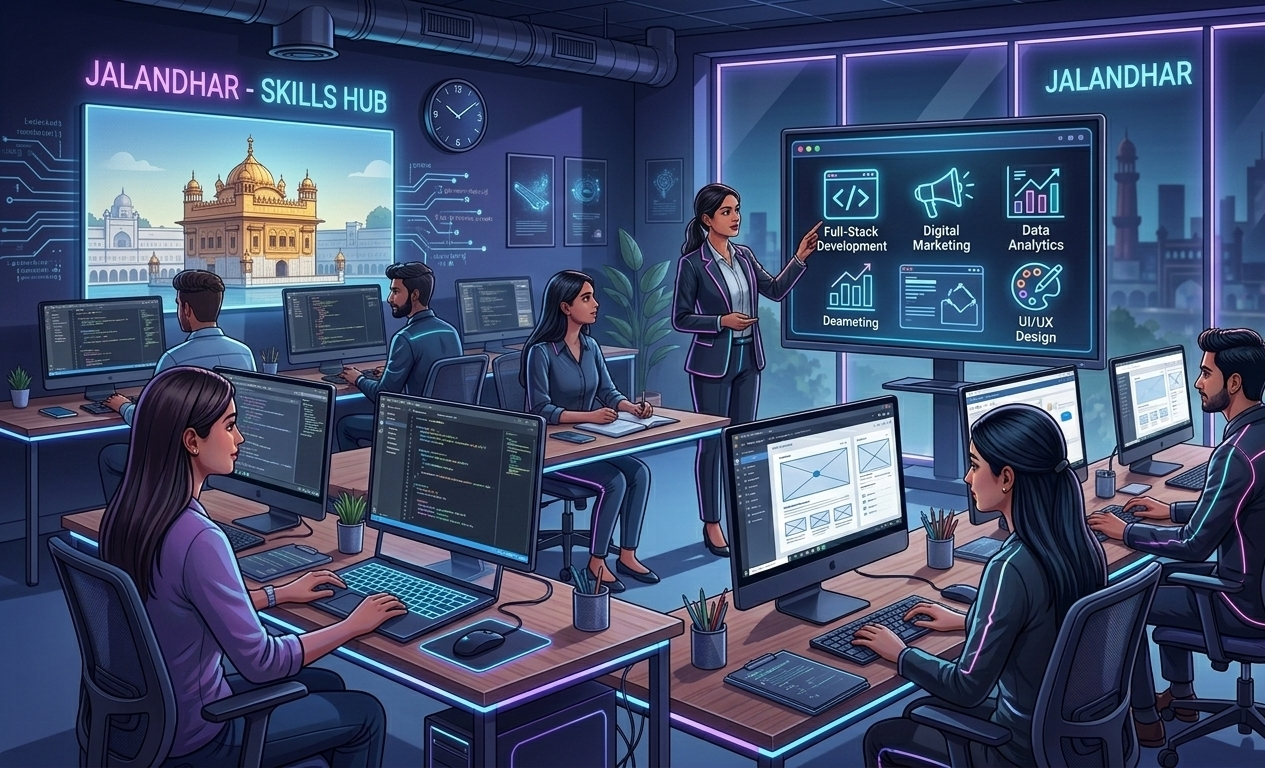
Why Career Oriented Courses in Jalandhar Are Important Today
Introduction
In today’s fast-changing world, education is no longer limited to theoretical knowledge. The modern job market demands individuals who possess practical skills, real-world knowledge, and the ability to adapt to evolving technologies. Traditional degrees still hold value, but employers increasingly look for candidates who can contribute immediately to their organizations. This is where career-oriented courses play a crucial role.
Career-oriented courses are designed to prepare students and professionals for specific job roles by focusing on practical learning and industry-relevant skills. These courses aim to bridge the gap between academic education and professional requirements. Instead of focusing solely on theory, they emphasize hands-on training, real-world applications, and skill development.
For individuals living in Jalandhar, career-oriented courses have become particularly important. The city has developed into an educational and commercial hub where businesses, startups, and industries are continuously growing. As a result, the demand for skilled professionals is increasing. Students who complete career-focused training programs gain a competitive advantage in the job market and can access better employment opportunities.
In this comprehensive guide, we will explore why career-oriented courses are essential today, how they benefit students and professionals, and why they are becoming increasingly popular among learners in Jalandhar.
Understanding Career Oriented Courses
Career-oriented courses are specialized training programs designed to equip learners with the skills required for specific industries or job roles. Unlike traditional academic programs that focus mainly on theoretical learning, these courses emphasize practical training and skill development.
The main objective of career-oriented education is to make students job-ready. These programs teach learners how to apply knowledge in real-world situations and solve practical problems that arise in professional environments.
Career-oriented courses are available in various fields such as information technology, digital marketing, graphic design, business management, data analysis, web development, and networking. These courses often include practical projects, internships, workshops, and certifications that help students gain hands-on experience.
By focusing on real-world applications, career-oriented courses help learners develop the confidence and competence needed to succeed in their chosen careers.
The Changing Nature of the Job Market
The global job market has changed significantly over the past decade. Technological advancements, automation, and digital transformation have reshaped many industries. As a result, companies are now looking for employees who possess specialized skills and practical expertise.
Employers today prioritize candidates who can contribute immediately without requiring extensive training. They expect employees to understand modern tools, software, and industry practices.
For students in Jalandhar, this shift means that simply earning a degree may not be enough. They need to develop additional skills through career-oriented training programs to remain competitive.
Career-oriented courses help learners stay aligned with industry trends and ensure that their skills remain relevant in a rapidly evolving job market.
Bridging the Gap Between Education and Industry
One of the biggest challenges faced by graduates today is the gap between academic education and industry expectations. Many academic programs focus heavily on theoretical concepts but provide limited exposure to practical applications.
This gap often leaves graduates unprepared for real-world job responsibilities.
Career-oriented courses address this issue by providing hands-on training and real-life project experience. Students learn how to apply their knowledge in professional scenarios, which prepares them for workplace challenges.
For example, a student learning digital marketing may work on real campaigns, analyze data, and develop marketing strategies during their course. This practical exposure makes them more confident and capable when entering the workforce.
Increasing Employment Opportunities
One of the primary reasons why career-oriented courses are important today is their ability to improve employment prospects.
Companies often prefer candidates who already possess the necessary skills required for specific roles. When students complete career-focused training programs, they acquire the knowledge and experience needed to perform job-related tasks effectively.
In Jalandhar, many businesses are looking for skilled professionals in fields such as technology, digital marketing, and business management. Career-oriented courses help individuals develop these skills and increase their chances of securing employment.
By gaining practical expertise and certifications, students can stand out among other job applicants.
Skill Development for Modern Careers
Modern careers require a wide range of technical and professional skills. Career-oriented courses focus on developing these essential competencies.
Students learn skills such as:
-
Technical proficiency in software and digital tools
-
Communication and presentation abilities
-
Analytical and problem-solving skills
-
Project management techniques
-
Team collaboration and leadership
These skills are crucial for success in today’s workplace. By acquiring them through structured training programs, learners become more prepared for professional challenges.
Supporting Entrepreneurship
Career-oriented courses are not only beneficial for job seekers but also for entrepreneurs.
Many individuals in Jalandhar are interested in starting their own businesses. However, running a successful business requires knowledge of technology, marketing, finance, and management.
Career-focused training programs help entrepreneurs develop these skills. For example, learning digital marketing can help business owners promote their products online and reach a wider audience.
Similarly, courses in business management and accounting can help entrepreneurs manage finances, plan strategies, and improve operational efficiency.
Preparing Students for Freelancing Opportunities
Freelancing has become a popular career option in recent years. Many professionals now work independently by offering their services online.
Career-oriented courses help individuals develop the skills needed to succeed in freelancing careers. Fields such as web development, graphic design, content writing, and digital marketing offer numerous freelancing opportunities.
With the right training and expertise, individuals can work with clients from different countries and build successful freelance careers.
Building Confidence and Professional Readiness
One of the most valuable benefits of career-oriented courses is the confidence they provide to learners.
When students receive practical training and complete real-world projects, they gain a deeper understanding of their field. This experience makes them feel more prepared for job interviews and professional environments.
Confidence plays a crucial role in career success. Individuals who believe in their abilities are more likely to perform well during interviews and workplace challenges.
Networking and Industry Exposure
Career-oriented courses often provide opportunities for students to interact with industry professionals.
Training institutes frequently organize seminars, workshops, guest lectures, and networking events where students can meet experts from their chosen industries.
These interactions help learners gain insights into industry trends and build valuable professional connections.
Networking can also lead to internship opportunities and job placements.
Certification and Career Credibility
Another advantage of career-oriented courses is the certification provided upon completion.
Professional certifications validate a learner’s skills and knowledge in a specific field. Employers often consider certifications as proof that a candidate has received proper training.
For students in Jalandhar, obtaining certifications from reputable institutes can significantly strengthen their resumes and improve their job prospects.
Contribution to Economic Development
Career-oriented education not only benefits individuals but also contributes to the economic development of a region.
When more people acquire specialized skills, industries gain access to a skilled workforce. This improves productivity, innovation, and business growth.
In growing cities like Jalandhar, skilled professionals play a crucial role in supporting industries such as information technology, education, manufacturing, and digital services.
A skilled workforce helps attract new businesses and investments, which further boosts the local economy.
Adapting to Technological Advancements
Technology is evolving at an unprecedented pace. Innovations such as artificial intelligence, cloud computing, and automation are transforming many industries.
To keep up with these changes, individuals must continuously update their skills.
Career-oriented courses provide training in modern technologies and tools, helping learners stay updated with industry developments.
By adapting to technological advancements, professionals can remain competitive and relevant in their careers.
Opportunities for Continuous Learning
Career-oriented courses also encourage lifelong learning.
Once individuals begin exploring skill-based education, they often continue learning new technologies and professional skills throughout their careers.
This continuous learning mindset helps professionals stay ahead in the competitive job market and achieve long-term career growth.
Why Jalandhar Is Becoming a Hub for Career Training
Over the years, Jalandhar has developed into an important educational center in Punjab.
The city offers numerous training institutes that provide career-oriented courses in various fields. Students from nearby towns and regions often come to Jalandhar to pursue skill-based education.
The presence of educational institutions, business establishments, and training centers makes the city an ideal location for career development.
Future Scope of Career Oriented Courses in Jalandhar
As the world continues to move toward digital transformation and skill-based employment, the importance of career-oriented education will continue to grow. Industries across the globe are focusing more on productivity, innovation, and specialized expertise. This shift means that individuals who possess practical and industry-relevant skills will have a greater advantage in the job market.
For learners in Jalandhar, career-oriented courses will play an even more significant role in shaping professional futures. These programs not only help individuals secure jobs but also prepare them for long-term career growth in an evolving economy.
Growing Demand for Skilled Professionals
One of the key reasons career-oriented courses will remain important in the future is the increasing demand for skilled professionals. Companies today prefer candidates who have specialized knowledge and practical experience rather than just academic qualifications.
Industries such as information technology, digital marketing, finance, healthcare, education, and manufacturing are constantly looking for trained professionals who can contribute effectively from the first day of employment. Career-oriented courses provide the hands-on training necessary to meet these industry expectations.
As businesses in Jalandhar continue to expand and modernize, the demand for skilled workers will continue to rise. Individuals who complete career-focused training programs will be better prepared to take advantage of these opportunities.
Growth of the Digital Economy
The global economy is increasingly becoming digital. Businesses rely heavily on online platforms, digital communication, and advanced technologies to operate efficiently.
Career-oriented courses that focus on digital skills help learners understand how to work with modern tools and technologies. For example, professionals who understand digital marketing strategies can help businesses promote their products online and reach wider audiences.
Similarly, individuals trained in data analysis can help organizations interpret data and make informed business decisions. As digital transformation continues to shape industries, the importance of skill-based education will only increase.
Expansion of Startups and Small Businesses
Entrepreneurship is growing rapidly across India, and cities like Jalandhar are witnessing a rise in startups and small businesses. Many young entrepreneurs are launching innovative ventures in fields such as technology, e-commerce, and service industries.
Career-oriented courses provide valuable knowledge that helps entrepreneurs manage their businesses effectively. Training in areas such as marketing, finance, business strategy, and technology enables business owners to operate more efficiently and compete in the marketplace.
Entrepreneurs who understand digital tools can also reach customers beyond their local markets, expanding their businesses nationally and internationally.
Increased Opportunities in Freelancing
Another important trend shaping the future of work is freelancing. Many professionals now prefer flexible work arrangements that allow them to work independently and manage their own schedules.
Career-oriented courses provide the foundation needed to build freelance careers. Skills such as graphic design, web development, digital marketing, content writing, and video editing are highly demanded in the freelance market.
Freelancers with strong technical skills can collaborate with clients from around the world and earn income through online platforms. This flexibility allows individuals to work remotely while maintaining a steady income stream.
Importance of Continuous Skill Development
One of the defining characteristics of modern careers is the need for continuous learning. Technology evolves rapidly, and professionals must regularly update their skills to remain competitive.
Career-oriented courses encourage a mindset of lifelong learning. Individuals who begin their journey with skill-based training often continue to pursue advanced certifications and specialized programs throughout their careers.
This ongoing learning process ensures that professionals remain adaptable and capable of handling new challenges and opportunities.
Enhancing Professional Competence
Career-oriented courses not only teach technical skills but also help learners develop essential professional qualities. These include communication abilities, leadership skills, time management, and teamwork.
In professional environments, these soft skills are just as important as technical expertise. Employers often look for individuals who can collaborate effectively with colleagues, communicate ideas clearly, and manage projects efficiently.
By combining technical knowledge with professional skills, career-oriented courses prepare learners for long-term success in the workplace.
Building Strong Career Foundations
For students who are just beginning their professional journeys, career-oriented courses provide a strong foundation. These programs help learners explore different career paths and identify their interests and strengths.
By gaining exposure to industry practices and practical projects, students can make more informed decisions about their future careers.
Early exposure to skill-based training also allows individuals to build experience before entering the workforce, which gives them a competitive advantage.
Contribution to Regional Development
The increasing popularity of career-oriented courses also contributes to the development of local communities. As more individuals acquire specialized skills, businesses benefit from a more capable workforce.
In Jalandhar, skilled professionals support the growth of industries such as technology, education, retail, and digital services. This growth creates additional employment opportunities and strengthens the local economy.
Educational institutions and training centers also play an important role by providing quality education and preparing students for modern careers.
Adapting to Global Opportunities
Another important benefit of career-oriented courses is that they prepare individuals for global opportunities. Many industries operate on an international scale, and companies often collaborate with partners and clients from different countries.
Professionals who possess specialized skills and modern technological knowledge can work with global organizations and explore international career opportunities.
This global exposure allows individuals to gain valuable experience and expand their professional horizons.
The Role of Technology in Career Education
Technology itself is transforming the way career-oriented courses are delivered. Many training institutes now incorporate advanced teaching methods such as virtual classrooms, interactive learning platforms, and practical simulations.
These modern teaching approaches help students learn more effectively and gain real-world experience through digital tools.
Technology also makes it possible for learners to access educational resources online, enabling flexible and convenient learning experiences.
Encouraging Self-Reliance
Career-oriented courses empower individuals to become self-reliant and independent. By developing practical skills, learners gain the ability to create their own career opportunities rather than relying solely on traditional employment paths.
Whether they choose to work for companies, start their own businesses, or pursue freelancing, individuals with specialized skills have greater control over their professional lives.
This independence fosters confidence and encourages individuals to pursue their ambitions with determination.
Preparing for Future Careers
The future workforce will require individuals who can adapt quickly to new technologies and work environments. Career-oriented education equips learners with the skills needed to navigate these changes successfully.
Fields such as artificial intelligence, data science, cloud computing, and digital marketing are expected to grow significantly in the coming years. Students who begin with career-oriented training today will be better positioned to explore these advanced fields in the future.

Comments
No comments yet. Be the first to share your thoughts!
Leave a Comment