AI / ML + Generative AI Certificate Program in Jalandhar
Learn the stack. Ship it for real. Python → Data → Machine Learning → Deep Learning → GenAI, on real datasets, with portfolio-ready deliverables, API development and deployment in every track.
- Live client projects
- Practitioner trainers
- Placement support
- Certificate + internship
- Duration
- 3, 6 or 9 Months
- Syllabus
- 43 Modules, 3 Tracks
- Mode
- Classroom, Weekend & 1-on-1
- Includes
- Internship Letter
- Students trained
- 25,000+Students trainedsince 2007
- Google rating
- 4.9★Google rating556+ reviews
- Practical training
- 100%Practical traininglive client work
Course overview
Learn AI. Build models. Deploy real systems. The AI / ML + Generative AI programme starts from Python fundamentals and progresses through data handling, visualisation, classical machine learning, deep learning, NLP, computer vision, Generative AI, RAG and production deployment. Each track is self-contained and uses real datasets with graded deliverables and dedicated capstone projects.
The programme is structured around evidence: trained models with evaluation, working APIs, portfolio projects and deployed systems.
What you get: Python from absolute zero, data structures, OOP and file handling; NumPy and pandas for real data; visualisation and exploratory analysis; statistics and probability in the longer tracks; machine learning through regression and classification; feature engineering and preprocessing pipelines; advanced ML with KNN, SVM, trees and forests; clustering and PCA; deep learning with ANN and CNN; NLP, TF-IDF and embeddings; computer vision and OpenCV; RNN, LSTM and GRU sequence models in the 9-month track; Generative AI and LLM fundamentals; Hugging Face integration; Retrieval-Augmented Generation; vector databases; advanced prompting and tool calling; hallucination detection and GenAI evaluation; Flask and FastAPI development; authentication and backend integration in the 9-month track; SQL in the 6-month track; Git, deployment and production monitoring in the 9-month track; and a final capstone project in every track.
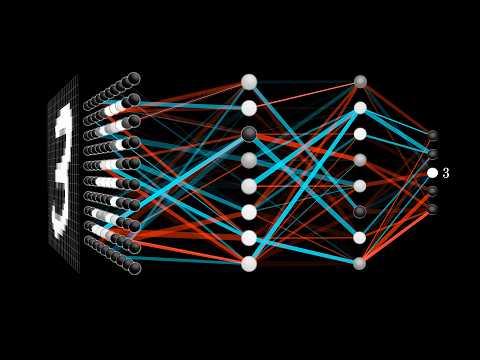
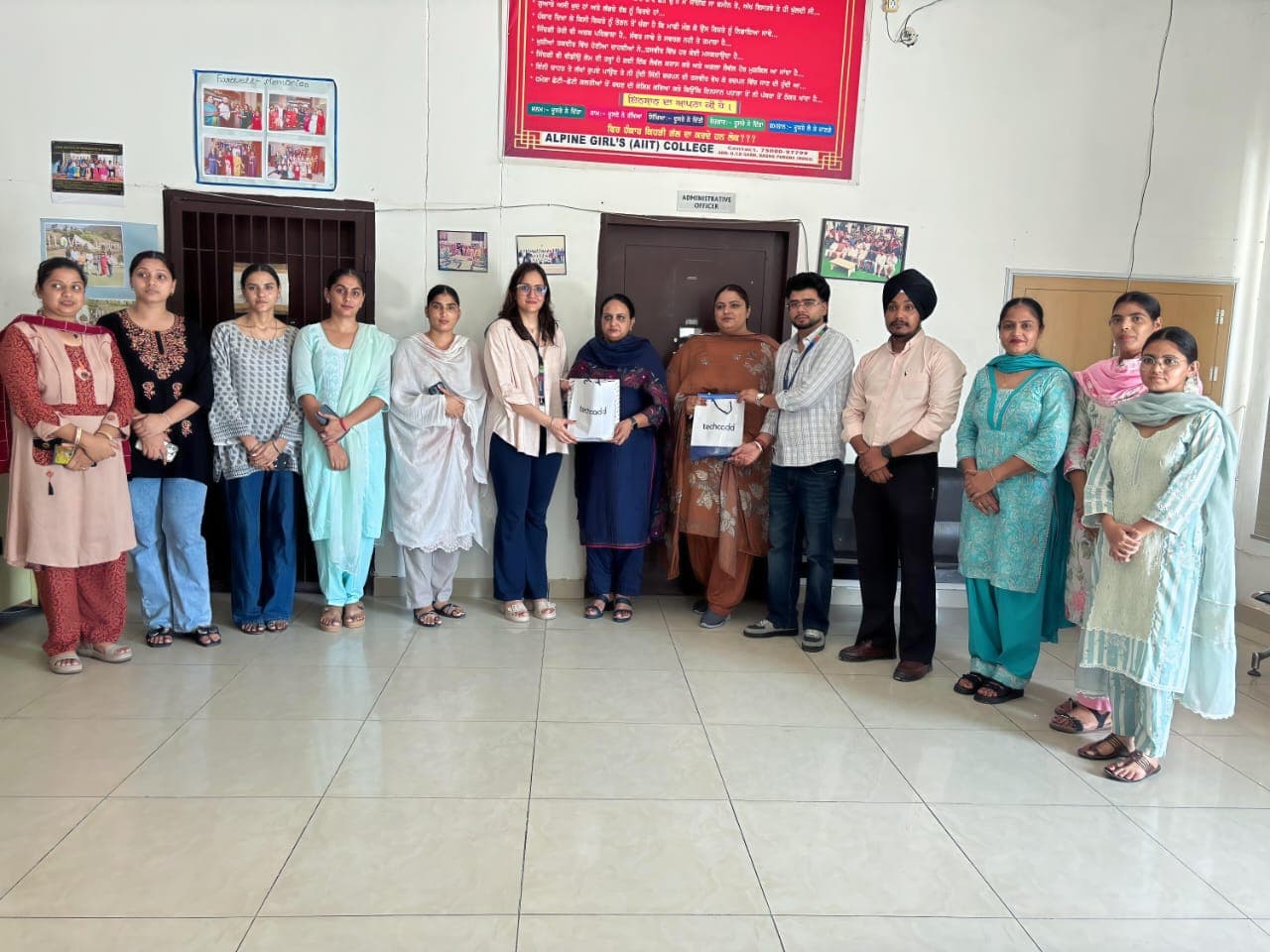
Industry-Ready Training in Machine Learning
- 100% practical, project-based learning
- AI tools integrated into every module
- Live client projects under trainer supervision
- Internship letter and placement support
- Small batches with daily doubt clearing
Who can dothis course
AI / ML training for different career stages. Every track begins with Python from absolute zero, so the starting point is the same whichever length you pick — what changes is how far it takes you.
Students after 12th
The tracks begin with Python from absolute zero, so no stream and no prior programming is assumed. Most students run the 3 or 6-month track alongside a degree at a Jalandhar college using the weekday or weekend batch.
Graduates & final-year students
Build practical AI/ML skills and portfolio evidence: trained models with evaluation scores, EDA reports and a deployed capstone are what a campus or product-company interview actually asks to see.
Working professionals
Develop practical machine learning and GenAI engineering capabilities. The weekend batch exists for people already earning, and the tracks are self-contained so you commit to one length rather than an open-ended programme.
Career changers
Start from Python fundamentals and progress through the complete selected track. Nothing assumes a computer science degree, and every module ends in something you can point at.
Learners without a coding background
The programme explicitly starts from absolute zero — installation, variables, loops and functions — before any data or ML library appears.
Why this programmeis worth your year
Learn the AI skills engineers actually use. The programme combines data preparation, model building, evaluation and deployment with the modern Generative AI stack. Longer tracks add statistics, unsupervised learning, sequence models, RAG and production deployment rather than simply repeating a shorter programme.
The working objective is simple: Learn → Build → Evaluate → Deploy → Present. Understand the data, the model and the evaluation requirement; create the notebook, pipeline, API or GenAI application; test on unseen data and document metrics and limitations; serve the trained system through an API where the track requires it; and turn the completed work into portfolio evidence you can explain.
Build skills employers can verify. By the end of a track you hold some combination of a Python foundations notebook, cleaned and analysis-ready datasets, exploratory data analysis reports, trained baseline models with evaluation scores, model benchmark notebooks, statistical analysis reports, segmentation and PCA projects, trained CNN and LSTM models, a YOLO object detection demo, an LLM-powered application, a live RAG pipeline, a tool-calling GenAI agent, a deployed AI application and an end-to-end AI/ML + GenAI capstone.
That is the difference between studying machine learning and being hired to do it: not the syllabus, which looks similar everywhere, but whether there is a trained model with a held-out score, an API someone else can call, and a repository an interviewer can open. This programme is built on that standard.
Ready to Build Your AI / ML + GenAI Career?
- Learn the skills, build real projects, create your portfolio and prepare for the industry — every module ends with a graded deliverable and a dedicated capstone project.
- Live project-based learning on real datasets, with API development, deployment, an internship and a certificate at the end of every track.
Reviewed by mentors. Built for interviews.What you will
actually build
One programme, a complete AI / ML + GenAI stack. The three tracks are self-contained: the 3-month Practitioner track covers topics 01 to 09, the 6-month Professional track covers topics 10 to 23, and the 9-month Expert track covers topics 24 to 43. Topic numbering is continuous across all three, and every topic carries its own subject matter, tools, deliverable and capstone project — the full topic list for each track is in the syllabus section below.
Python & the Programming Foundation
- Installation, variables, operators, conditions and loops
- Functions, arguments, return values and scope
- Lists, tuples, dictionaries, sets and comprehensions
- OOP, file handling, exception handling and structured logging
Three programmes,one stack
The three tracks are self-contained rather than nested, so this table reads column by column: a tick names the module that delivers the capability in that track, and a cross means it is not part of it. Note the one place the columns are not cumulative — SQL and database integration belongs to the 6-month Professional track, where the final project is served behind a REST API and backed by SQL.
| Module | 9 modulesAI / ML Practitioner3 MonthsPython, data handling, visualization, classical ML, deep learning basics and API deployment. | 14 modulesData & ML Professional6 MonthsAdds Excel, statistics, feature engineering, unsupervised learning, NLP/computer vision and SQL-backed deployment. | 20 modulesAI, ML & GenAI Expert9 MonthsAdds sequence models, the full GenAI stack, RAG, advanced prompting, tool calling, authentication, production deployment and the end-to-end capstone. |
|---|---|---|---|
| Python programming fundamentals |
|
|
|
| Python data structures & comprehensions |
|
|
|
| OOP, file handling & exception handling |
|
|
|
| Excel for data analysis | Not included |
|
|
| NumPy & vectorised computation |
|
|
|
| Pandas data cleaning & analysis |
|
|
|
| Data visualization & EDA |
|
|
|
| Statistics & probability | Not included |
|
|
| Machine learning — regression & classification |
|
|
|
| Feature engineering & preprocessing pipelines | Not included |
|
|
| Advanced ML — KNN, SVM, trees, forests |
|
|
|
| Model evaluation & cross-validation |
|
|
|
| Ensemble methods (bagging & boosting) | Not included | Not included |
|
| Clustering & dimensionality reduction (PCA) | Not included |
|
|
| Deep learning — ANN & CNN |
|
|
|
| Sequence models — RNN, LSTM, GRU | Not included | Not included |
|
| Time-series & sequence prediction | Not included | Not included |
|
| NLP — text, TF-IDF, embeddings |
|
|
|
| Word embeddings & vector semantics | Not included | Not included |
|
| Computer vision & OpenCV |
|
|
|
| Object detection with YOLO | Not included | Not included |
|
| Generative AI & LLM fundamentals | Not included | Not included |
|
| Hugging Face model integration | Not included | Not included |
|
| Retrieval-Augmented Generation (RAG) | Not included | Not included |
|
| Vector databases (FAISS / Pinecone) | Not included | Not included |
|
| Advanced prompting & tool calling | Not included | Not included |
|
| Hallucination detection & GenAI evaluation | Not included | Not included |
|
| API development with Flask/FastAPI |
|
|
|
| Authentication & backend integration | Not included | Not included |
|
| SQL & database integration | Not included |
| Not included |
| Git, deployment & production monitoring | Not included | Not included |
|
| Capstone / final project |
|
|
|
One course.A mesh of real tools.
Everything below is installed on the lab machines and used on live client work, not shown once in a slide and forgotten.
Get Certified in
Machine Learning
Complete the course with a portfolio of live projects and receive an industry-recognised certificate, plus a documented internship letter accepted by Punjab universities.
 Computer Education · JalandharCertificateof Project ExcellenceThis is to certify thatStudent Name
has designed, built and deployed a live capstone project in Machine Learning, reviewed and graded under industry mentorship.
Computer Education · JalandharCertificateof Course CompletionThis is to certify thatStudent Namehas successfully completed the professional training programme in Machine Learning with a grade of A+.
Two certificates on completion — the course certificate and a separate capstone project certificate.
Where this coursetakes you
The roles this opens, what they pay in Punjab and beyond, and who is hiring for them — the same figures our free Salary Estimator publishes, not a brochure number.
AI / ML Engineer
Builds and deploys machine learning models and AI systems.
- Starting package
- ₹3–5.5LPA
- After 2 years
- ₹6–12LPA
Indicative ranges for AI / ML Engineer roles, compiled from public job-market listings and drawn on the same scale in every market. Actual offers vary by employer, skillset and interview performance — Punjab pay typically reaches 2.2× the fresher ceiling within two years of delivery experience.
Open the salary estimatorWhere AI / ML Engineer graduates get hired
- AI startups and research labs (Bangalore, NCR, remote)
- Product companies building AI features
- Analytics and consulting firms
- Global remote positions via freelance platforms
Where do these skills take you?
Junior Data Analyst (Stage 1, entry level) — clean a real dataset, visualise it honestly and train a first working model. Machine Learning Engineer (Stage 1 → 2, early career) — feature engineering discipline, correct evaluation methodology and model comparison. Data Science Associate (Stage 2, mid level) — statistical reasoning, unsupervised learning and defensible conclusions. AI Engineer (Stage 2 → 3, senior) — deep learning fundamentals, NLP and computer vision on real data. GenAI / LLM Engineer (Stage 3, lead) — prompt engineering, RAG system design and hallucination resistance. Applied AI Developer (Stage 3, independent) — ship a complete system: model, API, database and frontend.
Which track should I actually take?
Take the 3-month Practitioner track for Python, data handling, visualisation, classical ML, deep learning basics and API deployment. Take the 6-month Professional track if you also want Excel, statistics, feature engineering, unsupervised learning, NLP and computer vision, and SQL-backed deployment. Take the 9-month Expert track if you are aiming at GenAI work: sequence models, the full GenAI stack, RAG, advanced prompting, tool calling, authentication, production deployment and the end-to-end capstone.
What do I actually leave with?
A Python foundations notebook, cleaned and analysis-ready datasets, EDA reports, trained baseline models with evaluation scores, an Excel reporting dashboard, statistical analysis reports, model benchmark notebooks, segmentation and PCA projects, trained CNN and LSTM models, a YOLO object detection demo, an LLM-powered application, a live RAG pipeline, a tool-calling GenAI agent, a deployed AI application and an AI/ML + GenAI capstone — depending on the track you take.
Is a model in a notebook enough to get hired?
Rarely. The gap between a trained model and something users can call is an API, a database and a deployment, which is why API development sits in every track and the 9-month track adds authentication, Git, live deployment and production monitoring. An interviewer can open a URL; they cannot open a notebook you describe.
Can I freelance or work remotely with this skill?
Yes. A Jalandhar address costs you nothing on a remote brief, and the deliverables travel: a deployed AI application behind an authenticated API with a connected frontend is a whole piece of work, not a fragment. The Expert track's capstone is scoped, documented and presented for exactly that reason.
Hands-on projectsyou will ship
Python Foundations Notebook
Working Python scripts covering variables, conditions, loops and custom functions — the command-line utility toolkit that proves you can write readable, debuggable code from zero.
Cleaned & Analysis-Ready Dataset
A messy retail spreadsheet turned into modelling-ready data, with documented missing-value handling, filters and a grouped summary.
Exploratory Data Analysis Report
A structured EDA notebook with heatmaps, pairplots and written findings that say what the data actually supports.
Two Trained Baseline Models
A house-price regressor and a loan-approval classifier, each with a preprocessing pipeline and honest evaluation scores.
Model Benchmark Notebook
An algorithm bake-off comparing at least four models on the same problem, with metrics and a written recommendation.
Deployed ML Capstone API
A trained model moved out of the notebook and served behind a live Flask or FastAPI endpoint anyone can call.
Excel Reporting Dashboard
A pivot-table-driven sales performance dashboard with three charts — the first-pass business reporting every analyst is asked for.
Statistical Analysis Report
An A/B test analysis with a hypothesis test, correlation analysis and a conclusion you can defend.
Segmentation & PCA Project
Customer segmentation comparing K-Means, hierarchical clustering and DBSCAN, visualised through PCA.
Trained CNN & LSTM Models
An ANN-versus-CNN image benchmark and an LSTM time-series forecaster, each with architecture, training curve and error analysis.
YOLO Object Detection Demo
A real-time object detection demo built on OpenCV and YOLO, with a detection-accuracy summary.
LLM-Powered Application
A prompt-engineered mini app that returns structured output from an LLM rather than free-form text you have to parse.
Live RAG Pipeline
A document Q&A assistant with documented chunking, retrieval and generation strategy over a vector database.
Tool-Calling GenAI Agent
A support agent with structured-output validation and an evaluation report — the step from GenAI demo to something you can trust.
Deployed AI Application
An authenticated AI web app: model and LLM APIs behind FastAPI, with a connected frontend and a monitored live deployment.
AI/ML + GenAI Capstone
An end-to-end system combining classical ML, deep learning and GenAI, delivered with source code, documentation and a presented case study you defend.
Learn it. Build it. Make it yours.
Every project moves through the same loop: understand the brief, build with guidance, then explain the decisions behind your work.
Understand
Break a real requirement into a clear plan and the right tools.
Python Foundations NotebookBuild
Work hands-on with trainer feedback while the decisions are still easy to change.
Cleaned & Analysis-Ready DatasetPresent
Turn the finished work into a portfolio story you can defend in an interview.
Exploratory Data Analysis ReportWhy students choosetechcadd
There are many places to learn this in Jalandhar and the brochure syllabus looks similar at all of them. What differs is who teaches, whether you ever touch real data, and whether anyone picks up the phone after you have paid. techcadd has trained students across Punjab since 2007 on the same model: small batches, working practitioners as trainers, client projects as coursework.
Practical learning
Work with real datasets and real endpoints throughout the programme, not the same three tidy CSVs every programme uses.
Project-based learning
Every module ends with a graded deliverable and a dedicated capstone project, so progress is measured by what you produced rather than by attendance.
Industry tool exposure
Work with the libraries, frameworks and platforms named in the syllabus — scikit-learn, TensorFlow, OpenCV, Hugging Face, LangChain, FAISS, FastAPI — on the lab machines.
Portfolio development
Build evidence that can be shown and defended in interviews: notebooks, evaluation reports, benchmarks, deployed APIs and a case study you present.
Internship & certificate
Practical, internship-oriented project experience and certification as applicable, accepted for university industrial training requirements.
Placement support
CV preparation, interview preparation, portfolio guidance and relevant opportunities, repeated after a rejection rather than abandoned.
How techcaddcompares
Machine learning programmes all list the same libraries. These are the eight things worth asking before you pay any institute, including this one.
| Feature | techcadd | Other institutes |
|---|---|---|
| Curriculum | Industry-aligned, updated regularly | Often outdated or generic |
| Learning style | 100% hands-on, project-based | Mostly theory-heavy |
| Trainers | Industry-experienced mentors who still deliver client work | Mixed experience levels |
| Real projects | A graded deliverable and a capstone in every module | Limited or simulated projects |
| Modelling practice | You train, tune and evaluate your own models with documented metrics, not run finished notebooks | Pre-written notebooks executed in class |
| Placement support | Dedicated career and interview preparation | Often limited or absent |
| Batch flexibility | Weekday, evening, weekend and 1-on-1 options | Fixed schedules |
| Doubt support | Ongoing mentor and community support | Limited post-class support |
| Certification | Industry-recognised certificate plus a documented internship letter | Varies |
The right-hand column describes what is commonly offered in the market, not any particular institute. Ask any institute you are considering — this one included — to show you the work its students actually produced.
What you are reallybeing taught
Six principles that outlive every framework. The libraries in this syllabus will change; these will not, and they are what a strong candidate can articulate under questioning.
Clean data beats a clever model
A sophisticated algorithm trained on dirty, mislabelled or leaky data can lose to a simple model trained on clean data.
Evaluation is not optional
A model that has not been evaluated on a proper held-out set is an opinion, not a result.
Understand the algorithm you are calling
Libraries make it easy to run models; understanding the algorithm remains essential for debugging and production.
GenAI still needs classical fundamentals
Tokenisation, embeddings and evaluation remain foundational ideas behind LLM systems.
A model in a notebook is not a product
The gap between a trained model and something users can call is an API, a database and a deployment.
Retrieval beats retraining
RAG can provide an updateable way to answer from a specific document set without retraining a large model.
What our studentsin Jalandhar say
- Google
techcadd's placement cell kept calling me for drives until I was placed. That persistence mattered more than anything else for Machine Learning.
Sandeep KaurPlaced Fresher · Phillaur GoogleI was switching careers and worried I would be behind. Half the Machine Learning batch were doing the same thing, and nobody made me feel slow.
Harpreet KaurSoftware Trainee · Jalandhar GoogleI joined the Machine Learning batch with almost no background and finished with a project I could actually show. The trainers correct your work daily rather than just moving to the next slide.
Rohit SharmaJunior Analyst · Phagwara Googletechcadd's placement cell kept calling me for drives until I was placed. That persistence mattered more than anything else for Machine Learning.
Sandeep KaurPlaced Fresher · Phillaur GoogleI was switching careers and worried I would be behind. Half the Machine Learning batch were doing the same thing, and nobody made me feel slow.
Harpreet KaurSoftware Trainee · Jalandhar GoogleI joined the Machine Learning batch with almost no background and finished with a project I could actually show. The trainers correct your work daily rather than just moving to the next slide.
Rohit SharmaJunior Analyst · Phagwara
- Google
What made Machine Learning click for me was the lab time. You can sit after class and someone will still explain it until you get it.
Simranjeet SinghFreelancer · Kapurthala GoogleThe Machine Learning programme got me interview-ready faster than I expected. My interviewer asked to see my project and that was the whole conversation.
Anjali VermaCareer Switcher · Jalandhar Cantt GoogleI travelled in for the weekend Machine Learning batch and it was worth every trip. Small batch, real work, no time wasted on theory nobody uses.
Gurpreet DhillonWorking Professional · Nakodar GoogleWhat made Machine Learning click for me was the lab time. You can sit after class and someone will still explain it until you get it.
Simranjeet SinghFreelancer · Kapurthala GoogleThe Machine Learning programme got me interview-ready faster than I expected. My interviewer asked to see my project and that was the whole conversation.
Anjali VermaCareer Switcher · Jalandhar Cantt GoogleI travelled in for the weekend Machine Learning batch and it was worth every trip. Small batch, real work, no time wasted on theory nobody uses.
Gurpreet DhillonWorking Professional · Nakodar
Frequently Asked Questions
No. Every track starts from Python at absolute zero — installation and environment setup, variables, operators, conditions, loops and functions — before any data or machine learning library appears.
The syllabus contains 3-month, 6-month and 9-month self-contained tracks: AI / ML Practitioner, Data & ML Professional, and AI, ML & GenAI Expert.
3 months: 9 modules. 6 months: 14 modules. 9 months: 20 modules. Across all three stages the module numbering runs continuously from 01 to 43.
Yes. Every module ends with a graded deliverable and a dedicated capstone project, and each track closes with a portfolio-polish final capstone.
Generative AI and the full GenAI stack — LLM fundamentals, Hugging Face, RAG, vector databases, advanced prompting, tool calling and hallucination handling — are included in the 9-month Expert track.
API development is included in all tracks. The 9-month track additionally includes authentication, Git and GitHub workflows, live deployment, logging and basic production monitoring.
SQL and database integration are included in the 6-month Professional track, where the final project is served behind a REST API and backed by SQL.
Fees vary by track (3, 6 or 9 months) and mode (Classroom, Weekend or 1-on-1). A counsellor will share the current fee structure, EMI options and any active offers when you book a demo — the demo class itself is free.
Python, VS Code, Jupyter Notebook and pip; NumPy, pandas, Matplotlib, Seaborn and SciPy; scikit-learn; TensorFlow and Keras; NLTK, Gensim, OpenCV and YOLO; Hugging Face, the OpenAI API and LangChain; FAISS or Pinecone; Flask and FastAPI; SQL; Excel; and Git, GitHub, virtualenv or conda and cloud hosting.
Yes. You receive a programme completion certificate for the track you finish, practical internship-oriented project experience as applicable, a portfolio of models, reports, APIs, RAG systems and deployed applications, and placement support covering CV preparation, interview preparation and portfolio guidance.
Yes. Weekday, evening, weekend and 1-on-1 formats run in parallel so working professionals and college students can both attend. Every class runs for 2 hours; book a free demo class to see the lab and meet the trainer before enrolling.
Choose the right duration for you
Start with the time you can commit consistently. Every track begins with practical foundations, then adds depth as your goals grow.
AI / ML Practitioner — 3 Months
Write real Python, clean real data and ship your first trained model. Nine modules, 01 to 09, from Python at absolute zero through pandas, classical machine learning and deep learning basics to a model served behind a live API.
Data & ML Professional — 6 Months
Go from clean data to statistically sound, properly evaluated machine learning models. Fourteen modules, 10 to 23, adding Excel, exception handling and logging, statistics and probability, clustering, NLP and computer vision, and a final project served behind a REST API and backed by SQL.
AI, ML & GenAI Expert — 9 Months
Own the full stack — from statistics and deep learning through to production GenAI systems. Twenty modules, 24 to 43, adding sequence models, the complete GenAI stack with RAG, vector databases, tool calling and evaluation, authenticated AI applications, Git and production monitoring, and an end-to-end capstone.
Choose the rightduration for you
Own the full stack — from statistics and deep learning through to production GenAI systems. Twenty modules, 24 to 43, adding sequence models, the complete GenAI stack with RAG, vector databases, tool calling and evaluation, authenticated AI applications, Git and production monitoring, and an end-to-end capstone.
Excel for Data Analysis
- Topics: Excel fundamentals and formulas; filtering and sorting; pivot tables; charts
- Tools: Microsoft Excel, Pivot Tables
- Real use: Perform first-pass reporting and summarisation
- Deliverable: Pivot-table-driven summary report and dashboard
- Capstone project: Sales Performance Dashboard
Python Programming
- Topics: Python fundamentals; functions and modules; comprehensions; structured error handling
- Tools: Python, VS Code, Jupyter Notebook
- Real use: Build reusable Python fluency for data, ML and GenAI work
- Deliverable: Modular Python scripts covering functions, comprehensions and error handling
- Capstone project: Reusable Utility Package
Python OOP & File Handling
- Topics: Object-oriented programming; inheritance and polymorphism; CSV and JSON; structured logging
- Tools: Python csv module, json module, logging module
- Real use: Structure production AI code into classes, modules and logs
- Deliverable: Class-based application processing structured data with logging
- Capstone project: Structured Data Processor
NumPy
- Topics: Array creation, indexing and vectorisation; broadcasting; mathematical and statistical operations
- Tools: NumPy
- Real use: Provide the numerical foundation for ML and GenAI computation
- Deliverable: Vectorised array notebook with loop-performance comparison
- Capstone project: Vectorised Statistics Toolkit
Pandas
- Topics: DataFrames and cleaning; missing values; GroupBy; merging and joining; datetime handling; feature preparation
- Tools: pandas
- Real use: Prepare multi-source data for modelling
- Deliverable: Cleaned, merged, feature-ready dataset with preparation log
- Capstone project: Feature-Ready Dataset Build
Data Visualization & EDA
- Topics: Matplotlib and Seaborn; structured EDA; heatmaps and pairplots; distribution analysis
- Tools: Matplotlib, Seaborn, pandas
- Real use: Understand data before selecting a modelling approach
- Deliverable: Full EDA report with heatmaps, pairplots and distribution analysis
- Capstone project: Structured EDA Report
Statistics & Probability
- Topics: Descriptive statistics; probability fundamentals; common distributions; correlation; hypothesis testing
- Tools: Python, NumPy, SciPy
- Real use: Make model assumptions and evaluation statistically defensible
- Deliverable: Statistical analysis report with hypothesis test and conclusion
- Capstone project: Hypothesis-Tested Business Report
Machine Learning
- Topics: Regression and classification; preprocessing; feature engineering; evaluation methodology
- Tools: scikit-learn, pandas
- Real use: Build properly evaluated classical ML models
- Deliverable: Two trained models with full feature-engineering pipeline and evaluation report
- Capstone project: Regression & Classification Pair
Advanced Machine Learning
- Topics: KNN; SVM; Decision Trees; Random Forests; ensemble methods; introduction to clustering
- Tools: scikit-learn, pandas
- Real use: Choose and compare models, including production-oriented ensemble methods
- Deliverable: Model comparison notebook with at least five algorithms including an ensemble method
- Capstone project: Ensemble Benchmark Report
Unsupervised Learning & Dimensionality Reduction
- Topics: K-Means; Hierarchical clustering; DBSCAN; PCA for dimensionality reduction and visualisation
- Tools: scikit-learn, Matplotlib
- Real use: Perform segmentation and analyse data without labels
- Deliverable: Segmentation project comparing three clustering methods with PCA visualisation
- Capstone project: Customer Segmentation Project
Deep Learning
- Topics: Neural network architecture; activation and loss functions; optimisers; ANN; CNN in depth
- Tools: TensorFlow / Keras, NumPy
- Real use: Build the neural-network foundation required for later GenAI work
- Deliverable: Trained ANN and CNN with architecture, training curve and evaluation
- Capstone project: ANN & CNN Image Benchmark
NLP
- Topics: Text preprocessing and tokenisation; TF-IDF; word embeddings; sentiment analysis
- Tools: NLTK, scikit-learn, Gensim
- Real use: Build the language-processing foundation used by GenAI systems
- Deliverable: Sentiment analysis model comparing TF-IDF and embedding-based features
- Capstone project: TF-IDF vs Embeddings Showdown
Sequence Models
- Topics: RNN; LSTM; GRU; sequence data; time-series prediction
- Tools: TensorFlow / Keras
- Real use: Model data where order affects prediction
- Deliverable: Trained LSTM with prediction accuracy and error analysis
- Capstone project: Time-Series Forecaster
Computer Vision
- Topics: OpenCV in depth; image processing; object detection concepts; introduction to YOLO
- Tools: OpenCV, YOLO
- Real use: Build systems that classify and detect visual information
- Deliverable: YOLO object detection demo with detection-accuracy summary
- Capstone project: Real-Time Object Detection Demo
Generative AI & LLMs
- Topics: Generative AI concepts; LLM architecture at a working level; prompting; embeddings; Hugging Face models; LLM API integration
- Tools: Hugging Face, OpenAI API, LangChain
- Real use: Build applications that use LLMs through engineered prompts and APIs
- Deliverable: Working LLM application returning structured output
- Capstone project: Prompt-Engineered Mini App
RAG
- Topics: Document loading and chunking; embeddings; vector databases; retrieval; context building; complete RAG pipeline
- Tools: LangChain, FAISS / Pinecone, OpenAI API
- Real use: Answer questions from a specific document set using retrieval
- Deliverable: Live RAG pipeline with documented chunking, retrieval and generation strategy
- Capstone project: Document Q&A Assistant
Advanced GenAI
- Topics: Prompt engineering patterns; structured output; function and tool calling; hallucination handling; GenAI evaluation
- Tools: OpenAI API, LangChain, Python
- Real use: Move from GenAI demos to systems that can be evaluated and trusted
- Deliverable: Tool-calling GenAI agent with structured-output validation and evaluation report
- Capstone project: Tool-Calling Support Agent
AI Application Development
- Topics: APIs with FastAPI or Flask; integrating models and LLM APIs; authentication basics; connecting a frontend to an AI backend
- Tools: FastAPI / Flask, REST API, basic auth
- Real use: Turn an AI pipeline into a usable application
- Deliverable: Deployed AI application behind an authenticated API with connected frontend
- Capstone project: Authenticated AI Web App
Deployment & Production
- Topics: Git and GitHub workflows; environment and dependency management; live API deployment; logging; basic production monitoring
- Tools: Git / GitHub, virtualenv / conda, cloud hosting
- Real use: Ship reliable AI systems beyond the notebook
- Deliverable: Version-controlled live deployment with logging and basic monitoring
- Capstone project: Monitored Live Deployment
Capstone Project
- Topics: Scoping an end-to-end AI/ML and GenAI project; combining classical ML, deep learning and GenAI; documentation; presentation; defending design decisions
- Tools: Full stack from the programme, Git, FastAPI / Flask
- Real use: Build and defend a complete end-to-end AI/ML + GenAI system
- Deliverable: Complete deployed project with source code, documentation and presented case study
- Capstone project: AI/ML + GenAI Capstone — Portfolio Polish
Not sure if Machine Learning is the right fit?
One call with a counsellor is usually enough to find out. Book a free demo class and see the lab before you decide.
Ask aboutMachine Learning
Send your question and a counsellor will call you back about batch timings, fees, EMI options, placement record, or whether this course fits your degree.
- Free counselling and demo class
- Weekday, evening, weekend or 1-on-1, all 2-hour classes
- Internship letter and placement support